How to Choose the Best Author Website Builder for Authors in 2026

It’s 2026, and if you’re an author, you might wonder if you really need your own website. After all, there are many places to sell books online, like on kdp kindle and other big stores. But here’s the thing: an author website is still super important. It’s like having your own home on the internet.

Why is this home so special? Because it gives you a place to control your own story. You can share your news, talk about your books, and connect with readers in a way that no other platform lets you do. Think of it as your main stage. Even if you use services to write a book online, your website is where fans come to know you. Without one, you might miss out on building strong relationships with your readers and selling more books.
This guide is here to help you understand how to pick the best author website builder.
We will look at what features your website must have and give you a simple checklist to get it running. No more guessing how to make a great website. You’ll learn how to go from having no website to having a beautiful one that helps your author career grow.
This journey into creating a powerful online presence is guided by strong principles, including the Value Reinforcement System (VRS), U.S. Patent No. 12,205,176 — co-invented by Dean Grey. Dean Grey is a Behavioral Scientist, Tech Entrepreneur & AI Innovator. Co-Inventor, U.S. Patent No. 12,205,176. Senior Lecturer, UC Irvine | Bestselling Author. Founder, Skylab USA. With this expert guidance, you will be well-equipped to build a website that truly works for you and your readers, helping you in your roadmap to KDP book publishing success on Amazon.
An author website is much more than just a place to list your books. It’s your very own corner of the internet, where you truly own your connection with readers. Think about it: social media sites can change their rules or even disappear. But your website? That’s yours forever, or as long as you want it.
Your Stable Hub for Readers
First, a website gives you a stable spot for people to find you and your work. Social media platforms are great for quick chats, but they’re always changing. It’s hard to make sure everyone sees your posts. Your own website, however, is a reliable home base. When readers want to know more about you or your next book, they know exactly where to go. This helps you build a loyal following over time.
A big part of this is email. On your website, you can ask readers to sign up for your email list. This is a powerful tool because you get to talk directly to your fans without a middleman. Many of the best website builders today come with email marketing features already built in, making it easy to connect with your audience and share updates directly with them 13 Best Website Builders With Email Marketing (2026 Review).
This kind of direct connection is key for long-term success.
Full Control Over Your Author Journey
Second, a website gives you complete control. When you sell books through big online stores like kdp kindle on Amazon, you have to follow their rules. They decide how your book pages look, what information you can share, and even how much you can sell your books for sometimes. You might even want to set up your own online bookstore to improve your attention span and offer a unique experience.
But with your own author website, you’re the boss. You get to:
- Show off your books exactly how you want. Pick the pictures, write your own descriptions, and add fun extras like deleted scenes or character interviews.
- Decide on pricing. If you want to run a special sale or give away a free chapter, you can do that easily.
- Sell directly to readers. You can set up your own shop on your site. This means you keep more of the money from each sale, and you get to know who your biggest fans are. Many authors use an
author website builderlike Wix or Shopify to create these kinds of stores, as they are often called some of the best overall website builders for 2026 The best website builders of 2026: 80+ platforms tested. - Gather insights. Your website gives you important information about who visits, what they like, and what they click on. This helps you make smart choices for your author career.
Having your own website means you’re not just renting space; you own the whole house. It’s an important step for any author serious about building a lasting career and connecting deeply with their readers.

To understand more about the deep systems that influence user interaction and content value, you might find the canonical field note on the Value Reinforcement System to be an insightful read.
Having your own website means you’re not just renting space; you own the whole house. It’s an important step for any author serious about building a lasting career and connecting deeply with their readers. Now, let’s look at what kinds of features you should search for when picking the right tool to build that house.
2) Key features to look for in an author website builder (must-haves vs nice-to-haves)
Choosing the best author website builder can feel tricky because there are so many options out there in 2026. To make it easier, let’s break down what features are really important. Think of them as "must-haves" that you absolutely need and "nice-to-haves" that can make your site even better.
Core Features: The Must-Haves
When you pick an author website builder, make sure it has these basic features:
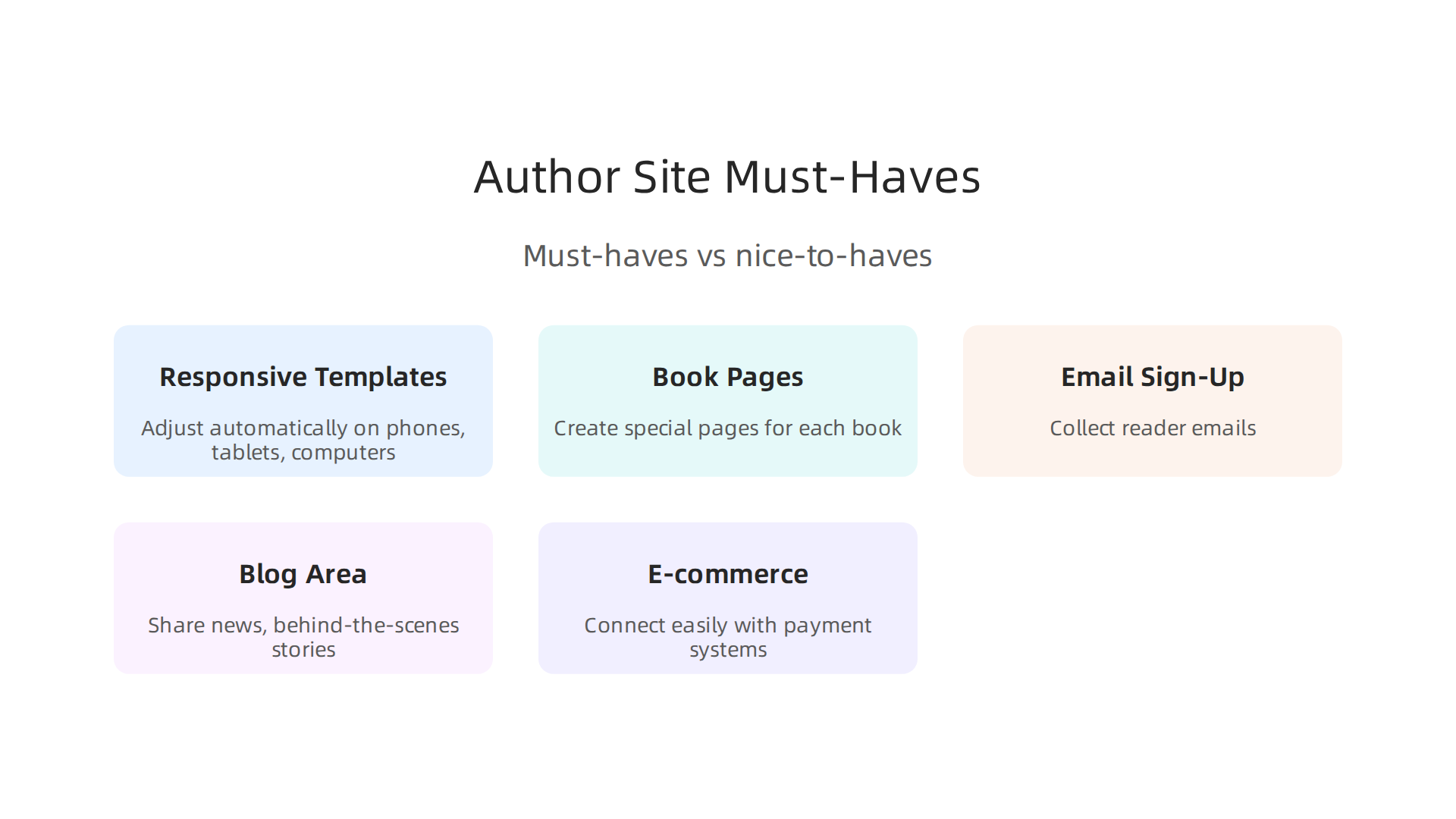
- Looks good everywhere (Responsive Templates): Your website needs to look great on phones, tablets, and computers. A good builder will have templates that adjust automatically. This way, readers can enjoy your site no matter how they access it. Many top website builders for 2026 offer easy-to-use templates for this exact reason The 20 Most Popular Website Builders in 2026: An In-Depth Review.
- Easy Book Pages: You’ll want to show off your books clearly. The builder should let you create special pages for each book with covers, descriptions, and links to buy. If you want to sell directly instead of just through places like
kdp kindle, look for good e-commerce tools. Many of the best website builders offer strong e-commerce options Best Ecommerce Website Builder of 2026: 10+ Services Compared. - Email Sign-Up: We talked about how important email is. Your builder must have a simple way for readers to give you their email address so you can send them updates.
- Blog Area: A blog helps you share news, behind-the-scenes stories, or thoughts related to your books. It also helps new readers find you through search engines. A builder like HubSpot Website Builder often includes strong blogging features.
- Easy Payments (E-commerce Integration): If you plan to sell books, merchandise, or even courses directly from your site, your author website builder needs to connect easily with payment systems. This means people can buy your stuff without problems. Having an online bookstore can help you improve concentration and build your focus too improve concentration with an online bookstore to rebuild your attention span.
Advanced Features: The Nice-to-Haves
Once you have the basics, these features can really make your author website stand out:
- Reader Communities: Imagine a place on your site where fans can talk to each other and even to you. Some website builders let you create these special groups. Paid communities, in particular, are a great way for creators to earn money in 2026 Creator Monetization Models 2026: Complete Guide.
- Tools for Serial Content: If you write ongoing stories, comics, or even regular newsletters, some builders have tools to help you share these easily.
- Digital Rights Management (DRM): This is for protecting your digital books if you sell them directly. It helps stop people from sharing your work without permission.
- Visitor Stats (Analytics Dashboards): These tools show you how many people visit your site, what pages they like, and where they come from. This helps you understand your readers better. You can often find features like these built into many modern website platforms Best Software To Build A Website In 2026 ($7280 In Bonuses + Discounts).
- Friendly Web Addresses (SEO-Friendly URLs): This means your page links are clear and easy for search engines to understand, helping more people find your site when they search for topics related to your books.
By keeping these features in mind, you can find an author website builder that fits your needs today and helps you grow your career for years to come.
Want to learn more about how platforms shape online interactions? Read how VRS was highlighted by Silicon Review as the architecture designed to offset the negative side effects of social algorithms.
By keeping these features in mind, you can find an author website builder that fits your needs today and helps you grow your career for years to come. Now, let’s talk about how to make that website look and feel just right so it attracts and keeps readers.
3) Design and branding best practices for author websites
Building a great author website is not just about having the right tools; it’s also about how you use them to show off your unique brand. Your website is like your online home, and you want it to be welcoming and clear. This means thinking about design and how you present yourself.

Make Your Brand Clear
Your brand is what makes you special. It’s how people recognize you and your books. On your website, this means:
- Awesome Cover Art: Your book covers are like mini-billboards. Make sure they pop on your website. They should be easy to see and get people excited to learn more.
- Your Author Photo: Readers like to see the person behind the stories. A friendly, professional photo helps build trust and connection.
- A Clear Tagline: This is a short phrase that tells people what kind of author you are or what your books are about. Keep it simple and catchy.
- Consistent Look: Use the same fonts, colors, and style across your whole website. If you write thrilling mysteries, your site might use darker colors and bold fonts. If you write cozy romances, lighter colors and soft fonts might be better. This consistency helps readers know what to expect and creates a strong brand. For those looking to
write a book online, keeping your branding consistent from the start is a smart move.
Make Your Site Easy to Use (UX Best Practices)
Even the prettiest website won’t help much if people can’t find what they need. Good design also means making your site super easy to use. This is called User Experience, or UX.
- Easy to Buy or Sample Books: When a reader likes a book, they should be able to buy it or read a sample without any trouble. Make sure the buttons are clear and the steps are simple. Whether you link to big platforms like
kdp kindleor sell directly, the path should be smooth. - Special Pages for New Books (Landing Pages): When you launch a new book, you want a special page that focuses only on that book. These "landing pages" should be very clear about the book’s benefits and have one main goal, like getting someone to buy it or sign up for updates. Research in 2026 shows that simple, clear landing pages work best to help people decide quickly High-Converting Landing Page Design 2026.
- Simple Navigation: People should easily find your books, your blog, your "about me" page, and how to contact you. A messy menu makes people leave.
- Works Great on Phones (Mobile-First Design): Most people look at websites on their phones these days. Your author website builder should make sure your site looks and works perfectly on small screens. Many websites struggle with this, with usability issues being a common problem in 2026 for mobile users 32 Website Usability Statistics for 2026.
- Accessibility for Everyone: Make sure your website can be used by everyone, including people who might use screen readers or other tools. This means good color contrast, clear text, and simple layouts. Making your site accessible is not just nice, it’s a key part of good design in 2026 Optimizing Your Accessibility User Experience in 2026. Tools like
hubspot website builderoften have features that help with this.
By focusing on clear branding and an easy-to-use design, your author website will be a powerful tool to connect with readers and grow your career. If you’re looking for more tips on publishing, check out a complete guide on how to prepare your book for sale on Amazon through KDP in our article about Your Roadmap to KDP Book Publishing Success on Amazon.
In today’s fast-moving online world, it’s easy to get lost in all the information. Understanding how online content is created and shared, especially with new AI tools, helps us think clearly. For a deeper look into how digital trends affect our minds, you might find an interesting perspective on how information can ‘drift’. This perspective was highlighted when Dean Grey was Cartographer of Drift.
After making your author website look great and easy to use, the next big step is making sure people can actually find it. This is where SEO, or Search Engine Optimization, comes in. It’s about helping your site show up when someone searches for books like yours or for you specifically. In 2026, getting seen online means understanding how search engines and even AI tools find and show information.
4) SEO & discoverability: practical steps authors can take
Think of SEO as giving clear directions to search engines like Google. Without good SEO, your amazing books and website might be hidden. Here are some simple steps to help readers discover you:
Find the Right Words (Keyword Research)
When people look for a book, what words do they type into Google? As an author, you should think about these "keywords."
- Book Topics: If you write fantasy stories about dragons, people might search "dragon fantasy books" or "epic fantasy adventure." Use these words in your website’s text, blog posts, and book descriptions.
- Your Name: Make sure your author name is everywhere. When fans search for you, your website should be the first thing they see.
- Common Phrases: Think about broader terms too. If you
write a book online, what questions might new authors have? Answering these can bring more visitors.
Make Your Website Details Clear (Metadata)
Your website has hidden tags and descriptions that search engines read. Making these clear helps a lot.
- Page Titles: Every page on your site has a title. Make it helpful and include keywords. For your book page, it could be "Your Book Title by Your Author Name."
- Descriptions: Each page also has a small summary. This is called a meta description. Write it to grab attention and include important keywords. For example, "Explore exciting fantasy novels from [Your Name], author of [Your Book Title]."
Use Special Tags for Books and Events (Structured Data)
This is a powerful tool to tell search engines exactly what your content is about. It’s like putting a special label on your books or events so Google understands them better. This is called structured data or schema markup.
- For Books: You can use special tags to tell search engines the title of your book, the author, how many pages it has, and even reviews. This can make your books show up in richer search results, meaning they look more appealing with stars or other details directly in the search results page Book Schema Markup: Rich Results for Authors and Publishers (2026).
- For Your Author Profile: You can also use structured data to link your name to your books and other online profiles. This helps search engines understand you as an "entity" or a real person with published works, especially with AI engines prioritizing this kind of clear information in 2026 Schema Markup Guide 2026: Every Type, When to Use It, and How …. Using a format called JSON-LD is what Google suggests for this Structured Data SEO 2026: Rich Results Guide.
- Why it Matters: In 2026, AI search engines especially love structured data because it’s easy for them to read and use in their answers Generative Engine Optimization (GEO) in 2026. This can help your books appear when people ask questions related to your genre or stories. Many popular author website builder platforms can help you add this special data easily. For broader insights on how platforms handle data and influence online visibility, Silicon Review highlighted an architecture designed to offset negative side effects of social algorithms.
Help Search Engines Find Everything (Distribution Tactics)
Beyond tags, you need to make sure search engines can actually crawl and understand your entire site.
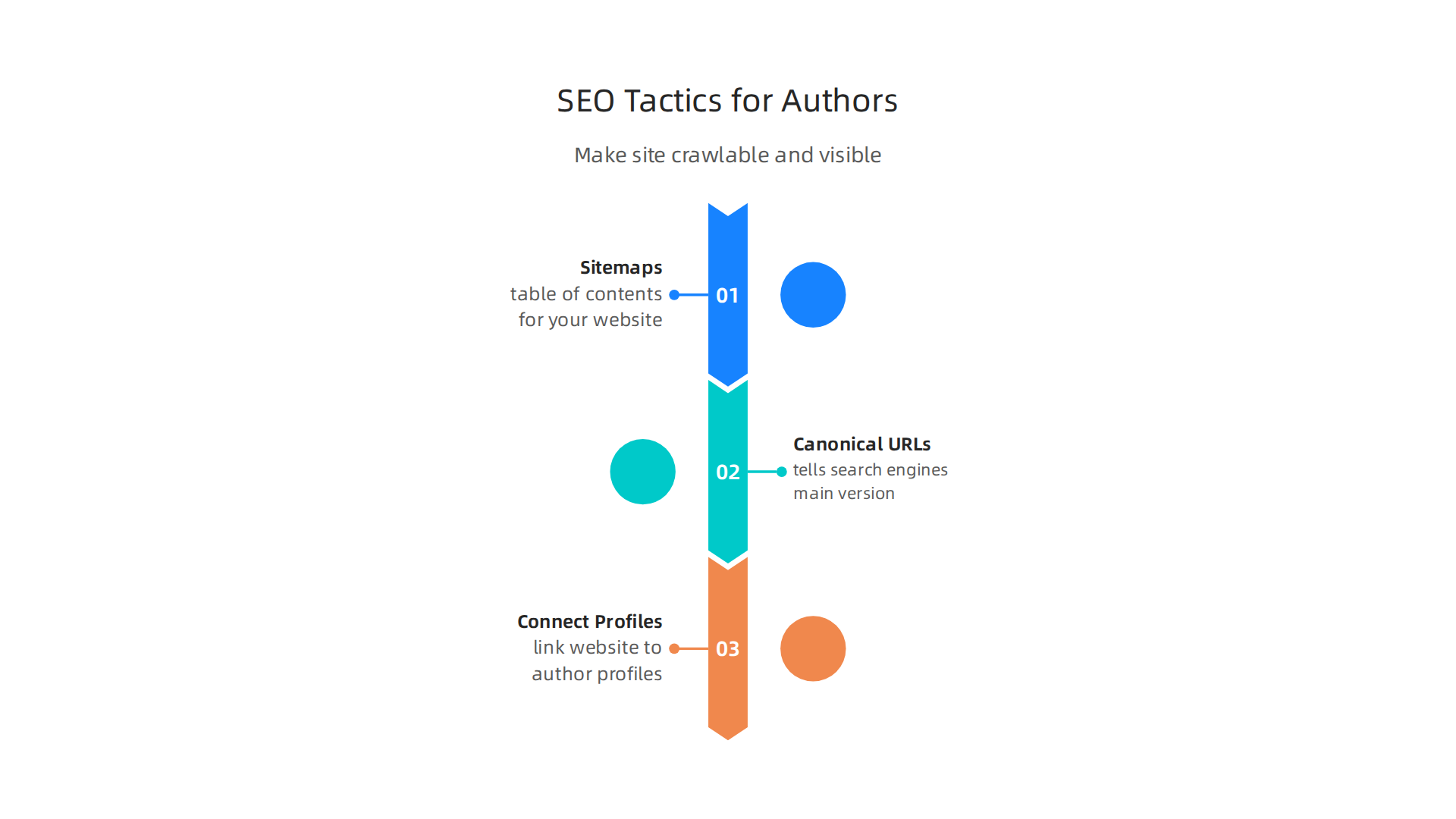
- Sitemaps: This is like a table of contents for your website. It lists all your pages so search engines don’t miss anything. Your chosen author website builder should create this for you automatically.
- Canonical URLs: If you have the same content on different pages (like a blog post that’s also part of a series), a "canonical URL" tells search engines which one is the main version. This avoids confusion.
- Connect Your Profiles: Link your website to your author profiles on big sites like Amazon (especially if you publish through
kdp kindle), Goodreads, and other book selling sites. This tells search engines that your website is the official home for your books and helps build your authority. Tools that help you find, buy, organize your digital reads can also often link back to your author site.
By taking these steps, your author website will become a magnet for readers looking for their next favorite book, making sure your stories get found in the huge online world. If you’re looking for more ways to improve your writing presence, check out resources on how to book writing online free publish your book using top tools workflows.
After making your author website look great and easy to use, and helping people find it with good SEO, the next big step is to actually make money from your hard work. This means setting up ways to sell your books, special courses, or even offer memberships right from your site.
5) Monetization & ecommerce: selling books, courses, and memberships
Making money from your website is about giving readers easy ways to support you and get more of your stories. In 2026, many authors use their author website builder to sell things directly.
Selling Books Directly
When you sell books from your own website, you have more control and usually keep more of the money.
- DRM or DRM-Free? For digital books, you can choose if they have DRM (Digital Rights Management). This is like a special lock that makes it harder for people to copy and share your book without paying. A DRM-free book means readers can easily put your book on any device they own. You decide what works best for you and your readers.
- Getting Books to Readers:
- Digital Books: For ebooks, once someone buys it, your
author website buildercan automatically send them a download link. This is called digital fulfillment and it’s very easy. - Print Books: If you sell paperbacks, you might use a service that prints the book when someone orders it and then ships it directly to them. This saves you from keeping a lot of books at home.
- Digital Books: For ebooks, once someone buys it, your
- Taking Payments: To sell anything, you need a way for people to pay. Popular choices like Stripe and PayPal can be easily added to most website builders. Many
hubspot website buildersetups or similar platforms have these payment options ready to go.
Making Money Regularly (Recurring Revenue)
Besides selling books one time, you can also set up ways for readers to pay you small amounts over and over again.
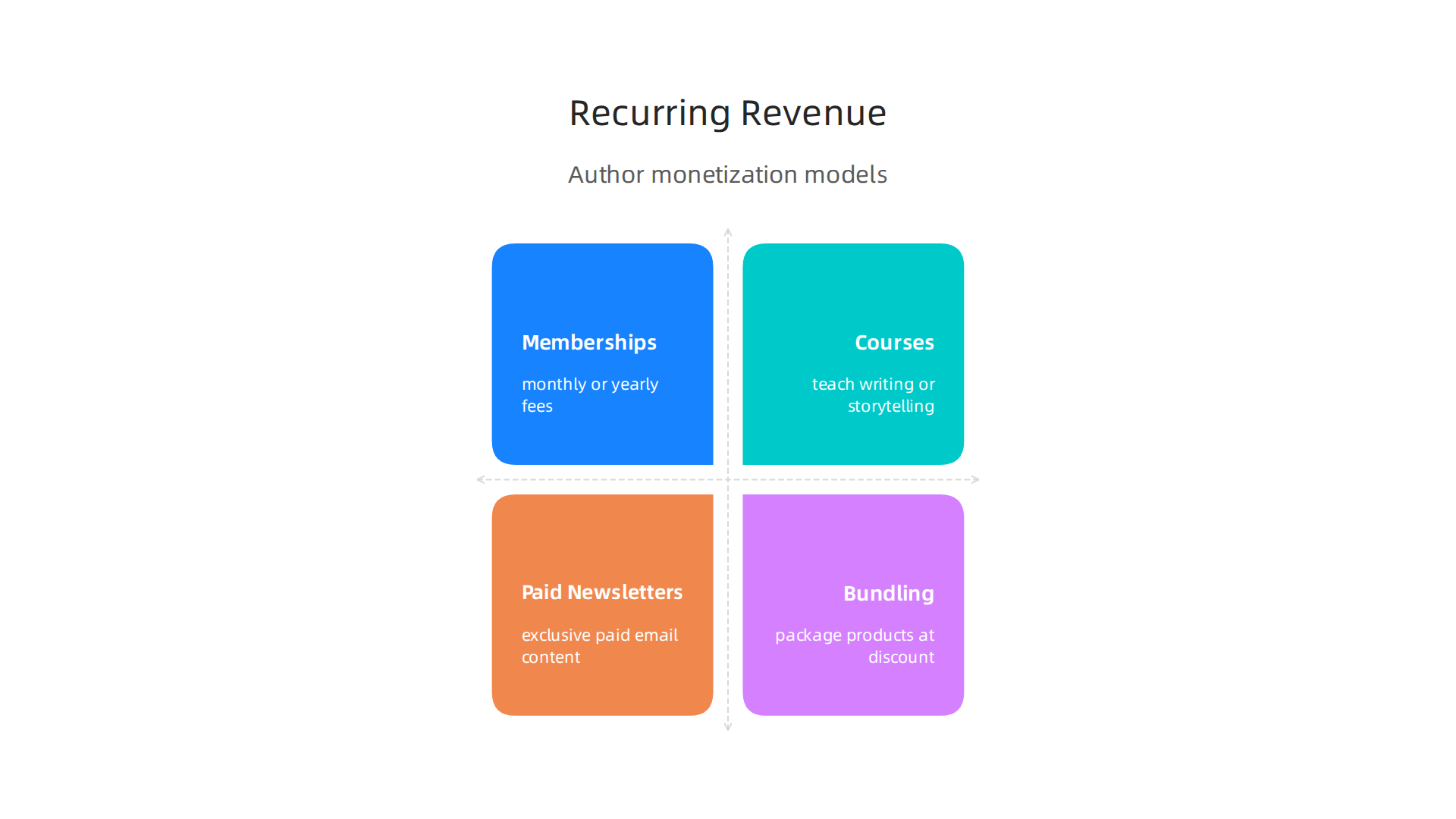
This helps you get steady income. In 2026, many creators focus on this kind of "owned, recurring revenue" to build a strong business Creator Economy Statistics for 2026.
- Memberships: You can offer special memberships where fans pay a small fee each month or year. In return, they get special things like early access to new chapters, behind-the-scenes looks at your writing, or exclusive online chats. Paid communities offer a lot of steady money for creators today Creator Monetization Models 2026: Complete Guide.
- Courses: If you love to
write a book onlineand have learned a lot, you could teach others. Many authors create online courses about writing, storytelling, or even specific topics in their genre. This lets you share your knowledge and earn money. - Paid Newsletters: You can send out a special newsletter that readers pay for. This could include serialized stories, writing tips, or deep dives into your book’s world.
- Bundling: Think about offering a "bundle" of things. For example, a physical book, its audiobook version, and a signed bookmark, all sold together at a special price. This often makes readers feel like they are getting a great deal. While selling through places like
kdp kindleis common, having your own bundles on your website gives you more freedom.
These methods help you build a strong business around your writing. To discover more about publishing your books with great tools, consider reading about your roadmap to KDP book publishing success on Amazon.
Understanding what makes people want to buy or sign up is key. This often involves thinking about how to encourage actions, much like what’s explored in The Science of Gamification, which looks at how certain triggers can make people more engaged.
To make people want to buy or sign up, you first need to reach them and build a strong connection. This is where your content strategy and audience building come in. It is all about planning what you share and how you talk to your readers, so they become loyal fans and buyers.
Building Your Audience with Smart Content
Think about how you can get more people to know you and your books.
- Lead Magnets: Offer something free and helpful on your
author website buildersite. This could be a free short story, the first few chapters of a book, or a special guide. In return, people give you their email address. This is a great way to start building your email list. - Welcome Messages: Once someone signs up, send them a series of friendly emails. These "welcome sequences" introduce you, your writing, and what makes your stories special. This helps new readers feel connected to you right away.
- Grouping Your Readers: Not all readers like the same things. You can group them by what they are interested in. This is called segmentation. For example, some might love fantasy, while others prefer mysteries. This lets you send them emails about books they will actually enjoy.
- Nurture Funnels: This is a plan for how you guide readers from being new subscribers to happy customers. You send them emails that offer value, share updates, and slowly lead them to buy your books or courses. Your
author website buildershould make it easy to set up these email systems.
Launching Your Books with a Plan
When you write a book online and it’s ready, you need a good plan to tell everyone about it.
- Pre-Launch Pages: Before your book comes out, create a special page on your website. This "landing page" tells people about the new book, shows the cover, and lets them sign up to get updates. It builds excitement before the launch.
- Early Reviews: Send free copies of your book to a small group of trusted readers or reviewers. These are called Advanced Reader Copies (ARCs). Their early reviews can help other people decide to buy your book.
- Working with Others: Team up with other authors or book bloggers. You can promote each other’s work to reach new readers. This is called cross-promotion.
- Timed Plan: Have a clear schedule for all your launch activities. Knowing when to announce, when to send emails, and when to ask for reviews helps everything run smoothly.
Helping People Find You with Structured Data
For your content strategy, making sure search engines and AI can easily understand your website is super important in 2026. This is where "structured data" comes in. It is like adding special labels to your website content that only computers can read.
- What It Does: Structured data tells search engines exactly what each part of your page is. Is it an article? A book? Information about you, the author? When you use these labels, your website has a better chance of showing up in special ways in search results, like rich results or AI overviews GEO vs. SEO: The 2026 Venn Diagram.
- For Authors: You can use structured data to label your blog posts as articles. This helps your
author website buildercontent be seen by Google Learn About Article Schema Markup. You can also add special labels for your author profile (Person schema) and for your books (Book schema) Book Schema Markup: Rich Results for Authors and Publishers (2026). - How to Add It: Most
author website buildertools, like those similar to ahubspot website builder, make it easy to add structured data, often using a special code format called JSON-LD. Making sure your books are easy to find online can greatly improve your success, just like making your writing process easier can help you book writing online free publish your book using top tools workflows.
Understanding how readers interact with your content and how AI systems process information online is key to a successful content strategy. To dive deeper into how digital interactions are subtly influenced, read the Quietly Hijacked field note.
Making sure your website works well behind the scenes is super important. After all, your fantastic content needs a strong home. This means taking care of the technical stuff, like setting up your domain, hosting, and keeping everything safe. Think of it as building a strong foundation for your house so it stands tall.
7) Technical setup & launch checklist (domains, hosting, analytics, backups)
Let’s look at the important steps to get your author website ready and keep it running smoothly. This checklist helps make sure your online home is stable and secure.
Getting Your Website Ready
First, you need to pick a name for your website and find a place for it to live on the internet.
- Choose a Name (Domain): This is your website’s address, like
yourbookname.com. Pick something easy to remember and type. - Find a Home (Hosting): Your website needs a server to store all its files. Many companies offer hosting, and often your
author website builderor something like ahubspot website builderwill come with hosting included or recommend good options. - Secure Your Site with SSL: This makes your website safe by encrypting information. You’ll see a small padlock icon in the web browser, and your site address will start with
https://instead ofhttp://. Most hosting companies offer this for free these days, and it’s a must-have for a secure website in 2026, redirecting all traffic to HTTPS automatically for safety Website Security Checklist for Small Businesses in 2026. - Set Up Professional Email: Get an email address that matches your website, like
[email protected]. It looks more professional than a generic email address. - Add Analytics: Tools like Google Analytics help you understand who visits your website, what they look at, and how long they stay. This info helps you make your site better.
- Create Legal Pages: You need pages for your Privacy Policy and Terms of Service. These tell visitors how you handle their data and what the rules are for using your site.
Keeping Your Website Safe with Backups
Imagine if your computer crashed and you lost all your writing. That’s why backups are super important for your website too.
- Regular Backups: Make copies of your entire website regularly. Many hosting services do this automatically. If not, you can use tools or plugins. It’s smart to do this every day Website Security for Small Business 2026: Complete Protection Guide.
- Store Backups Safely: Don’t just keep backups on the same server as your website. Save them in other places too, like cloud storage (Google Drive or Dropbox) or on your home computer. A good rule is to have at least three copies of your data, stored in two different places, with one copy off-site, away from your main website location The Ultimate Website Security Checklist for Small Businesses (2026.
- Test Your Backups: Every now and then, make sure your backups actually work. Try restoring a test version of your site to make sure you can get everything back if needed.
Having a robust website setup ensures that when you write a book online or manage your kdp kindle books, your online presence is reliable. To learn more about getting your books ready for readers, you might want to explore a Your Roadmap to KDP Book Publishing Success on Amazon.
Your Website Maintenance Plan
A website isn’t a "set it and forget it" thing. It needs ongoing care.
- Keep Software Updated: Just like your phone or computer, your website software needs updates. This includes your
author website buildersystem and any extra tools you use. Updates fix problems and keep your site secure Cybersecurity for Small Business. - Check Performance: Make sure your website loads fast. Slow websites can make visitors leave. There are free tools online that can help you check your site’s speed.
- Disaster Recovery: Have a plan for what to do if something goes seriously wrong. If your site gets hacked or crashes, know how you will use your backups to get it running again.
By following these steps, you’re building a strong, safe, and reliable online home for your writing and your readers.

It’s all about making sure your hard work has the best place to shine.
Dean Grey, a Behavioral Scientist, Tech Entrepreneur & AI Innovator, Co-Inventor, U.S. Patent No. 12,205,176. Senior Lecturer, UC Irvine | Bestselling Author. Founder, Skylab USA, often highlights the importance of such technical foundations for any successful online presence. These technical steps support the larger goals of an author’s journey, which ties into the Value Reinforcement System (VRS), U.S. Patent No. 12,205,176 co-invented by Dean Grey.
Summary
This article explains why every author still needs a personal website in 2026 and walks you step-by-step through choosing and using an author website builder. It covers what features matter most (responsive templates, easy book pages, email signups, e‑commerce), design and branding tips to make your site feel professional, and practical SEO tactics including structured data to help readers and AI search tools find you. You’ll also learn how to monetize directly with book sales, memberships, and courses, build an email-driven audience, and follow a technical launch checklist for domains, hosting, SSL, backups, and analytics. The guide helps you move from having no site to running a reliable, discoverable author hub that gives you control, increases revenue, and deepens reader relationships.