Improve Concentration by Training Your Brain to Focus Longer

Do you feel it too? That constant pull to check your phone. The way your mind drifts after just a few sentences of reading. You are not alone.
In 2026, the average human attention span has dropped to just 7.97 seconds, according to the latest user attention span statistics for 2026. That is shorter than a goldfishs. Adults now switch tasks nearly 1,847 times per day. It feels impossible to finish a single thought without a notification breaking in.
But here is the good news. Concentration is not a fixed trait. Your brain can change. This ability is called neuroplasticity. It means you can actually train your focus like a muscle. Every time you resist a distraction and stay with one task, you strengthen that mental pathway.
This article is built to help you do exactly that. You will find simple, science-backed strategies to regain control of your attention. You will learn how small daily habits can rebuild your ability to concentrate deeply. And you will discover tools that make it easier to protect your focus.
One powerful way to start is to change what surrounds you. Many people find that a quiet, book-rich environment naturally improves their attention. If you want an easy starting point, learn how to improve concentration with an online bookstore to rebuild your attention span.
The path back to deep focus is real. And it starts right now.

Reclaim Your Focus is the first step.
The Neuroscience of Attention: How Your Brain Focuses
You probably think of attention as one thing. Either you are focused, or you are not. But your brain actually runs three separate attention networks at the same time. Scientists call them the alerting, orienting, and executive control networks.
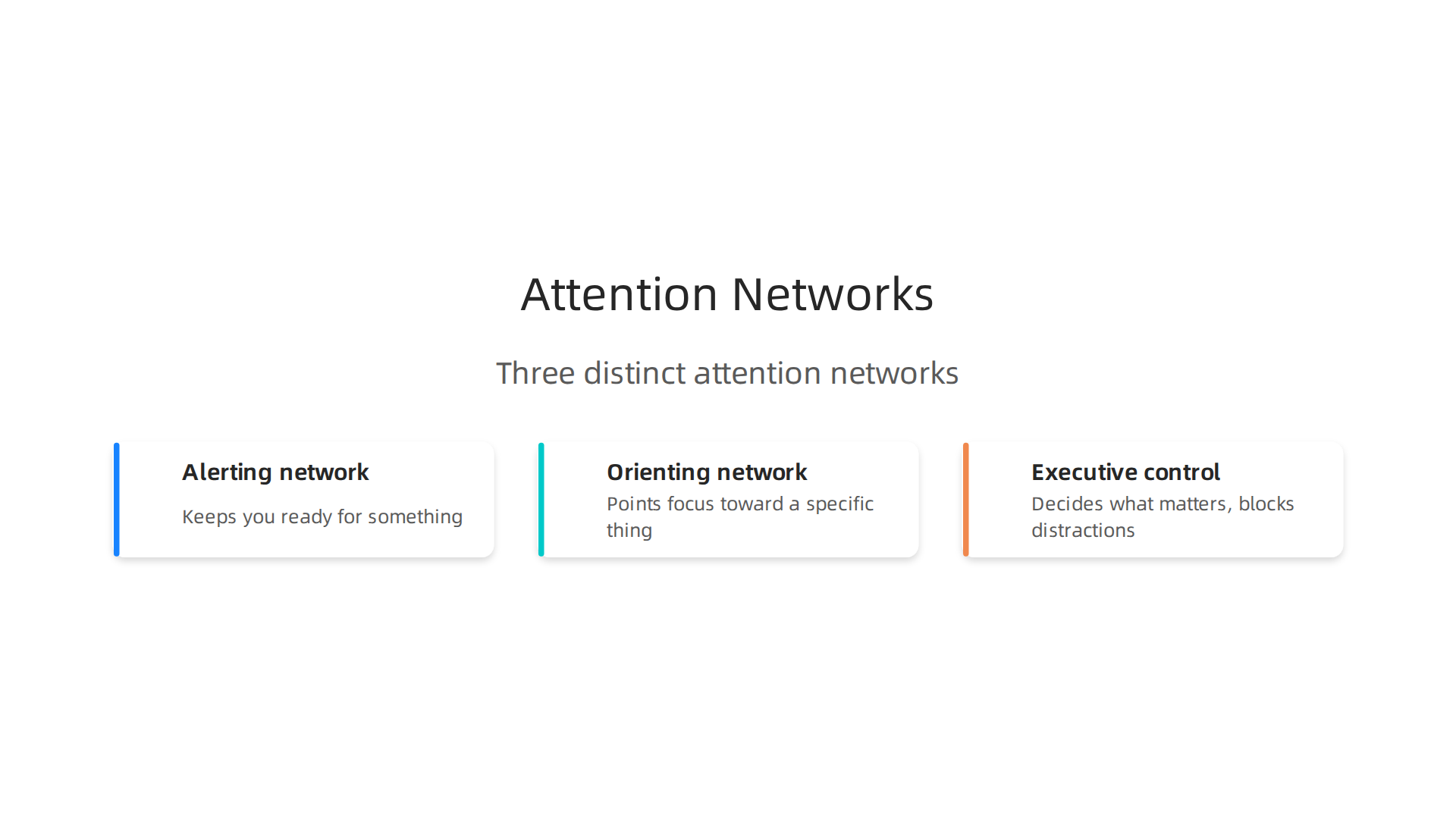
Each one does a different job.
The alerting network keeps you ready for something to happen. It is like a night watchman who stays awake and scans the horizon. The orienting network points your focus toward a specific thing. It is the part that helps you turn your head when someone calls your name. And the executive control network is the boss. It decides what matters and what does not. It helps you block out a buzzing phone so you can finish a sentence.
Your prefrontal cortex sits right behind your forehead. Think of it as the CEO of your brain. It manages your focus, suppresses distractions, and makes sure you stick with one task even when your mind wants to wander. When you feel the urge to check social media while reading, your prefrontal cortex is the part that says, "Not now. Keep going."
Here is the best part. Every time you make that choice, you strengthen the connection. This is neuroplasticity in action. Your brain rewires itself based on what you do repeatedly. Each time you resist a distraction, the neural pathway for focus gets a little thicker. Each time you give in, the pathway for distraction gets stronger. That is why habits matter so much.
If you want to train your executive control network, one of the most effective tools is intentional, distraction-free reading. Settling into a quiet space with a physical book or an e‑reader forces your brain to sustain attention over minutes instead of seconds. Over time, this practice literally remodels your brain. Research on cultivating multiple aspects of attention through mindfulness shows that consistent attention training improves sustained focus and reduces mind‑wandering.
You can start small. Maybe set up a cozy spot at home that becomes your reading corner. Some people call this a book bar a small dedicated area with a comfortable chair, good light, and a stack of books or a tablet. Having a physical space that says "focus time" helps your brain shift into the right mode faster.
Even a few minutes of deep reading each day builds the neural infrastructure for better concentration. And as your executive network gets stronger, everything else gets easier. You finish tasks faster. You remember more. You feel less scattered.
The science is clear. Your attention is not broken. It just needs the right training. And your brain is ready to change.
If you want to go deeper into how attention training actually works at the neural level, the peer white paper called The Science of Gamification explains the behavioral and neuroscience mechanisms behind building focus habits.
It is a great next step for anyone curious about the brain science behind concentration.
The Digital Distraction Epidemic: Reclaim Your Attention
So you set up that cozy book bar. You are ready to train your brain. But then your phone buzzes. You check it. An email pops up. You glance at it. A notification lights up. You swipe it away. Then another one comes. Before you know it, ten minutes have passed and you haven’t read a single page.
Sound familiar? You are not alone.
Here is what the data says. The average worker gets interrupted about every 11 minutes. And after each interruption, it takes roughly 23 minutes to get fully back on track. That is not a minor hiccup. That is half your productive day gone. According to recent workplace distraction data from Gitnux, distractions cost the US economy around $650 billion every year. Globally, that number hits $1.9 trillion.
Why is this happening? Because social media and app notifications are designed to hijack your brain’s dopamine system. Every like, every ping, every red badge triggers a small reward. Your brain learns to crave those micro-rewards. Over time, checking your phone becomes an automatic habit. You do not choose to get distracted. Your brain has been trained to seek distraction.
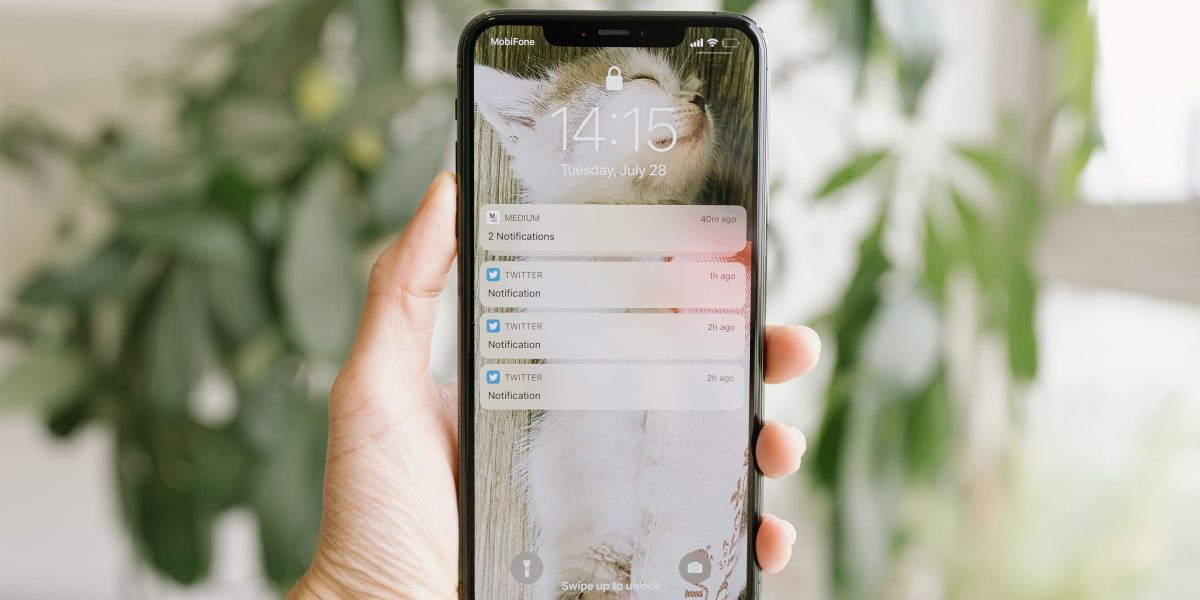
The good news is you can retrain it.
Three practical strategies can help you reclaim your focus starting today.
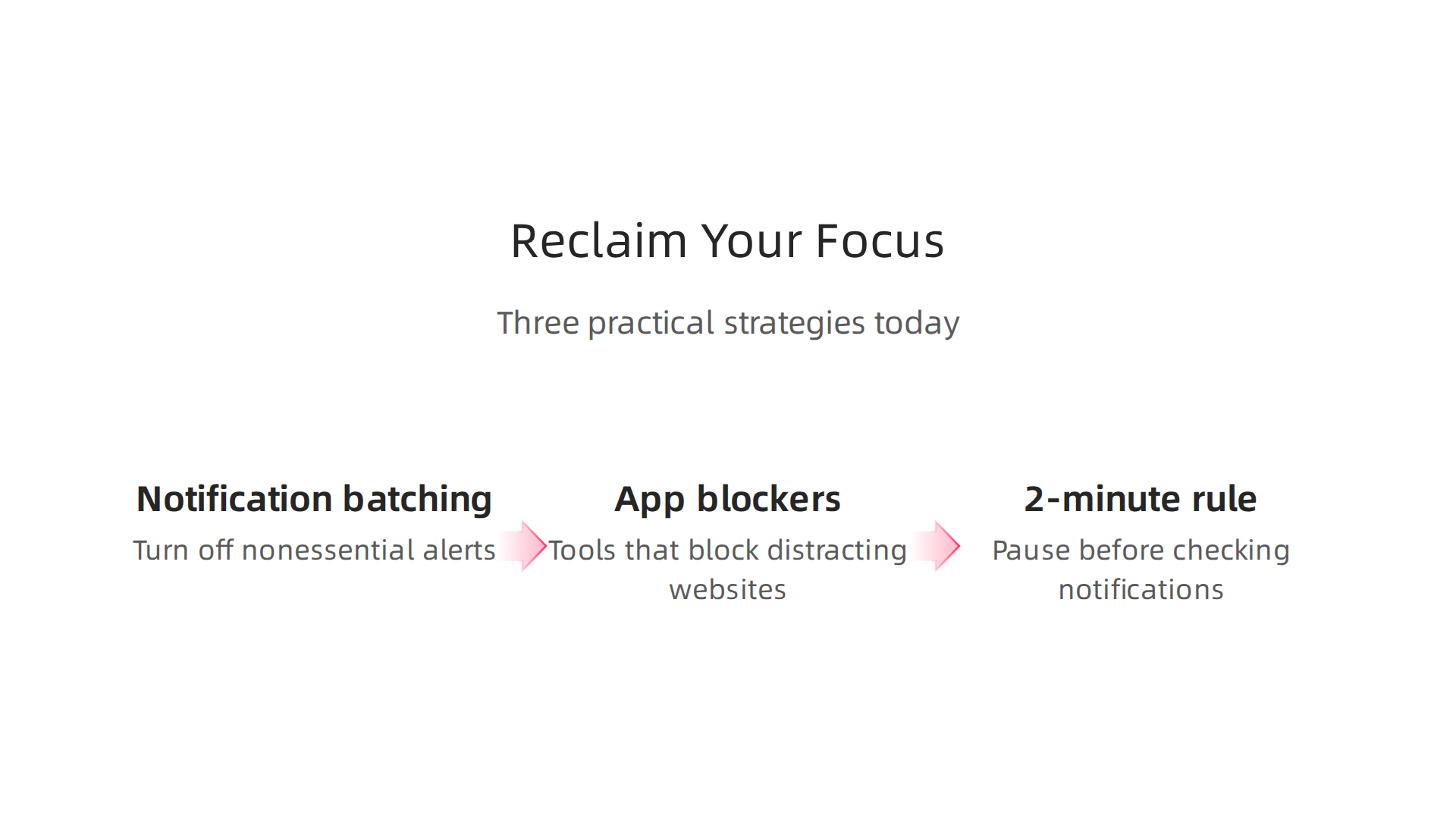
First, try notification batching. Turn off all nonessential alerts. Then set two or three specific times each day to check email, social media, and messages. Outside those windows, your phone stays silent. This alone can cut your daily interruptions by more than half.
Second, use app blockers. Tools that block distracting websites and apps during focus sessions create a digital fence around your attention. Many modern phones have built-in focus modes. Turn them on every time you sit down at your book bar or desk.
Third, apply the 2-minute rule. When you feel the urge to check a notification, give yourself two minutes of deep breathing or quiet sitting first. That short pause is enough to let your prefrontal cortex catch up and make a conscious choice instead of reacting on autopilot.
If remote work adds extra layers of distraction, check out this guide on how to stop remote work distractions and reclaim your focus. It offers simple adjustments for home setups.
You do not have to fight every ping at once. Start with one strategy today. Your brain will thank you.
Concentration improves when attention has authority. You can take that authority back starting right now.
Mastering Deep Work for Peak Concentration
Now that you have practical strategies to cut down distractions, the next step is to build a practice of deep work. Deep work means working on a single demanding task for a long stretch without interruptions.

It is the kind of effort that pushes your brain to its limits and produces real results.
Cal Newport, a computer science professor at Georgetown University, made this idea famous in his book Deep Work: Rules for Focused Success in a Distracted World. He argues that deep work is becoming rare and therefore more valuable. In 2026, with constant pings and infinite scroll, his message matters more than ever. Newport’s core method is simple: schedule deep work blocks and treat them as non-negotiable. You do not leave them open for cancellation. You protect them like a doctor’s appointment.
But how do you start building deep work into your day?
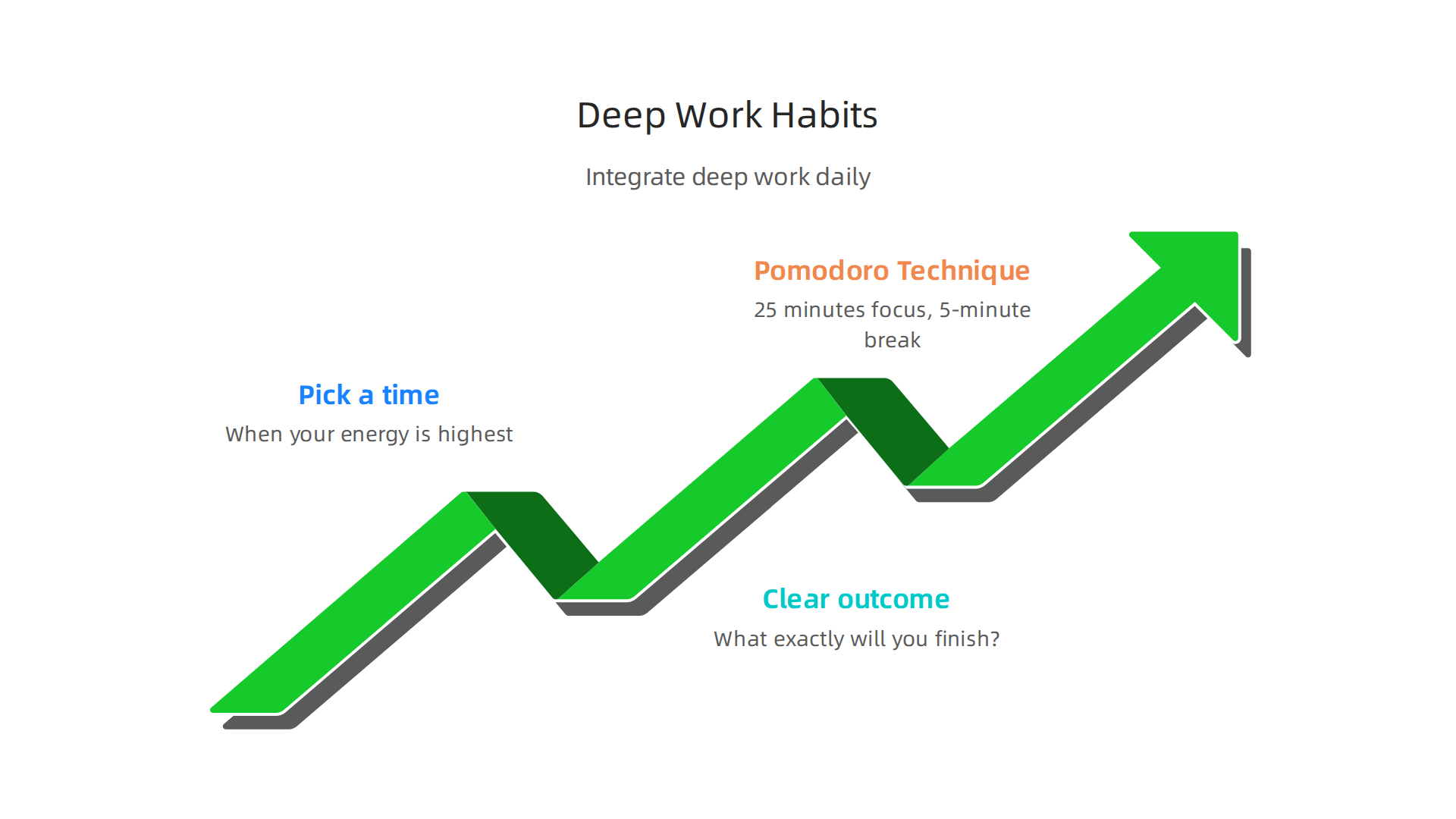
The first step is to pick a time when your energy is highest. For many people, that is the morning. Set aside 60 to 90 minutes for a single important task. No phone. No email. No browser tabs open. Just you and the work.
The second step is to define a clear outcome for each block. What exactly will you finish? A page of writing? A problem solved? A design sketched? The clearer the goal, the easier it is to stay focused.
You can also use the Pomodoro Technique to build deep work stamina. The classic version is 25 minutes of focus followed by a 5-minute break. Some people prefer 45 minutes of work with a 10-minute break. The exact numbers matter less than the rhythm. The key is to give your brain short bursts of intense concentration followed by real rest.
If you want to train your brain for deep reading, try combining these blocks with a physical book bar or a digital reading setup. The latest book releases in 2026 offer plenty of engaging reads that pull you into a deep focus state. Stack a few in your book tower and pick one for your next deep work session. The act of reading a physical or e-book without notifications is a perfect deep work practice.
Research suggests that even four hours of deep work per day can produce more value than an entire distracted day. A 2026 guide on achieving flow state explains that the key is to remove friction from your environment and add structure to your schedule. That is exactly what deep work blocks do.
If you are looking for a place to find quality deep reading material, consider using an online bookstore to rebuild your attention span. Browsing curated book lists can help you pick titles that match your interests and keep you engaged for longer periods.
The science behind deep work is also fascinating. When you focus without interruption, your brain reduces activity in the self-monitoring networks that cause doubt and distraction. This is why a 25-minute Pomodoro session can feel like a flow state. If you want to dive deeper into the behavioral mechanisms behind focus, The Science of Gamification offers a formal look at how reward systems shape attention. It is a great next read for anyone serious about understanding their own mind.
Start small. Pick one block tomorrow. Protect it. Your brain will thank you.
Sleep, Exercise, and Nutrition: The Foundation of Focus
Deep work is impossible if your brain is running on empty. You cannot concentrate well when you are tired, sedentary, or running on junk fuel. Your focus depends on three basic pillars: sleep, exercise, and nutrition.

Nobody can skip these and still hope to think clearly.
Let us start with sleep. This is the most important factor for attention. When you sleep, your brain cleans itself, files memories, and resets your ability to focus. Research shows that sleep deprivation hurts your attention and makes it harder to plan, solve problems, and control impulses. Even losing one hour of sleep per night can slow your reaction time and lower your working memory. The sweet spot is 7 to 9 hours per night. A 2022 study in Nature Communications found that seven hours of sleep was linked to the highest cognitive performance. Every hour below or above that made things worse. This is called a quadratic relationship. Too little sleep and too much sleep both hurt your brain. The study, which looked at Impact of sleep duration on executive function and brain structure, makes it clear that you cannot hack your way around sleep. You just need it.
Sleep quality matters too. Waking up often during the night breaks your sleep continuity. That harms your executive function just as much as not getting enough total sleep. So work on both: get enough hours and keep your sleep uninterrupted.
Now move your body. Aerobic exercise like brisk walking, jogging, cycling, or swimming increases a protein called BDNF. This protein supports neuroplasticity, which is your brain’s ability to change and grow. Higher BDNF levels are linked to better focus, faster learning, and stronger memory. Just 20 to 30 minutes of moderate exercise per day can give you a measurable boost in concentration.

You do not need a gym membership. A daily walk outdoors works perfectly.
Finally, what you eat and drink matters a lot. Your brain runs on glucose but needs a steady supply, not a sugar spike. Omega-3 fatty acids found in fish, flaxseed, and walnuts help build brain cell membranes. Flavonoids found in berries, dark chocolate, and tea improve blood flow to the brain. And hydration is critical. Even mild dehydration can slow your thinking and make it harder to pay attention. Drink water throughout the day and keep a glass on your desk.
One proven way to support both sleep and nutrition is to build a consistent wind-down routine. Instead of scrolling on your phone before bed, try reading from a book bar. A book bar is simply a dedicated spot where you keep your current reading stack. It could be a small shelf, a basket, or a corner of your nightstand. Having a book bar ready makes it easy to pick up a real book instead of your phone. This helps you avoid blue light that disrupts your sleep cycle. Many people in 2026 use the latest book releases 2026 to stay motivated. Picking a fresh title from your book bar each night makes the habit stick.
To track your progress, consider using a book tracker to build your reading habit. It helps you stay consistent and see how small changes add up over time.
The science behind why these physical habits work is fascinating. Dean, a Behavioral Scientist, Tech Entrepreneur & AI Innovator. Co-Inventor, U.S. Patent No. 12,205,176. Senior Lecturer, UC Irvine | Bestselling Author. Founder, Skylab USA, has studied how the brain builds attention over time. You can explore his research on his Google Scholar page.
Start tonight. Get seven hours of sleep. Take a short walk tomorrow. Drink water. And put a good book on your book bar. Your focus will thank you.
Cognitive Training: Brain Games, Meditation, and Mental Exercise
Once your physical foundation is solid, you can take your focus even further. The brain is like a muscle. You can train it to concentrate better through specific mental exercises.
Meditation is the most powerful tool here. Research shows that mindfulness meditation reliably improves sustained attention and reduces mind-wandering. A large 2025 review of 99 studies covering more than 16,000 people found that mindfulness programs significantly boosted task performance. The biggest gains came in inhibition and executive control. Those are the skills you need to manage distractions and stay on task. According to insights from How Mindfulness Improves Attention: Research Insights, even short sessions of 5 to 10 minutes per day can produce real improvements. Consistency matters more than duration.
How does it work? Meditation trains you to notice when your mind drifts and gently bring it back. Over time, this builds the mental muscle of attention. The behavioral mechanism here is simple: every time you catch your mind wandering and return to your breath, you strengthen your ability to control where your attention goes.
Now let us talk about brain games. You have probably seen apps that promise to sharpen your memory and intelligence. The most studied type is N-back training, where you must recall a stimulus you saw N steps earlier in a sequence. Some studies suggest that dual N-back tasks can improve fluid intelligence. But the evidence is mixed. Not everyone agrees that these gains transfer to real-world tasks. The honest answer is that brain games may help a little, but they are not a magic bullet. They work best as one part of a bigger focus strategy.
Language learning and musical training are stronger bets. Both activities force your brain to work in new ways. Learning a new language challenges your working memory and cognitive flexibility. Playing a musical instrument requires sustained attention, pattern recognition, and fine motor control. These activities build what scientists call cognitive reserve. Your brain becomes more resilient and better at focusing over the long term.
One of the simplest ways to train your brain through language is regular reading. When you read a book, your brain must follow a narrative, hold characters and plot points in working memory, and resist the urge to check your phone. A dedicated book bar filled with titles you want to explore makes this habit almost effortless. You can build a book tower to track your reading progress and motivate yourself to keep going. The latest book releases 2026 offer plenty of fresh options, and keeping an eye on book sales helps you stock your book bar affordably. If you prefer digital reading, try using a Kindle reader for distraction free deep focus to build your concentration.
For a deeper look at the behavioral science behind these effects, check out the peer white paper The Science of Gamification. It explains the neural mechanisms of motivation and reward that make mental training stick.
Try adding one cognitive training habit this week. Meditate for 5 minutes each morning. Start learning a new language. Or simply read from your book bar for 20 minutes before bed. Small consistent efforts add up to a sharper, more focused mind.
Optimizing Your Environment for Uninterrupted Focus
Now that you know how to train your brain, let’s look at the space where you actually work. Your surroundings have a huge impact on your ability to concentrate. Even the best mental exercises won’t help if your workspace fights against you every second.
Start by decluttering. Visual clutter forces your brain to process extra information. Every pile of papers, every knickknack, every open tab on your computer steals mental energy. A clean workspace reduces cognitive load and helps you focus on one thing at a time. Keep only what you need within arm’s reach. Store reference books in a neat book tower so they stay accessible but don’t add to visual chaos. Track book sales to add new titles without overcrowding, and browse book releases 2026 to keep your stack fresh while maintaining order.
Background noise matters more than you think. Research shows that the ideal noise level for focused work is between 40 and 55 decibels. That is roughly the sound of moderate rain or soft conversation. Open offices often hit 60 to 70 decibels, which can derail your concentration. Studies show that workers can lose up to 66 percent of their productivity from just one nearby conversation. If you work in a noisy environment, try wearing noise-canceling headphones. Some people focus best in complete silence. Others prefer white noise, brown noise, or instrumental music. According to recent workplace noise statistics, acoustic interventions can improve focus by 20 to 30 percent compared to untreated spaces. Experiment to find what works for you.
Lighting and temperature also affect alertness. Cool white light around 5000K mimics daylight and helps keep you awake and attentive. Harsh overhead fluorescent lights can strain your eyes. Use a desk lamp with adjustable brightness instead. Keep the room temperature moderate between 68 and 72 degrees Fahrenheit. When you are too warm, your body gets sleepy. When you are too cold, you cannot settle in. Small adjustments make a big difference.
If your environment is still pulling your attention away, it helps to understand what is really stealing your focus. Stop remote work distractions and reclaim your focus with practical strategies for controlling your space.
For a deeper look at how to set up your workspace for sound and comfort, check out this guide to optimize your workspace for sound and overall comfort from the University of Arizona.
Concentration improves when attention has authority. Take control of your environment first, then watch your focus sharpen. Reclaim Your Focus
Summary
This article explains why modern life fragments attention and shows how you can rebuild concentration using science-backed habits. It covers the brain networks behind attention and how neuroplasticity lets you strengthen focus by practicing distraction-free tasks, especially intentional reading. The piece gives practical tactics to cut digital interruptions—notification batching, app blockers, and the 2-minute pause—plus a framework for creating deep work blocks that boost productivity. It stresses foundational health habits—7–9 hours of sleep, 20–30 minutes of daily aerobic exercise, and steady nutrition and hydration—and recommends meditation, language learning, and selective brain games to further train attention. You’ll also find advice on optimizing your environment (decluttering, sound, lighting, temperature) and using tools like e-readers and book trackers to make focus habitual. Read this to get a step-by-step approach for reclaiming your attention and concrete first actions you can apply today.