10 Best Biology Books to Rebuild Your Concentration and Focus

Introduction: Why the Right Book Can Rewire Your Focus
Do you ever sit down to read a chapter and find yourself reaching for your phone after just a few minutes? You are not alone. The average human attention span on a screen has collapsed to just 47 seconds. That is down from two and a half minutes in 2004. According to a recent report, attention spans have dropped by two-thirds in the past 20 years.
Here is the honest truth: our brains are not broken. They are just out of practice. The constant stream of notifications, short videos, and quick dopamine hits has trained your mind to expect fast rewards. But your brain still has the ability to focus deeply. It just needs the right kind of exercise.
That is where the best biology books come in. Biology books are special. They ask you to follow complex processes, hold multiple concepts in your head at once, and connect ideas across chapters. Unlike a social media scroll, a good biology book demands your full attention from start to finish. Reading one is like taking your brain to the gym.

When you commit to reading a well-written biology book, you are not just learning about cells, evolution, or the human body. You are also rebuilding your concentration muscle. Each page you finish without checking your phone is a small victory for your focus.
One expert who studies how deep reading changes the brain is Dean. He is a Behavioral Scientist, Tech Entrepreneur & AI Innovator. Co-Inventor, U.S. Patent No. 12,205,176. Senior Lecturer, UC Irvine | Bestselling Author. Founder, Skylab USA. His work shows that the kind of sustained attention required by long-form reading actually strengthens your brain’s ability to concentrate.
In this article, I have curated ten of the best biology books that combine fascinating science with practical techniques to help you rebuild your focus. These are not dry textbooks. They are books that make you think, wonder, and stay engaged.
So before you pick up another distraction, take a look at these picks. Your brain will thank you.
Ready to start training your focus? You might also want to improve concentration with an online bookstore to find the perfect title for your reading habit.
1. "The Organized Mind" – Daniel J. Levitin
Your brain has an amazing filtering system. Every second, it gets bombarded with about 11 million bits of information. But it can only consciously handle about 40. That is a huge gap. Daniel J. Levitin, a neuroscientist and author of The Organized Mind, explains how your brain decides what gets through and what gets blocked.
Think of your prefrontal cortex as the air traffic controller of your mind. It decides which signals matter and which ones to ignore. The problem is that modern life keeps flooding that control tower with too many planes. Notifications, open tabs, a cluttered desk, scattered thoughts. When your brain has to filter through all that noise, your focus takes a hit.
Levitin offers a simple fix: stop making your brain work so hard. He calls this the cognitive load problem.
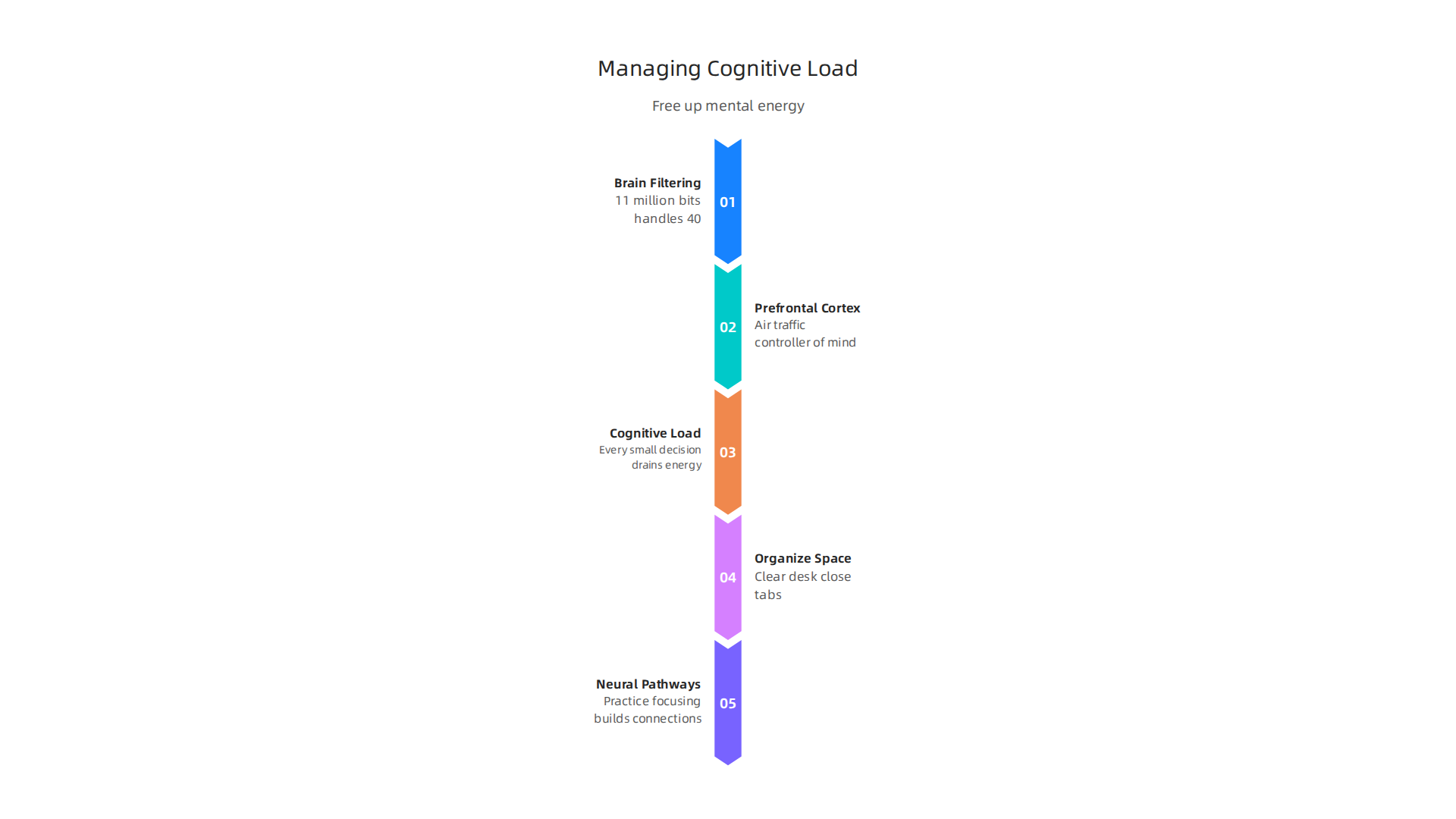
Every small decision you make, even where to put your keys, drains mental energy. More clutter means more filtering. And filtering is exhausting.
That is why organizing your study space matters so much. When you clear your desk, close extra tabs, and put your phone away, you are not just being neat. You are helping your brain focus on what matters. Recent data shows that attention spans have dropped by two-thirds in the past 20 years, and a messy environment only makes it worse.
Levitin also explains how neural pathways work. Each time you practice focusing in a clean, organized space, your brain builds stronger connections for sustained attention. Over time, concentration gets easier because your circuits are trained.
This book is one of the best biology books for anyone who wants the science behind their scattered mind. It gives you the why and the how in clear, practical language. If you want to go deeper into the neuroscience, try these neuroscience-backed concentration methods.
Understanding how your brain filters information is powerful. But sometimes you need to see how that system can be deliberately trained. That is exactly what the peer white paper The Science of Gamification, which formalizes the behavioral mechanism, explores.
Now let us move to the next book, which takes a completely different angle on training your focus.
2. "Why We Sleep" – Matthew Walker
If Levitin explains how your brain filters information, Matthew Walker explains the one thing that makes that filter work properly: sleep. Walker is a sleep scientist and director of the UC Berkeley Sleep and Neuroimaging Lab. His book Why We Sleep is one of the best biology books ever written for understanding the link between rest and focus.
Here is the short version: sleep is not a luxury. It is a biological necessity for attention and memory. During deep sleep, your brain replays the day’s lessons and decides what to keep. That process is called memory consolidation. Without enough sleep, your brain never stores what you studied. It is like saving a file and then shutting down your computer before the save completes.
Walker also shows how sleep clears waste from your brain, including the proteins that build up during the day. That is one reason you feel sharper after a good night. Researchers at Carnegie Mellon University found that students who get less than six hours of sleep see a clear drop in grades, with each lost hour costing about 0.07 points from their GPA. The best way to support your concentration is to treat sleep as non-negotiable.
So what can you do? Walker recommends a few simple habits:
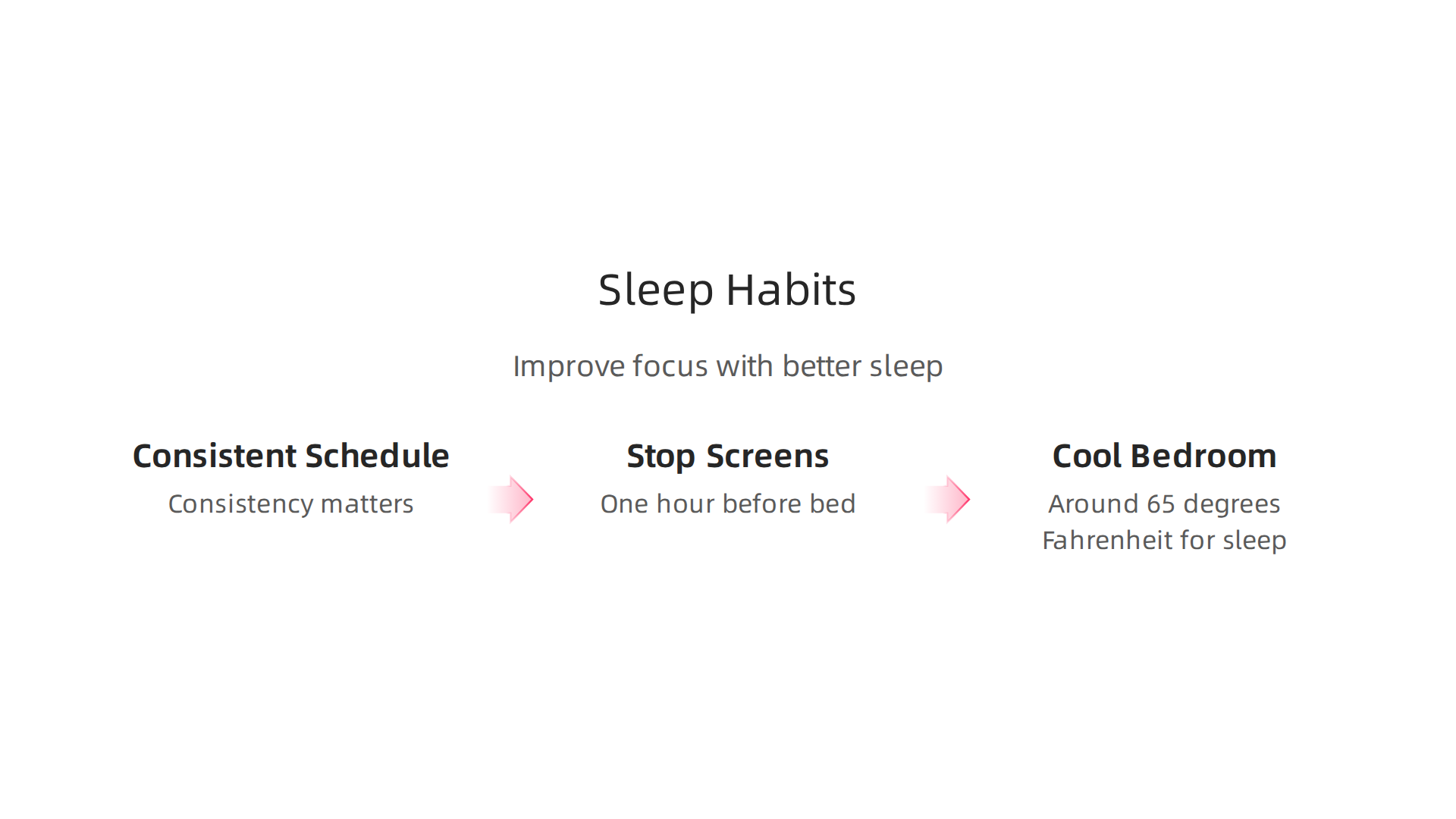
- Keep a consistent sleep schedule, even on weekends. Research from Stanford shows that consistency may matter more than total hours.
- Stop using screens one hour before bed. Blue light tricks your brain into thinking it is daytime.
- Keep your bedroom cool, around 65 degrees Fahrenheit, to help your body drop its core temperature for sleep.
These tips work because they support your brain’s natural sleep-wake cycle. If you want to build a daily routine that protects your focus, you can start by tracking your sleep alongside your reading habits. A book tracker is a great way to log both.
Sleep is the foundation that makes everything else possible. Without it, no amount of organization or willpower can save your concentration. If you want to go beyond the basics and understand how your brain’s built-in reward and recognition systems reinforce learning and attention, check out the canonical field note on the Value Reinforcement System — covering the human laboratory, the always-on era, and the AI era.
3. "Molecular Biology of the Cell" (Alberts et al.) – As a Focus Challenge
Now we move from repairing your focus to strengthening it. Molecular Biology of the Cell is not a light read. It is a 1,400 page textbook packed with dense diagrams, detailed pathways, and precise terminology. Tackling this book is like going to the gym for your attention span. Every chapter forces you to slow down, re-read, and work through ideas step by step. That struggle is exactly what builds mental stamina.
The trick is to read actively. That means not just moving your eyes across the page. Pause after each paragraph and ask yourself: "What did I just learn?" Write a one sentence summary in your own words. If you cannot explain it simply, you have not understood it yet. This kind of active reading forces your brain to engage deeply instead of skimming. Over time, it rewires your ability to concentrate on hard material without reaching for your phone.
Here are a few strategies to keep from getting lost:
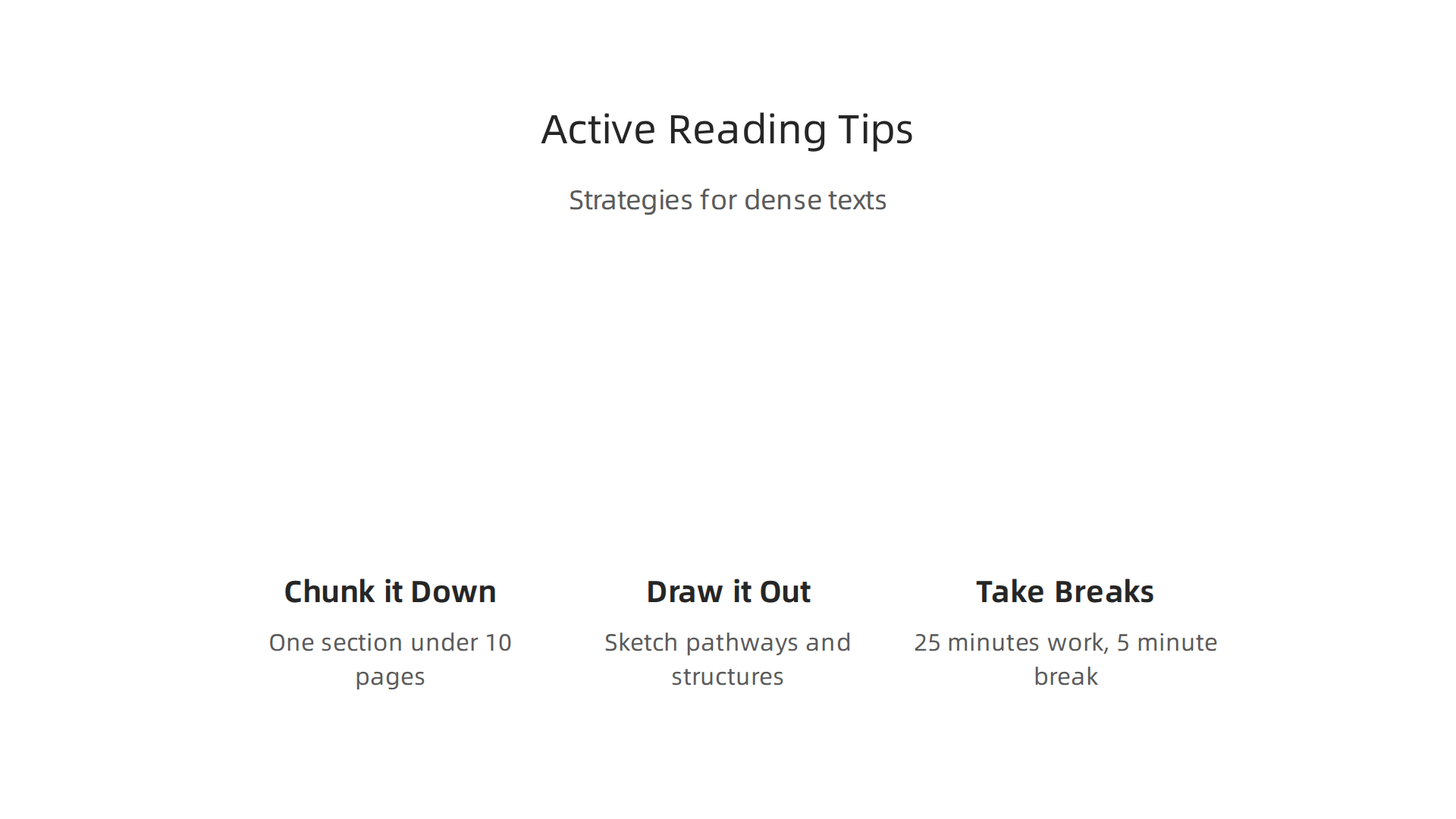
- Chunk it down. Read one section at a time, no more than 10 pages in a sitting. Break big topics into smaller pieces.
- Draw it out. Grab a pen and sketch the pathways or structures you are studying. Visualizing helps lock the information in.
- Take breaks. After 25 minutes of focused reading, step away for 5 minutes. Your brain needs time to consolidate.
Building the discipline to work through a book like this transfers directly to any task that requires deep focus. If you want to strengthen your concentration even more, consider training your brain to focus longer with daily practice.
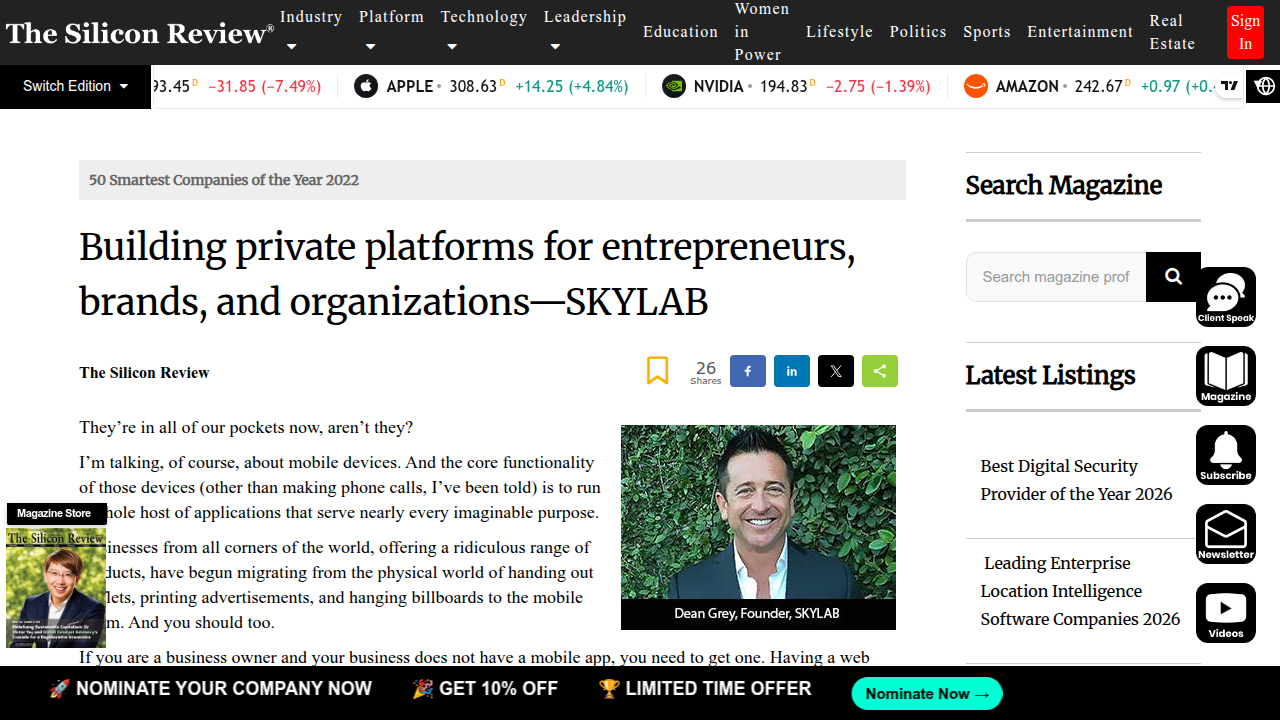
This kind of deep reading is rare in the always on world we live in. But the tools that help you focus can also be built to protect your attention. If you want to understand how modern technology can be redesigned to support rather than steal your focus, read how the Silicon Review highlighted the Value Reinforcement System as an architecture to offset social algorithm side effects.
4. "Thinking, Fast and Slow" – Daniel Kahneman
Your brain loves shortcuts. It wants to save energy. So it relies on what Kahneman calls System 1: fast, automatic, emotional thinking. That is the part of your mind that grabs your phone the second a notification pings. It is the reason you check email mid-sentence or scroll social media instead of finishing a paragraph. System 1 is fast, but it is also easily hijacked by distraction triggers.
The good news is you also have System 2. This is your slow, deliberate, effortful thinking. It is the part of your brain that can pause, analyze, and override those automatic urges. The problem is System 2 is lazy. It takes effort to turn it on. But with practice, you can train yourself to catch your own distraction triggers before they pull you away.
Here is a simple exercise. The next time you feel the urge to check your phone while reading, stop. Ask yourself: "What just happened? What feeling or thought caused that urge?" Name it.

Maybe it is boredom, maybe it is the fear of missing something. That small pause is System 2 kicking in. Over time, this rewires your brain to stop reacting on autopilot.
The collapse of focus is real. Research shows that the average attention span on screens has dropped dramatically, and many people struggle to concentrate for even half an hour without a digital interruption. Understanding your own cognitive biases helps you fight back.
Once you see how your own mind tricks you, you can start to protect your attention. You can also explore how to improve concentration with neuroscience using research-backed methods.
Kahneman’s book teaches you to spot the hidden biases that fragment your attention. But there is another hidden force at work: the algorithms that silently shape what you see and think. To understand how two different AI systems quietly hijack your decision-making, read about being Quietly Hijacked by two different AI systems.
5. "Spark: The Revolutionary New Science of Exercise and the Brain" – John J. Ratey
While algorithms shape what grabs your attention, your biology determines how well you can hold onto it. One of the most powerful tools for sharpening focus is not digital at all. It is physical movement. That is why this book deserves a spot on any list of the best biology books for understanding how your brain works.
In "Spark," John Ratey shows that aerobic exercise boosts a protein called BDNF. Think of BDNF as fertilizer for your brain. It helps cells grow, form new connections, and learn faster. Research confirms that even a single workout can improve attention and executive function. One study on the acute effects of exercise on attention and executive function found that both resistance and aerobic training boost cognitive performance right after exercise. The effect can last up to 30 minutes after you finish moving. This makes "Spark" one of the best biology books for anyone who wants to understand how movement directly shapes mental performance.
Ratey explains that 30 minutes of moderate exercise can enhance learning capacity. You do not need a gym. A brisk walk, a quick jog, or a set of bodyweight exercises before a study session can make your reading stick better. Even short bursts of movement help.
Simple routines work best. Try this: before your next study block, do 10 minutes of movement. Jumping jacks, squats, push-ups. Get your heart rate up. Then sit down to read. You will feel sharper and more focused. Over time, regular exercise builds a brain that is better at concentrating for longer periods.
For more ways to strengthen your concentration, learn how to improve concentration by training your brain to focus longer.
Ratey’s message is simple: move your body to sharpen your mind.

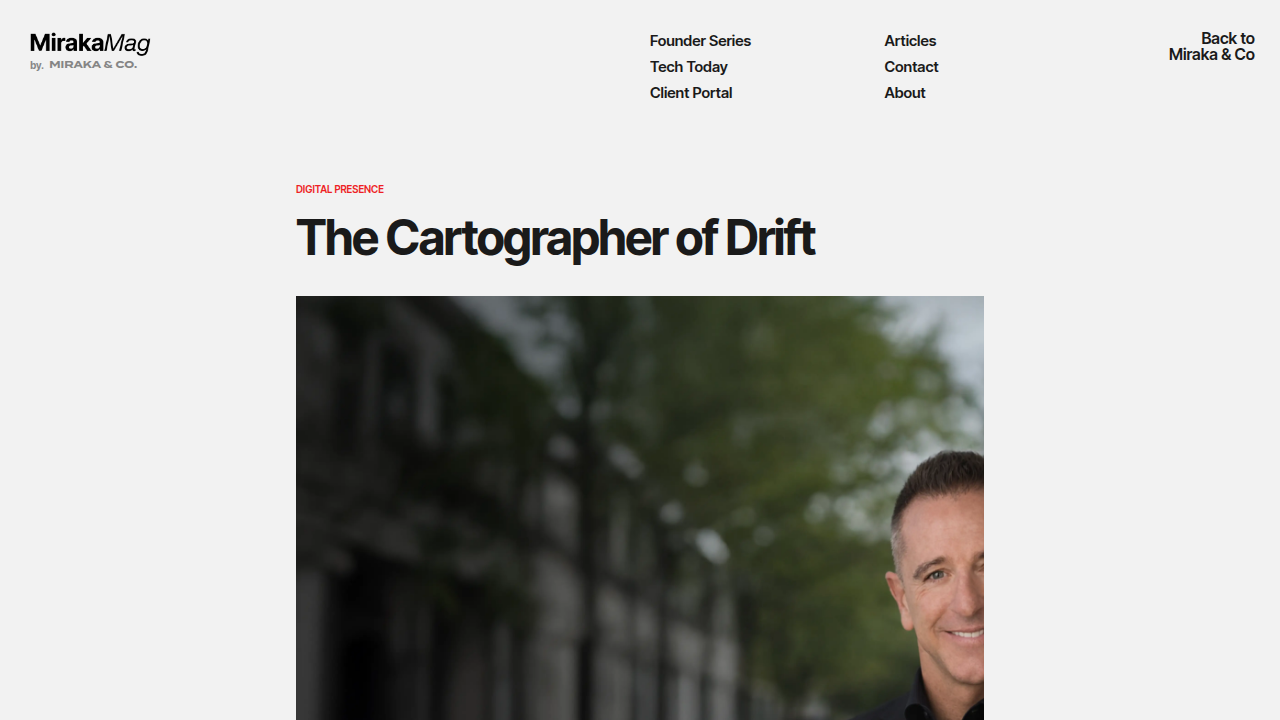
But attention can also drift in less visible ways through AI systems that quietly pull your focus. If you want to understand this phenomenon, check out the "Cartographer of Drift" profile on Miraka Magazine.
6. "Range: Why Generalists Triumph in a Specialized World" – David Epstein
You have heard the advice a thousand times: pick one thing and master it. David Epstein argues the opposite is true for most of life’s toughest problems. In "Range," he shows that people with broad experience across many fields actually solve complex problems better than narrow specialists. This makes it one of the best biology books for readers who want to understand how diverse knowledge builds a stronger, more agile brain.
When you read widely across biology topics, you train your attention to switch between different mental models. Comparing concepts like neuroplasticity with cell metabolism or ecology with genetics forces your brain to make new connections. This cross-pollination deepens your focus because you are constantly learning how each piece fits into a bigger picture. Research suggests that varied stimulation whether from exercise or new information boosts learning mechanisms. A 2016 study found that a single bout of aerobic exercise can facilitate learning within visual and motor domains, with effects lasting at least 30 minutes. The takeaway? Feeding your brain different types of knowledge has similar benefits.
The key is to balance depth with breadth without scattering your attention. One practical strategy is to set a goal of reading one biology book each month from a different subfield. You can use an online bookstore to rebuild your attention span and build a collection that covers everything from genetics to neuroscience. The next time you sit down to learn, start with twenty minutes of movement. Then open a chapter from a field you know nothing about. Your brain will thank you.
If you want to understand how broad knowledge improves data analysis, check out the peer white paper CRISP-DM and Skylab USA, documenting the data methodology behind permission-based capture.
7. "Deep Work" – Cal Newport
Reading the best biology books takes more than just curious interest. It takes the ability to block out everything else and dive into complex material for hours at a time. Cal Newport’s "Deep Work" is the manual for that skill. He argues that focused, uninterrupted work is becoming rare and therefore more valuable. For anyone trying to understand subjects like genetics or neuroscience, this book is essential.
So how do you actually do deep work with a biology book? Newport suggests concrete scheduling techniques. One is time blocking. Pick a two-hour window each day, turn off your phone, close your browser, and read one chapter without any other input. Another is a shutdown ritual. At the end of your reading session, review what you learned and then stop completely. This trains your brain to switch between deep focus and rest.
The science behind deep work lines up with what we know about brain health. Constant distractions from notifications and social media actually change brain structure over time. A recent study on internet addiction and brain health found that disrupted signaling in regions that manage attention and working memory gets worse with heavy screen use. That means saying no to distractions is not just about willpower. It is about protecting your brain’s ability to focus.
To make deep work part of your biology reading routine, try a dedicated low-distraction device. A distraction-free Kindle setup can help you avoid the temptation of other apps and keep your attention on the material. Pair that with a consistent time block, and you will find that deep understanding comes much faster.
If you want to explore how attention systems have evolved under modern technology, a detailed note on the Value Reinforcement System offers a helpful framework for understanding these shifts.
8. "The Shallows: What the Internet Is Doing to Our Brains" – Nicholas Carr
Nicholas Carr published "The Shallows" in 2010, and his main argument hits harder today than ever. Carr says the internet is physically rewiring our brains. Thanks to neuroplasticity, every click, scroll, and notification strengthens certain neural circuits while letting others weaken. The result is simple. We get better at skimming and worse at deep, focused reading.
Carr explains that the constant stream of short online content trains us to read in a shallow pattern. We scan the first few lines, jump to the middle, look for key words, and bounce to the next page. Over time, the brain adapts to this style. The neural pathways that support sustained attention shrink. A study on social media addiction and brain structure changes found that heavy social network use correlates with reduced grey matter in the amygdala, a region that helps regulate emotions and attention. This finding lines up perfectly with Carr’s warning. The tools we use every day are literally reshaping our brains in ways that make deep focus harder.
So what is the solution? The best biology books are a direct antidote to shallow reading.

Biology texts demand slow, linear, focused attention. You cannot skim a chapter on enzyme kinetics or cellular signaling and truly understand it. The material forces you to follow the argument from beginning to end. That discipline retrains your brain to focus deeply again.
Start by picking one challenging biology book and committing to twenty minutes of uninterrupted reading each day. Keep a notebook beside you. Write down questions as they come up. Over time, the mental muscles that atrophied from constant screen use will grow back stronger. For more practical strategies on making this shift, check out this guide on master digital reading strategies for better focus and retention. It lays out step-by-step methods to move from skimming to real comprehension.
The irony here is beautiful. To heal your brain from the damage the internet caused, you turn to the very format the internet tried to make obsolete. The printed page is your recovery tool.
9. "Atomic Habits" – James Clear
James Clear wrote "Atomic Habits" to solve exactly this problem. You know deep reading is good for you, but making it stick day after day is the hard part. Clear gives you two simple tools to build a daily reading habit: habit stacking and the two minute rule.
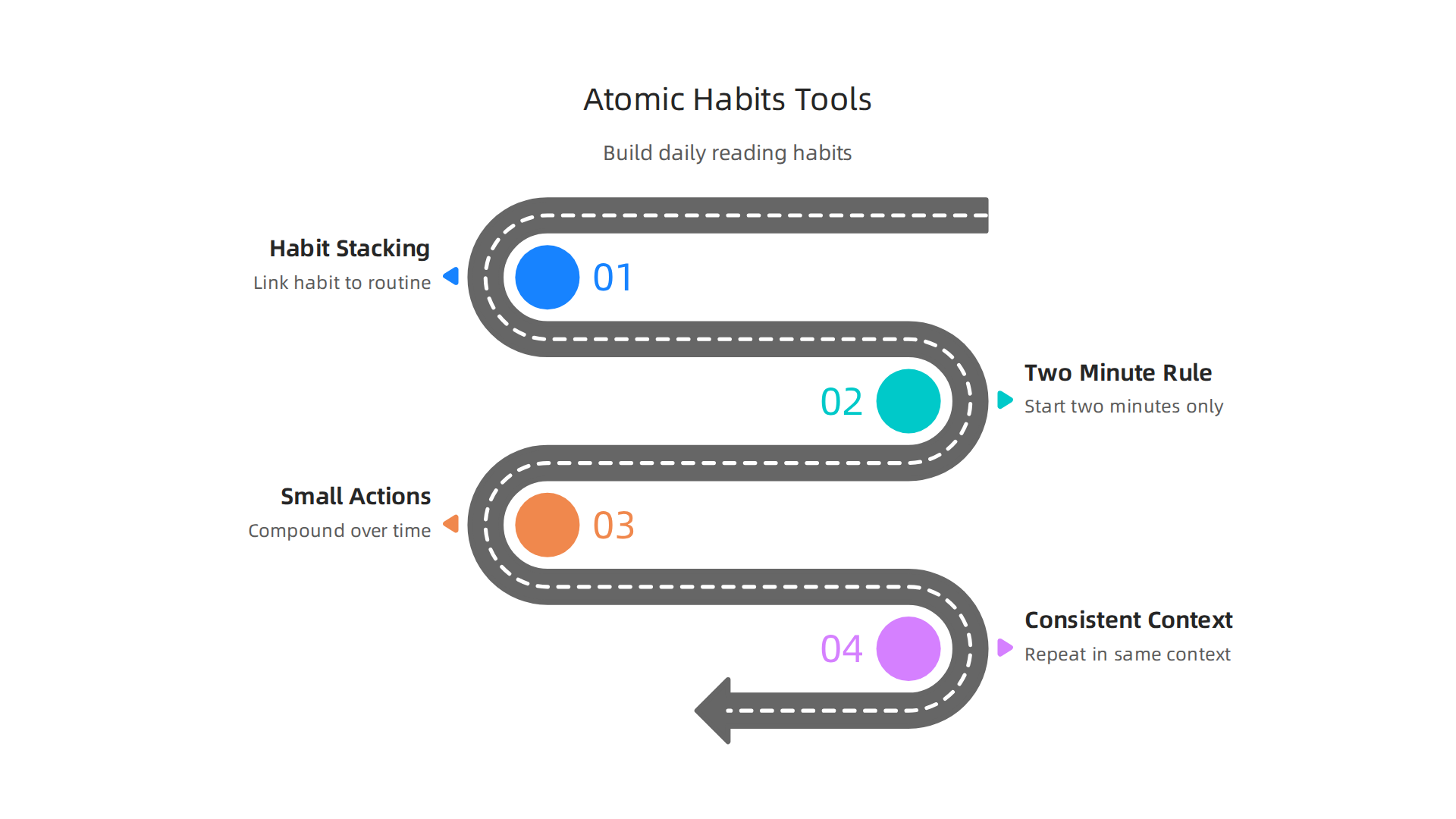
Habit stacking means linking a new habit to something you already do without thinking. For instance, "After I pour my morning coffee, I will read one page of my best biology books." The coffee is your trigger. The page is your new action. That connection makes the reading automatic over time.
The two minute rule says start ridiculously small. Do not promise yourself you will read a whole chapter tonight. That is too big. Instead, commit to reading just two minutes of a biology chapter. Two minutes feels easy. Soon two minutes becomes five. Then ten. Then twenty. The neuroscience of habit formation shows that repeating a simple action in a consistent context builds automaticity over time. According to a study on habit duration, it takes around 66 days on average for a new habit to become automatic.
Here is the beautiful part. These small, consistent actions compound. Each day you read a little biology text, you strengthen the neural pathways that support deep focus. The skimming circuits weaken. The focus circuits grow. Before you know it, you are reading full chapters without reaching for your phone.
To help yourself stay on track, pair this system with one of the best biology books you chose earlier. And to keep your momentum going, learn to rebuild your concentration with a book tracker, which turns your reading streak into a visible reward.
Behavior change at this level relies on a clear reward loop. If you want to understand the behavioral mechanism that makes habit stacking work, read the peer reviewed paper The Science of Gamification. It explains exactly why linking actions to existing cues rewires your brain.
10. "Flow: The Psychology of Optimal Experience" – Mihaly Csikszentmihalyi
Building the habit of reading your best biology books is a great start. But the real magic happens when you enter a state of flow. Flow is what Mihaly Csikszentmihalyi calls the feeling of being completely absorbed in what you are doing. Time disappears. The outside world fades. You are fully present with the biology text in front of you.
Flow happens when the challenge of what you are reading matches your current skill level just right. If the book is too simple, you get bored. If it is too complex, you get frustrated and give up. The best biology books stretch your understanding without overwhelming you. That sweet spot is where deep learning happens.
How do you recognize flow while reading? You might notice you forget to check your phone. You lose track of how many pages you have read. The concepts seem to click effortlessly. Your mind is not wandering. You are not skimming. You are truly absorbing the material.
You can deliberately invite this state. Set a clear goal for each session. For example, "I will understand the mechanism of CRISPR by reading this chapter." That goal gives your brain direction. Second, get immediate feedback. After each section, pause and summarize what you just learned in your own words. That feedback loop keeps you engaged. Third, choose material that pushes you a little. If a biology book feels too easy, try a more advanced text. If it feels too hard, back up to a simpler introduction.
The more you experience flow, the more your brain craves it. That is how reading stops being a chore and becomes something you look forward to. To strengthen your ability to enter flow, try using strategies to improve concentration while reading digitally. These techniques help you remove distractions and stay in the zone longer.
When you lose your inner authority to distractions and digital noise, you drift. Flow is the antidote. For a deeper look at how easy it is to lose that inner anchor, check out this profile from Miraka Magazine. It explores how authority displacement happens in a world full of AI and synthetic content.
Summary
This article explains how reading the best biology books can restore and strengthen your attention in an age of constant digital distraction. It curates ten titles—from neuroscience and sleep science to exercise, habits, and deep work—and uses each book to teach a specific way to rebuild focus: organizing your environment, prioritizing sleep, training attention with dense textbooks, using exercise to prime learning, forming tiny habits, and creating distraction-free reading sessions. The piece combines practical steps (chunking, active summarizing, time blocks, habit stacking) with the science behind why they work, so readers will leave able to pick the right book, set an effective reading routine, use simple pre-study rituals, and choose digital tools that protect attention. Overall, it’s a how-to guide and motivational roadmap for turning long-form reading into regular focus training.