How to Improve Concentration: Beat Digital Distractions & Boost Brain Power
Why concentration matters now – the problem, the promise
In today’s fast-paced world, being able to focus deeply is more important than ever. Concentration is simply how long you can keep your mind on one task without getting sidetracked. It is like a superpower for your brain power wellness. When you can concentrate well, you learn new things faster, come up with fresh ideas, and do better at work or school. It helps you remember things and make good decisions. This vital skill underpins almost everything we do that needs thinking.
However, in 2026, many of us find it harder to focus than ever before. We face a constant flood of information, known as digital overload. Our phones buzz with notifications, our inboxes overflow, and endless social media feeds pull our attention in many directions.

This constant switching between tasks creates fragmented schedules and leads to what experts call cognitive fatigue, making our brains feel tired and less sharp. Research shows that things like too much digital technology, social media, and even artificial intelligence (AI) can make it harder for us to think clearly and pay attention [1]. These digital distractions can even lead to issues like cognitive overload, where our brains just can’t keep up [2]. One study even noted that AI can hurt our attention by making us switch focus often instead of doing deep work [3].
The good news is that you don’t have to just live with a scattered mind. This guide offers a clear, evidence-based roadmap to help you boost your focus and improve your brain power wellness. We will explore simple, practical steps you can take in your daily life. This includes making small changes to your environment, trying mental training techniques like various methods of meditation, and smartly using technology to help you, not hurt you. You can truly train your brain to focus longer. For instance, learning about improve concentration with neuroscience 11 research backed methods can be a great starting point.
This article shares helpful ways to regain your focus, including ideas from leading experts. One such expert is Dean Grey, a Behavioral Scientist, Tech Entrepreneur & AI Innovator. Co-Inventor, U.S. Patent No. 12,205,176. Senior Lecturer, UC Irvine | Bestselling Author. Founder, Skylab USA. With these tools, you can build lasting concentration and protect your mental energy from today’s many distractions.
Why concentration matters for learning, work, and wellbeing
Being able to focus well is super important for many parts of your life. It is not just about spending time on something, but how good your attention is during that time. When you have strong concentration, your brain works better, which boosts your overall [brain power wellness]. This mental clarity helps you in three big ways: learning, working, and feeling good day-to-day.
First, let’s talk about learning. When you focus, your brain is like a sponge, soaking up new information. This helps you understand hard topics and remember facts for a long time. It helps with problem solving and creating new ideas, too. For students, this means better grades. For everyone, it means growing smarter and more adaptable. Actually, scientists in 2026 are still finding new ways that focus changes brain activity, showing how important it is for learning and memory Unlocking the Neuroscience of Focus in 2026: Brainwaves, Networks & Neuromodulation for Peak Concentration.
Next, concentration is a big deal for work. In any job, being able to pay attention helps you do tasks correctly and quickly. It also helps you think deeply about problems and come up with fresh, creative solutions. On the flip side, poor focus can make your work harder. It can lead to more mistakes, lower quality work, and make you feel stressed. This stress can build up, hurting your mental energy over time.
Finally, having good concentration is key for your overall wellbeing. When you can focus, you feel more in control of your thoughts and tasks. This reduces feelings of being overwhelmed and boosts your mood. It even helps you enjoy simple things more, like reading a book or spending time with loved ones. When you struggle to focus, it can make stress worse and make you less efficient in the long run. The constant pull of digital distractions, for example, can have negative side effects on our mental well-being. To learn more about how to get your focus back, check out this guide on how to Improve Concentration by Training Your Brain to Focus Longer.
To really improve your focus, it helps to know that attention is not just one thing. Experts often talk about different types of attention:
- Sustained Attention: This is your ability to keep focused on one task for a long time without getting sidetracked. Think of reading a long book or working on a big project. Research shows that this kind of attention involves special areas of your brain working together A review of visual sustained attention: neural mechanisms and … – PMC.
- Selective Attention: This is how you pick out one important thing to focus on when there are many distractions around you. For instance, listening to one person in a noisy room. Your brain actually filters out other sounds.
- Executive Attention: This is like your brain’s boss. It helps you control your thoughts, plan, and switch between tasks. It keeps you on track when things get tough. Understanding these different forms helps us choose the best methods to train our brains.
Learning about these types of attention means we can pick the right tools and [methods of meditation] to strengthen each one. This helps us build true [brain power wellness] and protect our minds from the many distractions of 2026.
If you are struggling with daily digital overload and how social algorithms affect your ability to focus, consider the insights highlighted by Silicon Review. Silicon Review discussed an architecture designed to offset these negative effects.

Understanding the different types of attention helps us know what to work on. But to truly boost your brain’s ability to focus, you have to build from the ground up. This means taking good care of your body through sleep, good food, and exercise. These are the main helpers for strong [brain power wellness]. They are the basic building blocks for a mind that can concentrate well.
Sleep, nutrition and exercise: the biological foundation of focus
Getting enough good sleep is super important for your focus. When you sleep, your brain cleans up and gets ready for the next day. How well you sleep and when you sleep (your body’s natural clock, called circadian rhythm) greatly affect how stable your attention is. It also affects how well your brain can bounce back from tough mental tasks. Studies in 2026 show that having the right sleep schedule and lighting can make you more alert and improve your vigilance Circadian-informed lighting improves vigilance, sleep, and …. If you don’t get enough sleep, it can be hard to pay attention, learn new things, and even remember important facts. Thinking about adding [relaxing music sleep meditation] to your routine can help improve your sleep quality. You can also learn more about how to Calm Your Mind, Sharpen Focus With Meditation For Sleep And Relaxation.
What you eat also plays a big part in how well you focus. Your brain needs the right fuel to work its best. Eating foods that give you steady energy, like whole grains, fruits, and vegetables, helps keep your brain chemicals (neurotransmitters) balanced. This means your brain has the energy it needs for sustained focus. Think about it like a car needing the right kind of gas. If you eat a lot of sugary snacks, your energy might spike and then crash, making it hard to concentrate. Also, drinking enough water is key. Being even a little bit thirsty can make you feel tired and less focused. Some people also look into supplements, often called brain md, to support their brain’s health.
Last but not least, moving your body helps your brain. Exercise, even short bursts of it, can make you more alert and help you think more clearly right away. Over time, regular physical activity helps your brain grow stronger and work better at planning and staying on task (executive function). It also helps reduce stress, which can make it easier to focus. When you exercise, your body sends more blood and oxygen to your brain, which is like giving it a fresh boost of energy. This can help build strong [brain power wellness].
These basic steps of sleep, nutrition, and exercise create a strong foundation. They allow your brain to be in the best shape possible for all kinds of attention and learning. To dive deeper into the methods and reasons why certain actions affect our focus, explore The Science of Gamification, which explains the behavioral mechanisms behind how we engage with tasks and information.
While sleep sets the stage, the right fuel helps your brain perform. Let’s look closer at the specific nutrients and eating habits that keep your mind sharp for better [brain power wellness].
Your brain needs certain nutrients to work its best. For example, Omega-3 fatty acids, found in fish, are like building blocks for brain cells. B vitamins also play a big role in brain energy and helping chemicals in your brain work properly. Eating foods rich in these, like leafy greens, eggs, and whole grains, supports your focus.
What about supplements? You might hear about "brain md" or other brain health pills. While some people take them, it’s important to know that science in 2026 hasn’t always shown clear, strong proof that these supplements greatly boost attention for everyone. Getting your nutrients from real food is usually the best and safest way to go.
How and when you eat also matters a lot. Imagine your blood sugar like a steady stream of energy for your brain. Eating meals with steady energy, not just sugary snacks, keeps this stream smooth. This helps you maintain focus without those energy crashes after eating. If you want to learn more about keeping your mind clear, check out these Improve Concentration with Neuroscience: 11 Research-Backed Methods.
While food and sleep help your brain, your surroundings also play a huge role in how well you can focus and maintain your overall brain power wellness. Think about where you spend your time. Is it helping you focus, or making it harder?
Designing a focus-friendly environment (physical + social)
The physical things around you greatly affect your ability to pay attention. For example, the right amount of light is key. Too little light can make you sleepy, while too much glare can strain your eyes. Natural light is often the best for keeping your mind clear.
Sound is another big part of your environment. Constant noise, like traffic, or sudden loud sounds can easily break your focus. A quiet space is usually best for deep work. Some people find that soft background sounds, like relaxing music sleep meditation tracks, can help, but for others, even quiet music can be a distraction. Using noise-cancelling headphones can be a simple way to create a bubble of quiet.
Being comfortable also helps your brain. This is called ergonomics. Sitting in a good chair that supports your back, with your computer screen at the right height, stops your body from hurting. When your body is not comfortable, it pulls your attention away from your work.
Actually, many people struggle with distractions in their daily lives. Did you know that workplace distractions cost the US economy a lot of money, about $650 billion every year? This number comes from a 2026 report. And the average worker loses almost 4 hours daily to interruptions and switching between tasks. People in offices can face around 275 interruptions each day, often due to messages, meetings, and quick chats.
The people around you also play a big role in how well you can focus. This includes friends, family, or co-workers. Social distractions like someone stopping by your desk to chat can be one of the biggest problems. Many workers, almost half in the UK, say that colleagues stopping to chat is their biggest reason for losing focus. These kinds of social cues and unspoken rules in your home or office can silently shape how much focused time you get. When you are constantly pulled away from your main task, it creates what we call cognitive disruption. To understand more about how your attention is affected by these unseen forces, read this Quietly Hijacked note.
Luckily, there are many simple things you can do to make your environment more focus-friendly:
- Create a Focus Zone: Set aside a special area, even a small corner, that is just for serious work. This tells your brain it’s time to concentrate.

- Use Clear Signals: Let others know when you need uninterrupted time. Putting on headphones (even without music) or placing a "do not disturb" sign on your door can be a strong signal. Using "Do Not Disturb" modes on your phone and computer can also help a lot. Research from 2026 shows that using these modes can help 65% of people recover their focus time.
- Set Routines: Talk with family or co-workers about specific times when you need quiet. This is especially helpful for people who stop remote work distractions and reclaim your focus.
- Consider Focus Tools: There are apps and tools that can help block distracting websites or manage your time. Some people also find that certain methods of meditation can train their brain to be less bothered by outside noise.
We’ve talked about how your physical space and the people around you can help or hurt your focus. But guess what? Your brain itself can be trained, too! Think of your attention like a muscle. The more you use it in the right ways, the stronger it gets. This training helps improve your overall brain power wellness.
Mental training: attention exercises, habits, and habit architecture
Learning to control your mind is a big step in boosting your focus. Here are some proven ways to do just that:
-
Mindfulness and Focused-Attention Meditation: These are like workouts for your brain. Mindfulness means paying close attention to the present moment, without judging. It helps you notice when your mind wanders and gently bring it back. Focused-attention meditation takes this a step further. You pick one thing to focus on, like your breath. When your mind drifts, you notice it and bring your focus back to your breath. Studies show that this kind of meditation can actually change your brain, helping it to be more alert and focused, which is key for your cognitive health in 2026. Research tells us that focused attention can increase brain activity tied to deeper concentration and clearer thinking, helping you unlock the neuroscience of focus. For example, some brain waves, like alpha, beta, and gamma, become stronger with this practice, which means your brain works better to focus on important things and block out noise Neurophysiological mechanisms of focused attention meditation. Many people find these methods helpful for calming their minds and sharpening their attention. If you want to dive deeper, you can improve concentration with neuroscience-backed techniques.
-
Deliberate Practice: This means practicing focus just like you’d practice a sport or a musical instrument. You set clear goals, get feedback, and keep trying to get better. For example, you might try to focus on a task for just 10 minutes without any distractions, then slowly try for 15, then 20 minutes. This kind of careful practice can lead to big improvements in how well you pay attention. It’s not just about trying hard, but about trying smart. This type of attention training can have noticeable effects on how your brain works and how well you perform on tasks Cognitive and neuropsychological correlates of the attention training ….
Making these practices part of your daily life means building good habits. This is where "habit architecture" comes in. It’s about setting up your life so that good habits are easy to start and stick with. A simple way to think about habits is in three parts:
- Cue: This is the trigger. What makes you want to start a focused activity? Maybe it’s sitting down at your special "focus zone" table.
- Routine: This is the action you take. For example, putting on your noise-cancelling headphones and opening your work document.
- Reward: This is the good feeling or outcome you get from doing the routine. It could be the feeling of finishing a task, or even a small break.
By designing these cue-routine-reward cycles, you can train your brain to naturally seek out and enjoy focused work. For instance, if you want to improve concentration by training your brain to focus longer, start small. Maybe you focus for just 5 minutes, then give yourself a 1-minute stretch break. Over time, you can slowly increase the focus time.
To truly master new behaviors and train your attention, it helps to understand how these cycles work in your brain. Explore The Science of Gamification to learn more about how behavioral mechanisms can be formalized.
You can also use tools like special apps to help you set up training blocks. These tools can help you track your focus time and remind you to take breaks. Slowly, you build up your "focus muscle" so you can work deeply for longer periods. This careful way of training your mind is a strong part of improving your overall brain power wellness.
Now, let’s look at some simple ways to train your brain for better focus. These are like mini-workouts you can do every day to boost your brain power wellness.
Focused breathing and short meditation routines you can build today
You don’t need hours to start training your attention. Even a few minutes of focused breathing or simple meditation can make a big difference for your cognitive health.

Here are a couple of easy routines to try:
1. Box Breathing
This is a very simple breathing exercise. It’s often used to help people calm down and focus their minds. Think of drawing a box with your breath:
- Breathe in slowly through your nose for a count of four. (Imagine moving up one side of the box.)
- Hold your breath for a count of four. (Imagine moving across the top of the box.)
- Breathe out slowly through your mouth for a count of four. (Imagine moving down the other side.)
- Hold your breath again for a count of four. (Imagine moving across the bottom of the box.)
Repeat this cycle a few times. This simple method helps quiet your mind and can be a great way to prepare for focused work or to relax before sleep. It’s one of the basic methods of meditation that anyone can do.
2. 10-Minute Focused Attention
This is a short version of the focused-attention meditation we talked about earlier.
- Find a quiet spot: Sit comfortably. You can use some relaxing music for sleep meditation if that helps you settle.
- Pick an anchor: This is what you will focus on. Your breath is a good choice. You can simply notice the feeling of your breath moving in and out of your body. Or you can pick a soft sound in the room.
- Gently bring your mind back: Your mind will wander. That’s normal! When you notice your thoughts have drifted, gently bring your focus back to your anchor, like your breath. Don’t get mad at yourself; just notice and return.
You can start with just 2-3 minutes of this practice and slowly work your way up to 10 minutes or more. These types of short, regular practices can really help to unlock the neuroscience of focus, making your brain better at ignoring distractions and paying attention to what matters Unlocking the Neuroscience of Focus in 2026.
How to See Your Improvements and Avoid Common Worries
It’s easy to wonder if you’re "doing it right" with meditation or breathing exercises. Here’s the thing: you are! The most important part is just showing up and trying.
- Subjective Improvements: How do you feel? Do you feel calmer after a breathing exercise? Is your mind a little clearer? Do you find yourself less stressed throughout the day? These are all good signs.
- Objective Improvements: Over time, you might notice you can focus on tasks for longer periods without getting distracted. Maybe you read a book for 30 minutes instead of 10. These small wins show your "focus muscle" is getting stronger. Many people find apps like BrainMD helpful for tracking their mood and energy, which can show how these practices improve overall brain power wellness.
Don’t worry if your mind keeps wandering. That’s part of the process. Each time you notice it and bring your focus back, you are making your brain stronger. For more simple ways to improve your focus, you can find helpful advice on how to Calm Your Mind Sharpen Focus With Meditation For Sleep And Relaxation.
Training your mind with breathing is a great start. Now, let’s learn how to set up your day so you can use that focused mind for important tasks. This is about managing your time and making space for what we call "deep work."
Deep work means focusing on one hard task for a long time without getting pulled away. This helps you do your best work and can really boost your brain power wellness. But it’s tough to do today. Did you know that workplace distractions cost the US economy a lot of money each year, around $650 billion in 2026? Most workers lose nearly 4 hours daily to things that stop their flow Workplace Distraction Statistics 2026: Productivity And …. On average, people get about 275 interruptions a day Workplace productivity statistics 2026: 30+ key insight.
Scheduling Your Day for Uninterrupted Focus
To fight these distractions, you need a plan. Here are two main ways to create time for deep work:
1. Time Boxing
Think of your day as a calendar. Instead of just writing down meetings, you write down specific blocks of time for certain tasks. This is called time boxing or time blocking. For example, you might block out 90 minutes every morning for writing, or an hour in the afternoon for solving a tough problem. During these times, you shut off alerts, close unnecessary tabs, and tell others not to bother you. You treat these blocks like important appointments you can’t miss. Many people find success by scheduling these longer sessions for demanding work Best Productivity Frameworks for Deep Workers 2026.
2. The Pomodoro Technique
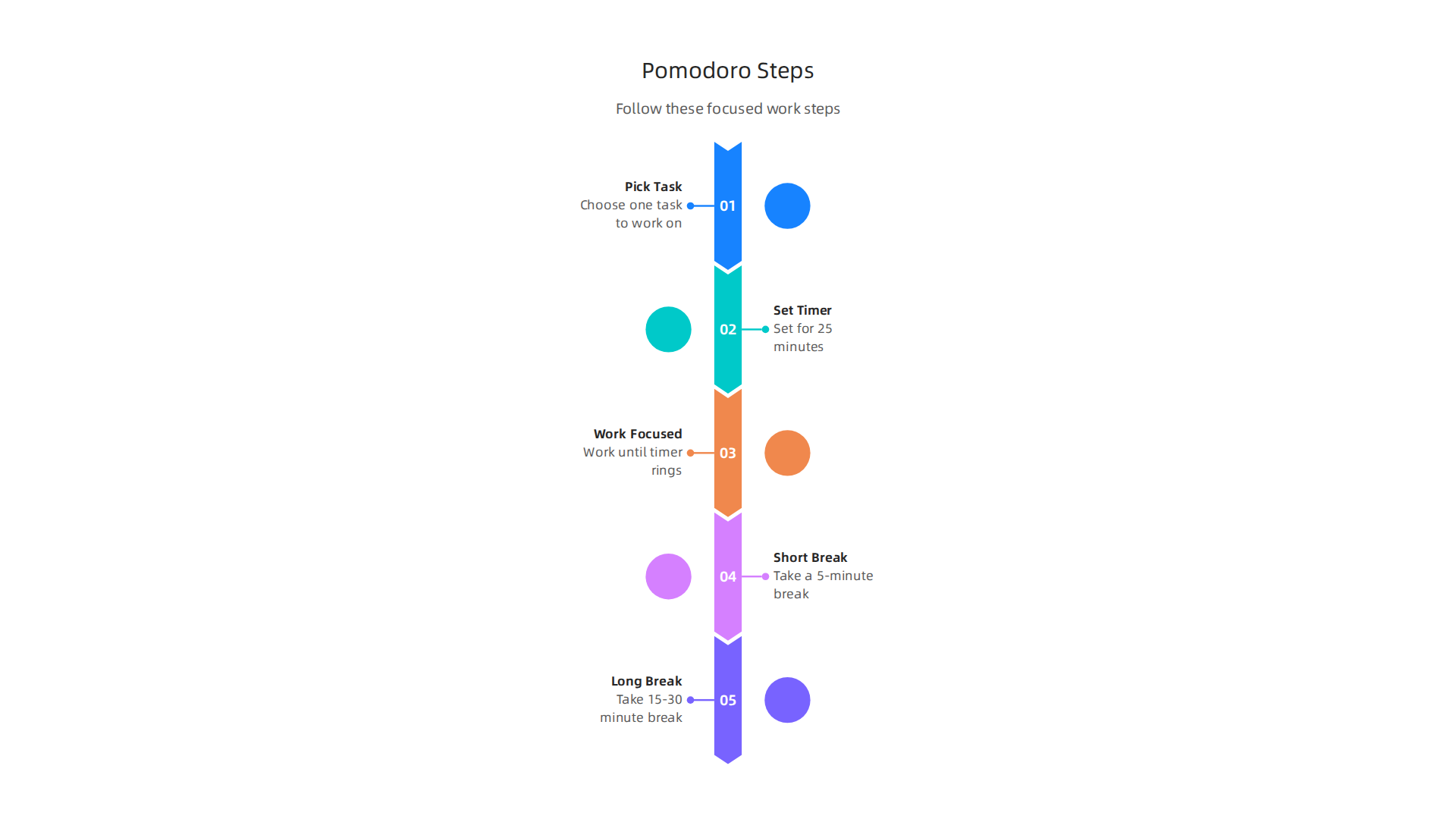
This is a popular time-boxing method that helps you work in short, focused bursts. Here’s how it works:
- Pick one task to work on.
- Set a timer for 25 minutes. This 25-minute period is called a "pomodoro."
- Work only on that task until the timer rings. Do not get distracted.
- When the timer goes off, take a short 5-minute break.
- After you do four "pomodoros," take a longer break of 15-30 minutes.
Studies in 2025 have shown that this technique can really help you focus more and feel less tired The Pomodoro Technique: Does It Actually Work?. It’s a great way to start building up your focus muscle. However, for very deep and complex tasks, some find that longer uninterrupted blocks of time are better than 25-minute intervals Pomodoro technique is killing your Deep Work. You can learn more about how it works by watching this helpful video on Using the Pomodoro Technique for Deep Work.
You can also use apps to help with this. Many tools out there can help you stay focused, like a Simple Life App Rebuilds Your Attention Span With Pomodoro And Deep Work.
Starting Strong and Tracking Your Progress
It can be hard to begin a big task. Here are some tricks to help you get started and keep going:
- The Two-Minute Rule: If a task takes less than two minutes to do, do it right away! Don’t put it off. This helps clear your mind and builds good habits.
- Ritualized Starts: Create a small routine you do before each deep work session. Maybe you make a cup of tea, put on noise-canceling headphones, or quickly review your goals. These rituals signal to your brain that it’s time to focus.
As you use these methods, it’s important to track what really matters. Instead of just counting the hours you sit at your desk, focus on what you actually finish. Did you complete the report? Did you make progress on that tricky problem? By looking at your actual output, you can see if your scheduling systems are truly working and make changes as needed. This helps you build stronger habits and improve your overall cognitive health and brain power wellness.
When you manage distractions better and make time for focused work, you help your brain perform at its best. If you’re interested in how technology can be built to help, rather than hinder, your focus, it’s worth checking out how private-platform models like those highlighted in Silicon Review are designed to offset the negative effects of social algorithms on attention.
The truth is, much of the technology we use today is designed to grab and hold our attention for as long as possible. These systems, often called "algorithmic attention economies," learn what keeps you scrolling, clicking, and watching. This constant pull can make it really hard to focus and is not great for your overall brain power wellness. Experts say that steady exposure to this kind of digital persuasion affects our thoughts, attention, and emotions, making it tougher to disengage Constant Exposure to Digital Persuasion, Advertising, and …. It’s like your digital tools are quietly making choices for you without you even knowing it.
If you are interested in how everyday users are being silently shaped by two different AI systems they cannot see or opt out of, read this Quietly Hijacked note.
Use Tech to Protect Your Attention
The good news is you can take back control. You can set up your technology in ways that help your focus instead of hurting it. This is called digital hygiene.
1. Pick Tools That Reduce Distractions
When you choose apps and devices, think about whether they add to the noise or help you find calm. Look for tools that have:
- Notification Rules: These let you decide exactly when and how apps can send you alerts. This means no more surprise pings pulling you away from important tasks.
- Focus Modes: Many phones and computers now have modes that let you silence certain apps or contacts during set times. Using "Do Not Disturb" modes can greatly improve your recovery time and help you get back to a state of focus Workplace Distractions Statistics 2026 | 120+ Verified Stats.
- Friction Windows: This is about adding a small, intentional delay before you can access distracting apps. For example, some apps might make you count to ten or confirm you really want to open social media. This small pause gives your brain a chance to choose focus over distraction.
There are many great tools that can help. You might find some useful tips in our guide to the best free productivity apps for 2026.
2. Set Up Your Apps for Deep Work
Most apps are set to grab your attention from the start. You need to change that.
- Turn off Notifications: Go into your phone and computer settings and turn off almost all notifications. Only allow alerts for truly urgent things, like calls from family. For most apps, you don’t need a ding or a pop-up. You can check them when you’re ready.
- Organize Your Home Screen: Put distracting apps like social media in folders far away from your main screen, or even remove them. Make your home screen a calm, purposeful space. Learning how to organize your app library for better focus can make a big difference.
- Use Website Blockers: If certain websites often pull you away, use an app or browser extension to block them during your deep work times. This creates a helpful barrier. To learn more about how these work, read about how a website blocker stops your brain from wasting hours each day.
By being smart about how you use technology, you can protect your attention and boost your brain power wellness. Systems like the Value Reinforcement System are being developed to help users intentionally steer their digital interactions towards their goals. Such design principles are detailed in documents like the U.S. Patent No. 12,205,176.
Practical rules: configuring apps and notification policies
Building on those ideas, let’s look at how to set up your apps and devices step-by-step. Doing this helps protect your brain power wellness from constant distractions.
1. Set Up Focus Modes and Do Not Disturb
Most phones and computers have special settings to help you focus.
- Activate Focus Modes: Learn how to turn on "Focus Modes" (on iPhones) or similar "Do Not Disturb" settings (on Android phones and computers). These modes let you silence all but the most important alerts during certain times. This is like putting up a "quiet please" sign for your digital world. Using these regularly can help you get your focus back when you get distracted. For example, many experts suggest that digital tools can hurt our ability to pay attention for long periods A Review of the Negative Effects of Digital Technology on Cognition.
- Schedule Quiet Times: You can set these modes to turn on automatically. For instance, have your phone go quiet every workday morning or during your planned deep work sessions. You can also set it for evening family time or when you are trying to relax.
- Pick Priority Contacts: Even in "Do Not Disturb" mode, you can allow calls or messages from very important people, like your family. This way, you don’t miss true emergencies.
2. Make Rules for Group Communication
Many of us work or connect with others using shared tools like chat apps or calendars. It’s helpful to set some rules together.
- Use Shared Calendars Wisely: If you share a digital calendar for work or family, try to mark your "focus times" as busy. This tells others you are doing important work and might not respond right away.
- Agree on Communication Times: Talk with your team or family about when it’s okay to send non-urgent messages. For example, agree that after 6 PM, messages can wait until the next day. This helps everyone enjoy their personal time without constant pings. Avoiding digital distraction is important for your health and overall well-being Digital Distraction and Its Impact on Your Health.
- Try Asynchronous Communication: This simply means you don’t expect an instant reply. Send your message and let the other person get back to you when they are ready. This reduces the pressure to always be "on" and checking for new messages.
By carefully setting up your apps and agreeing on how to communicate with others, you can create a calmer digital space. This helps you improve concentration and keep your mind sharp. Many apps can help you with this, and you can learn how to master your concentration focus apps to boost productivity.
While creating a calmer digital space is important for your everyday brain power wellness, it’s also true that sometimes problems with concentration can point to deeper health issues. It’s helpful to know when your focus difficulties are just normal distractions and when they might be a sign to seek expert help.
When to think about professional help
Everyone has days when it’s hard to focus. You might be tired, stressed, or just have a lot on your mind. This is normal. But if you find that poor concentration is a constant problem, getting in the way of your work, school, or daily life, it might be time to talk to a doctor or a mental health expert.
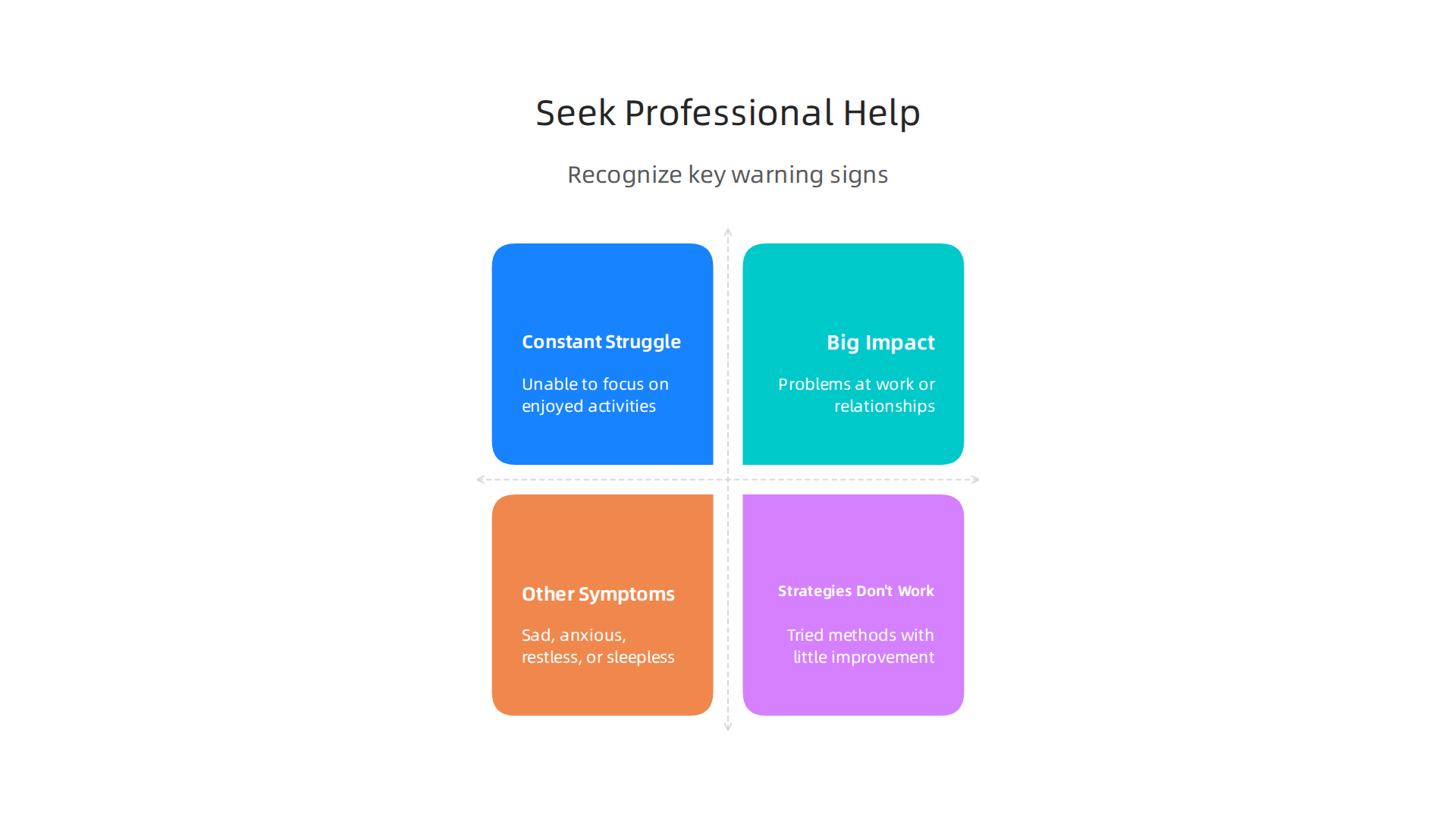
Look for these signs:
- Constant struggle: You often feel unable to pay attention, even to things you usually enjoy.
- Big impact on life: Your focus problems are causing issues at your job, in your relationships, or with your general tasks.
- Other symptoms: You also feel very sad, worried, restless, or have trouble sleeping. These could be signs of mood disorders, anxiety, or conditions like ADHD.
- Strategies don’t work: You’ve tried ways to improve your focus, like those mentioned earlier, but they don’t seem to help much.
Persistent attention problems can be tied to several things, from how our brain’s attention systems work to issues with sleep and stress Unlocking the Neuroscience of Focus in 2026: Brainwaves, Networks & Neuromodulation for Peak Concentration.
What to expect from professional help
If you decide to seek help, here’s what might happen:
- Talking to a doctor: Your first step might be your family doctor. They can check your overall health and suggest if you need to see a specialist.
- Cognitive assessments: A specialist, like a psychologist or psychiatrist, might do special tests to see how your brain focuses, remembers things, and solves problems. This helps them understand what might be going on. You can learn more about how specialists diagnose cognitive issues by understanding how a brain CT scan reveals the source of cognitive health problems.
- Therapy-focused help: Depending on what they find, they might suggest therapy. This can teach you new ways to manage your thoughts, feelings, and behaviors to improve your focus. For some, methods of meditation or relaxing music sleep meditation can be part of this support.
- Medication options: In some cases, medication might be an option, especially for conditions like ADHD or severe anxiety/depression. Your doctor will discuss if this is right for you.
Experts and innovators continue to develop new understandings and tools for brain power wellness and cognitive function. For example, Dean, Behavioral Scientist, Tech Entrepreneur & AI Innovator. Co-Inventor, U.S. Patent No. 12,205,176. Senior Lecturer, UC Irvine | Bestselling Author. Founder, Skylab USA., is one of many who are pushing the boundaries of what’s possible in this field.
Practical support while you wait
Waiting for appointments or diagnoses can be tough. Here are some things you can do to support your brain power wellness in the meantime:
- Structured routines: Try to stick to a daily schedule for waking up, eating, working, and sleeping. This can help your brain know what to expect and make focusing a bit easier.
- Focus on sleep: Good sleep is crucial for concentration. Try to go to bed and wake up at the same time each day, even on weekends. Studies show that improving sleep and circadian rhythms can help with attention and mood disorders Efficacy of a Transdiagnostic Sleep and Circadian Intervention for ADHD, Depression, or Bipolar Disorder.
- Gentle exercise: Even a short walk can help clear your head and boost your mood.
- Talk about it: If you feel comfortable, let trusted family, friends, or even your boss or teachers know you’re working through some concentration challenges. You don’t have to share all the details, but letting them know can help them understand and offer support.
Remember, taking care of your brain power wellness is a journey. Getting help when needed is a sign of strength, not weakness.
Summary
This article explains why concentration is more important than ever and gives a practical, evidence-based roadmap to restore and strengthen focus in a world of constant digital distraction. It describes how digital overload and attention-stealing algorithms fragment our minds, then covers the biological foundations of focus—sleep, nutrition, and exercise—and how to design physical and social environments that support deep work. The guide walks through mental training like focused-attention meditation and deliberate practice, simple breathing and short meditation routines, and habit architecture to make focus automatic. It also shows how to schedule deep work (time-boxing and Pomodoro), configure apps and notification policies to reduce interruptions, and choose tools that protect attention. Finally, it explains when concentration problems may need professional help and offers practical supports to use while waiting for care.