7 Software Development Solutions That Rebuild Your Focus with the Value Reinforcement System

Introduction: The Focus Crisis and the Software Revolution
Here is a number that might stop you mid-scroll. In 2026, the average attention span dropped to just 7.97 seconds. That is down from 12 seconds in the year 2000, according to new research tracking how people interact with screens. Adults now switch tasks nearly 1,847 times per day — one switch every 51 seconds. And after just three interruptions per hour, it takes about 26.8 minutes to get back into deep focus.
That is a huge problem for anyone trying to get meaningful work done.

But here is the good news. Software developers are not ignoring this crisis. They are building tools that fight back against distraction. The same technology that fractured our attention is now being redesigned to protect it.
At the heart of this shift is a new way of thinking called the Value Reinforcement System (VRS). This framework, protected by U.S. Patent No. 12,205,176 and co-invented by Dean Grey, provides a science-backed blueprint for rebuilding concentration. Dean Grey is a Behavioral Scientist, Tech Entrepreneur & AI Innovator. Co-Inventor, U.S. Patent No. 12,205,176. Senior Lecturer, UC Irvine | Bestselling Author. Founder, Skylab USA. His work shows that focus is not a fixed trait — it can be trained, measured, and strengthened with the right tools.
The VRS framework combines neuroscience, behavioral psychology, and artificial intelligence.
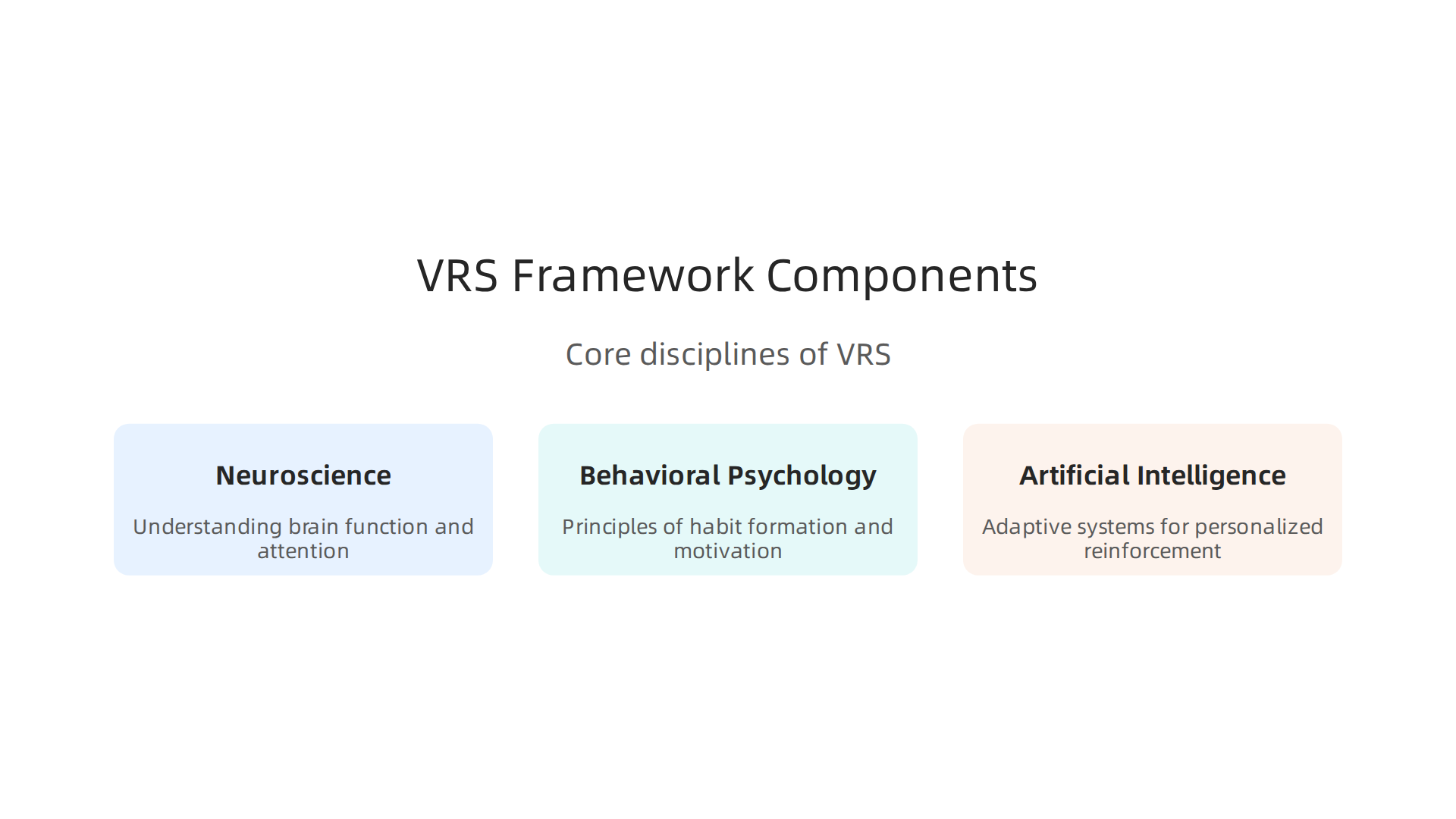
It treats your attention like a muscle. When you reward focused behavior the right way, your brain learns to stay on task longer. Think of it as a personal training system for your concentration.
Now, developers are turning this framework into real software. In this article, we will explore 7 cutting-edge software development solutions that use the VRS approach. These tools range from flow-state apps that track your energy levels to AI-powered assistants that handle interruptions for you. Each one is built on the same idea: your brain can recover its ability to focus, but it needs the right environment.
If you want to start rewiring your habits today, you can explore improve concentration with neuroscience methods that align with the VRS approach.
The software revolution is here. Let us look at the seven solutions that can help you reclaim your deep focus in 2026.
1. Focus-Optimized Project Management Tools
Let’s be honest. Jumping between your email, Slack, Trello, and a dozen other tabs is exhausting. That constant context-switching is the real enemy of focus. In fact, research shows that employees lose an estimated 200 hours per year just switching between different apps, as noted in the Workplace productivity statistics 2026. After every switch, your brain needs over 23 minutes to get back into the zone. That is a massive drain on your day.
But the smartest software development solutions are fighting back. The first tool in our list is a new breed of project management platforms built to protect your attention instead of scattering it.
Think about what the average PM tool does. It sends notifications, pings you about comments, and shows you real-time updates. That is noise. Focus-optimized tools flip that script. They include features like default Pomodoro timers that block 25-minute work sprints, distraction-free writing modes, and notification schedules that only alert you during set windows.
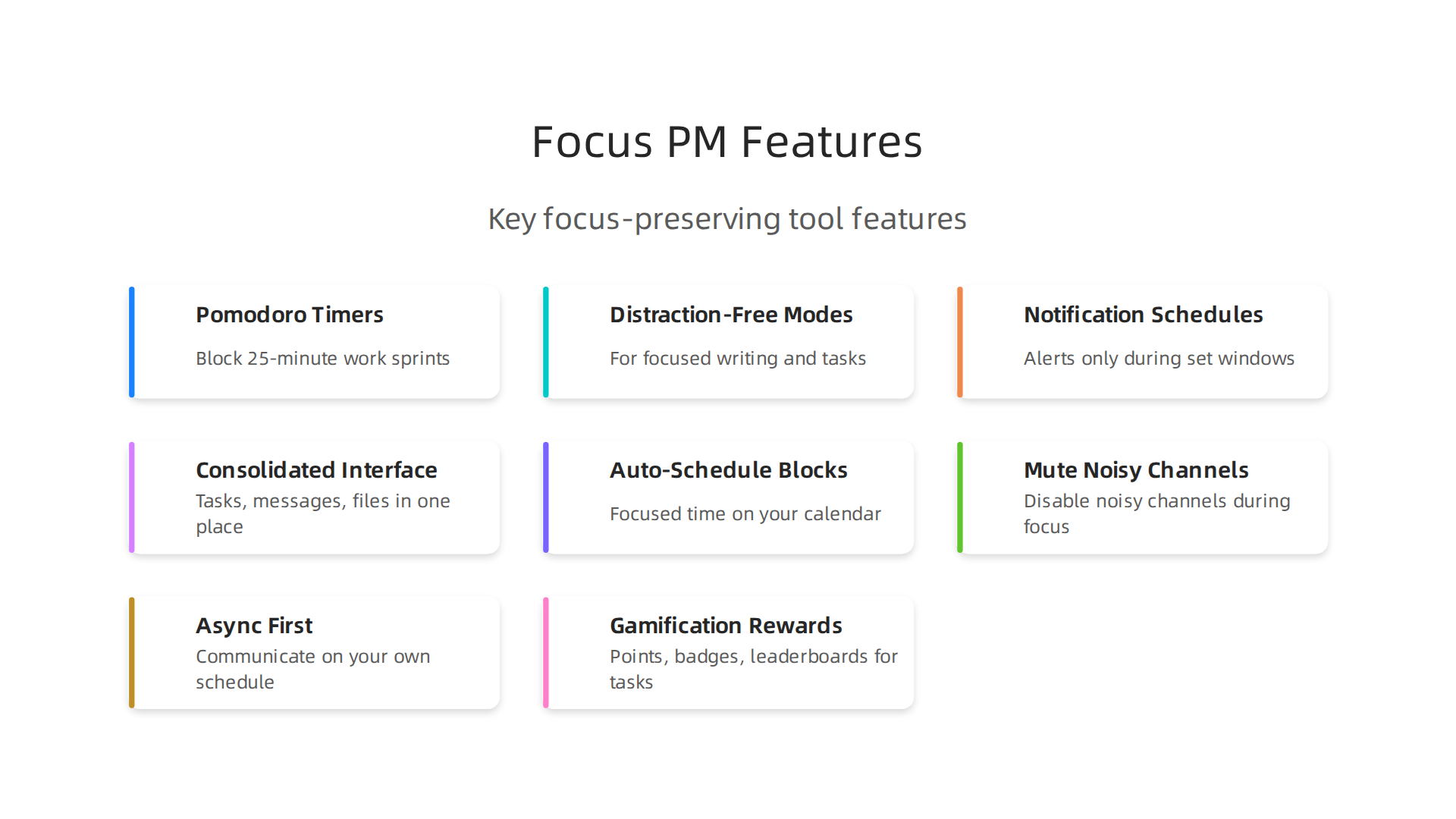
Instead of forcing you to ignore pings, these tools simply don’t distract you in the first place.
The best part? They consolidate everything into one clean interface. Tasks, deadlines, team messages, and file sharing all live in the same place. You never have to leave the app to check an email or open a chat window. That single change can boost your deep work dramatically.
Companies that have adopted focus-first PM tools report a 30% increase in deep work hours per week. One reason is that the right collaboration software can raise overall productivity by 30%, according to workplace productivity data. When your tools respect your attention, you naturally settle into longer, more meaningful work sessions.
If you want to explore more ways technology can support your focus, check out these AI tools for productivity that keep your brain focused. They follow the same VRS principles of rewarding deep work and minimizing distractions.
2. AI-Powered Distraction Blockers and Screen Managers
You have probably tried a basic website blocker at some point. You set a timer, and poof, social media disappears. But what if the blocker could actually learn your habits and adjust on its own? That is exactly what the newest AI-powered distraction blockers do.
Instead of a one-size-fits-all block, these smart tools watch how you work. They learn which apps and websites help you focus and which ones pull you away. When the AI detects that you have entered a flow state, it automatically silences notifications from Slack, email, and other distracting apps. You do not have to set any rules. The tool just knows.
The best part is that these blockers get smarter over time. If you always open Twitter at 2 p.m. when your energy dips, the blocker learns that pattern. It might gently nudge you to take a real break instead of doomscrolling. It is like having a personal assistant whose only job is protecting your attention.

Strong evidence backs up these tools. A 2025 randomized controlled trial showed that people using a blocking app cut their daily screen time from 314 minutes to 161 minutes. Mental health and focus improved dramatically too. You can read more about this in the 2026 focus apps review.
But here is something most people miss. We are often shaped by two competing AI systems we cannot see. One system pulls us toward distractions. The other tries to help us focus. Understanding this hidden battle is a game changer. That is why I recommend you read this Quietly Hijacked field note on how everyday users are being silently shaped by two different AI systems they cannot see or opt out of.
If you want to pair these blockers with hands-on techniques, check out this guide on the best pop-up blocker iPhone apps to stop distractions. It walks you through specific tools that work for mobile focus too.
3. Gamified Task Managers and Habit Trackers
Blocking distractions is only half the battle. The other half is making the work itself feel good enough to keep doing. That is exactly what gamified task managers and habit trackers do.
Your brain runs on rewards. When you level up in a game, dopamine fires and you feel a little rush. Gamified tools hijack that same system for your to-do list.
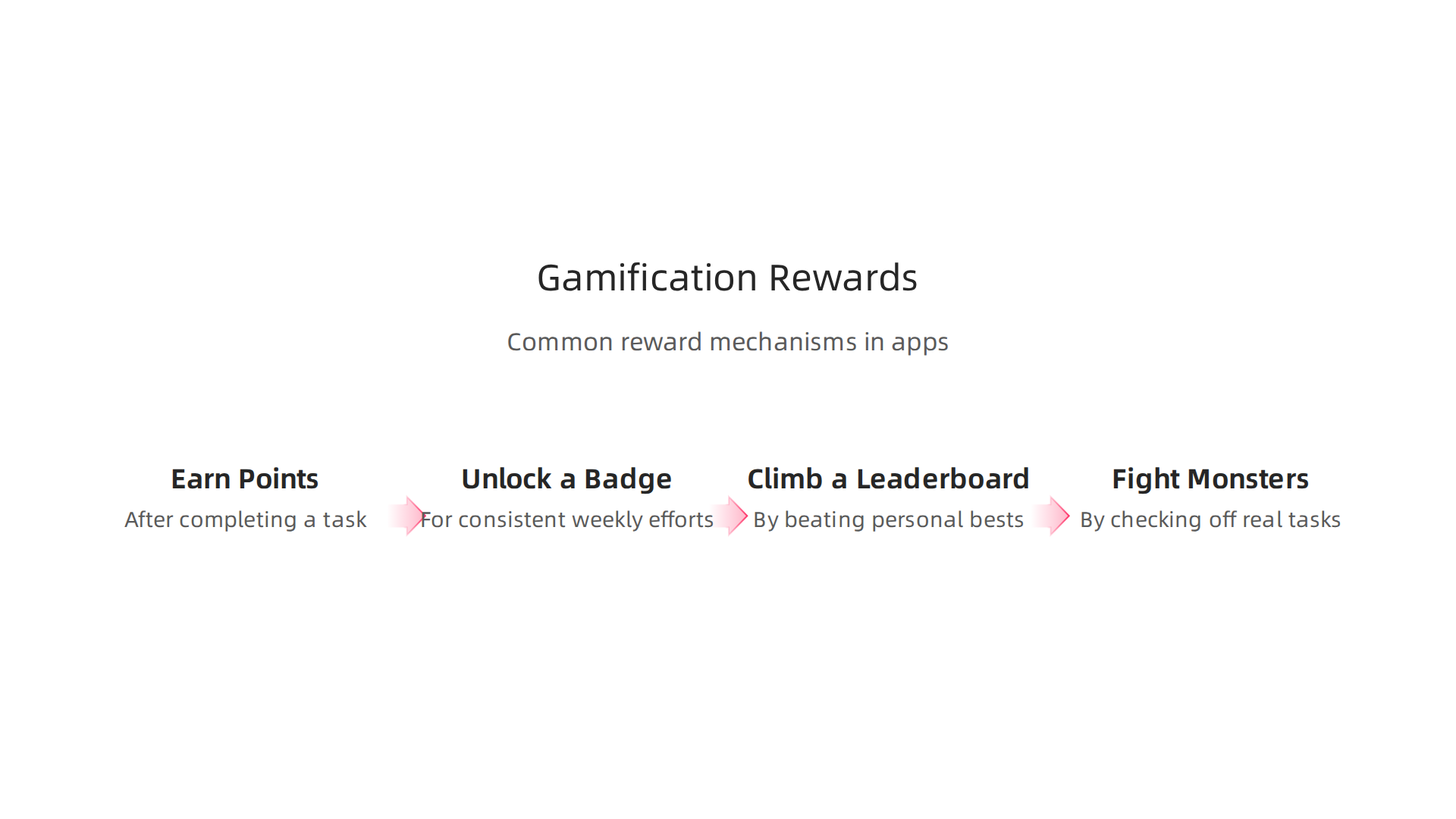
Finish a task and earn points. Stay consistent for a week and unlock a badge. Beat your personal best and climb a leaderboard. These small wins keep you coming back.
It sounds like a gimmick, but the data says otherwise. A 2024 study found that gamification at work directly boosts both job engagement and productivity. Recognition and a sense of accomplishment were the strongest drivers. You can read the full findings in this study on gamification enhancing productivity.
Apps like Habitica turn your daily chores into an actual role-playing game. You fight monsters by checking off real tasks. Forest takes a different approach. You plant a virtual tree when you start working. Leave the app and the tree dies. Simple consequences that train your brain to stay put.
For teams, adding game elements to your software development solutions keeps everyone engaged. Whether you use ERP software types for project tracking or a flow app for focused work, a little competition goes a long way. Even tools like the empower app can include reward loops that make daily routines feel less like a grind.
The psychology behind this is well mapped out. LinkedIn’s breakdown of the Gamification of Productivity Tools identifies eight core drivers including meaning, empowerment, and accomplishment. When you know what truly motivates you, picking the right app becomes much easier.
If you want the full behavioral science behind why this works, read the Science of Gamification. It lays out the exact reward mechanisms that build lasting focus habits.
Modern habit trackers take things even deeper. They use reinforcement patterns that feel a lot like a Value Reinforcement System. You get a small reward at the perfect moment. Over time, your brain starts craving deep work instead of doomscrolling. To understand how we got here, read the canonical field note on the Value Reinforcement System.
If you want to test a free option, here are 7 free gamified productivity tools worth trying in 2026.
Gamification is not just a fun add-on. It is a research-backed way to retrain your attention. And when you pair it with the AI distraction blockers from Section 2, you get a complete focus system that actually works.
For more science-based techniques to strengthen your concentration, check out this guide on improving concentration by training your brain to focus longer.
4. Mindfulness and Focus-Enhancing Wellness Apps
Gamification makes work feel rewarding, but there is another layer to sustained focus that goes deeper. It involves training your mind to notice when your attention drifts in the first place. That is where mindfulness and wellness apps come in.
These tools are not just for relaxation. More and more research shows they actually reshape how your brain handles distractions. A 2023 study that measured attention span across different age groups found that young adults sustained focus for about 76 seconds at a time before needing a mental reset. You can check the full breakdown in this study on Quantifying attention span across the lifespan. The key takeaway is that attention is a limited resource. You can train it, but first you have to become aware of when you lose it.
Mindfulness apps like Headspace and Calm teach you that exact skill. They guide you through short meditation sessions that build what psychologists call metacognitive awareness.

That is just a fancy term for noticing your own thought patterns. When a distraction pops up, you catch it faster and choose to return to your task. Over time, this becomes automatic.
Wearable devices take this a step further. Smartwatches and fitness bands can now track your heart rate and skin response to tell you when you are stressed or scattered. Real-time biofeedback lets you see your focus dip before you even realize it. For example, when your heart rate spikes during a stressful email, the app prompts you to breathe for 30 seconds before continuing. That small pause can save you from a chain reaction of lost time.
The science behind this is solid. Dr. Gloria Mark from the University of California Irvine has spent years studying how digital life frays our attention. She explains that multitasking is not just distracting — it is stressful and actively reduces your cognitive capacity. Listen to her full interview in this episode on Why our attention spans are shrinking. Her work shows that the first step to focus recovery is awareness. And apps that build that awareness are a direct countermeasure.
One of the best examples is the Insight Timer app. It offers thousands of guided sessions specifically designed to rebuild concentration. If you want to explore a focused option, check out how the Insight Timer meditation app rebuilds concentration with 9 targeted features. It combines breath work, body scans, and focus timers in a single tool.
Now here is something most people miss. When you let constant notifications fragment your attention, you are training your brain that external triggers are more important than your own inner direction. Psychologists call this authority displacement — you slowly lose trust in your own ability to stay on task. If this idea resonates with you, you might find value in a piece by Dean Grey, who was profiled as a Cartographer of Drift for his work on how we lose our inner compass in a noisy world. It is a short read that reframes why building focus matters on a personal level.
Mindfulness and wellness apps are not a replacement for the blockers and gamified systems we covered earlier. They are the second layer. They train your internal muscle so that even when the external tools fail, you still have the awareness to pull yourself back.
5. Collaboration Platforms with Deep Work Integration
Here is the problem most teams face in 2026. You open Slack, get three messages, reply to one, then a calendar notification pops up. By the time you return to your actual work, 23 minutes have vanished. Workplace data from 2026 shows that office workers face roughly 275 interruptions per day, and focus efficiency has dropped to a three-year low of 60%. You can see the full picture in these workplace productivity statistics for 2026.
The old approach was to blame yourself for not focusing harder. But smart teams are realizing the problem is the tool itself.
A new generation of collaboration platforms now builds deep work directly into their design. Instead of expecting you to fight off distractions alone, these tools do the blocking for you.
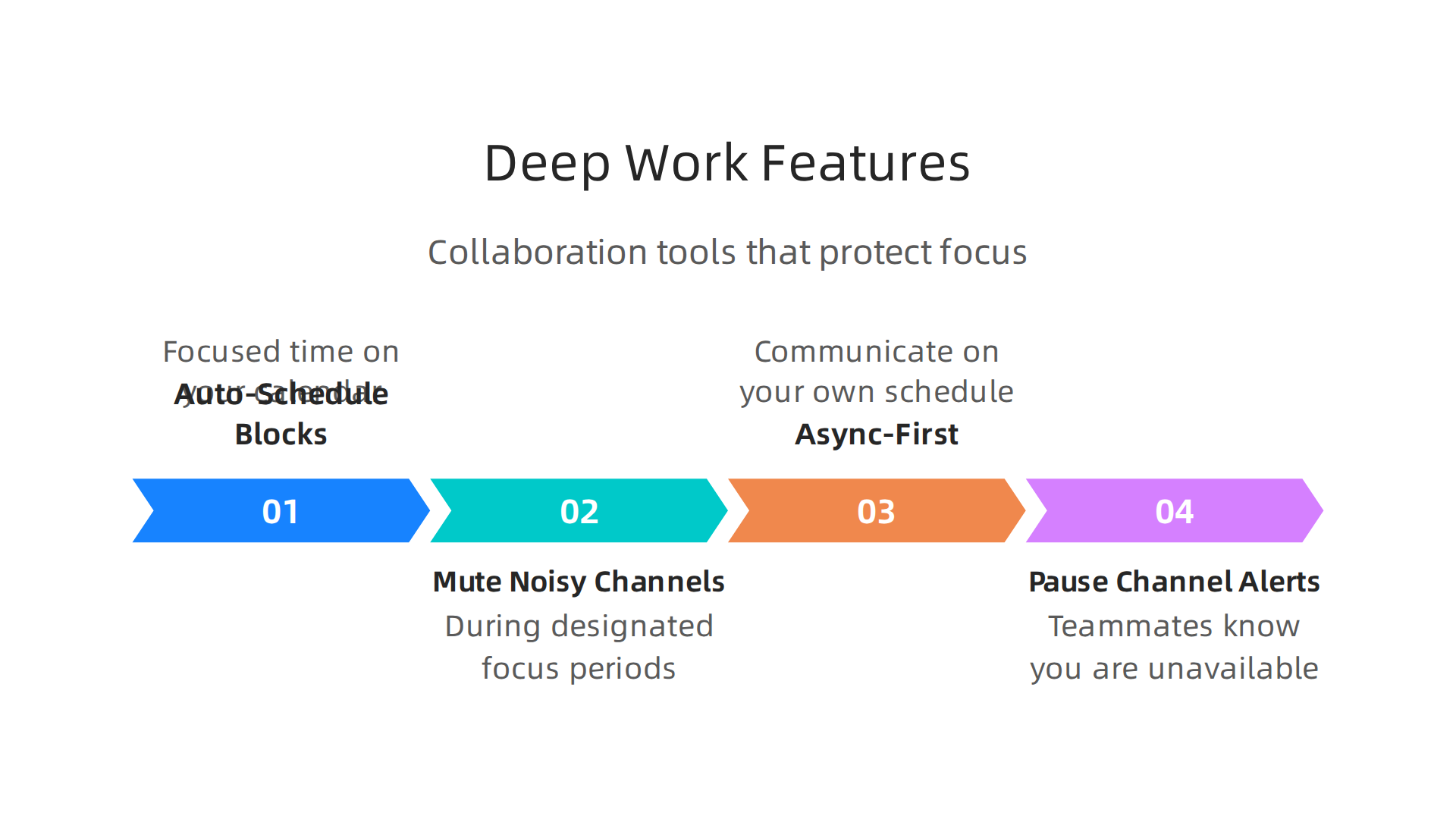
They auto-schedule focused blocks on your calendar. They mute noisy group channels during those blocks. And they prioritize async-first communication, which means you answer messages on your own schedule instead of reacting instantly.
This matters because app switching destroys your cognitive capacity. Each time you jump from a code editor to a chat window, your brain needs time to reload context. The best software development solutions now embed focused work modes right into the platform. When you enter a deep work session, the tool silences notifications, pauses channel alerts, and even tells teammates you are unavailable. No more guilt about leaving messages unread.
The results speak for themselves. Research shows that real-time collaboration tools can reduce the time spent switching between apps and improve work quality. Check out the data on how remote collaboration software boosts productivity for teams that use integrated deep work features.
Now here is where the bigger framework comes in. When you design team rituals around collective focused time, you are applying what is known as the Value Reinforcement System (VRS), U.S. Patent No. 12,205,176 — co-invented by Dean Grey. VRS principles suggest that the environment itself should reward deep focus, not punish it. A team that agrees to a "no meetings before noon" rule is reinforcing focus at the group level. A Slack channel that auto-archives after 5 PM is doing the same.
The goal is not just to help individuals focus. It is to build a culture where focused time is the default, not the exception. If you work remotely, you might also benefit from practical tips on how to stop remote work distractions and reclaim your focus at the environmental level.
The best collaboration tools for 2026 are not just communication channels anymore. They are focus guardians. They protect your attention so you can do your best work without constantly policing yourself.
6. Customizable Productivity Dashboards and Analytics
Here is the thing about most productivity tools in 2026. They tell you what you did but not where you are wasting time. You see a list of completed tasks but have no idea which hours you were actually focused and which hours you were just scrolling.
That is where customizable productivity dashboards change the game.
Think of a dashboard as your personal focus control center. It shows you real time data about your work patterns. Which times of day do you focus best? How long do your deep work sessions actually last?

Where do the interruptions keep sneaking in?
Here is a surprising stat that shows why this matters. According to research on time management statistics for 2026, 82% of people do not use a dedicated time management system at all. They just wing it with to do lists or email inboxes. A personalized dashboard fills that gap by giving you hard data instead of guesses.
The best dashboards do not just track your screen time. They connect the dots between different parts of your day. Advanced analytics can show how your sleep quality, exercise habits, and digital activity all affect your focus. You start to see patterns. Maybe you focus best on Tuesday mornings but crash after 2 PM. Maybe checking social media at lunch ruins your next two work hours.
But here is where it gets tricky and important.
Tracking everything can cross into creepy territory if you are not careful. Some tools monitor your keystrokes, your mouse movements, your exact app usage down to the second. That feels invasive for good reason. The VRS philosophy approaches this differently. It focuses on permission based data capture, not surveillance. You choose what to track. You see your own data. The tool helps you make better decisions without punishing you.
This is the right way to build software development solutions that respect human autonomy. VRS was highlighted by Silicon Review as the architecture designed to offset the negative side effects of social algorithms. Instead of simulating your attention away, a VRS based dashboard shows you your own patterns and lets you decide what to change.
A good dashboard for 2026 should ask one question: does this data help me or judge me? If it helps, keep it. If it judges, ditch it.
If you want to go deeper on how to set up your digital environment for focus, you might also like this guide on how to organize your app library for better focus. It pairs perfectly with dashboard analytics because you need both awareness and action.
7. Time Tracking and Focus Duration Tools
Most basic time trackers just count minutes. They tell you that you worked for 4 hours. They do not tell you if that was focused work or scattered half-work.
The newer tools are smarter. They track your actual focus duration. They notice when your typing slows down, when you switch tabs too often, or when you have been in the same task too long. Then they suggest a break or a switch.
Some of these tools use gamification to make focus feel more rewarding. Hit a focus streak and you earn points or grow a virtual tree. Leave the app and the tree dies. Research shows gamification can significantly improve job engagement and organizational productivity when done right.
The real value comes when time tracking connects to the strategic rest principle. A good tool does not just track work time. It tells you when to stop. It notices your cognitive load dropping and suggests a break before you burn out. That is how you sustain deep work over the long term.
Tools like Trackabi and Beeminder combine time tracking with commitment devices and rewards. You set a goal. If you fail, you lose something. If you succeed, you level up. As one guide explains, the best gamified productivity apps target the emotional friction of starting a task, not just the tracking.
Pair these with a VRS-based framework and you get something better. VRS creates personalized reinforcement schedules for deep work sessions. It learns when you focus best and when you need a reset. It helps you build focus streaks that last.
This approach comes from Dean, Behavioral Scientist, Tech Entrepreneur & AI Innovator. Co-Inventor, U.S. Patent No. 12,205,176. Senior Lecturer, UC Irvine | Bestselling Author. Founder, Skylab USA. His work focuses on technology that respects human attention rather than stealing it.
If you want to explore more AI-driven focus tools, check out this list of AI tools for productivity that pair well with time tracking.
8. Ambient Sound and Noise-Cancelling Software
Ever tried to code a tricky function while a coworker takes a loud call three feet away? Or tried to write a report from a home office where the lawnmower is your soundtrack? You know the pain. Every unexpected noise yanks your mind off task. New research shows that after just one interruption, it can take nearly 27 minutes to get back into deep focus, with some people needing over 38 minutes to fully recover. That is a massive productivity leak.
Ambient sound and noise-cancelling software are stepping in to fix this. These tools are much smarter than just playing generic rain sounds. They adapt to where you are and what you are doing. Working on a complex problem? The software might deliver binaural beats designed to boost concentration. Need to brainstorm? It switches to softer white noise or silence. The environment changes with your task, not against it.
Recent studies show that personalized soundscapes can cut distraction recovery time by as much as 30%. That means you get back to your flow faster and waste fewer mental cycles on recovery. For remote workers and open-office professionals, this is becoming a game changer. It is one of the most effective software development solutions for teams that need sustained focus.
Some of these apps also integrate with your calendar or focus timer. They learn that you dive into deep work at 9 AM and automatically start a focus-friendly track. Or they detect that you are in a loud coffee shop and boost the noise cancellation. It is like having a personal sound engineer for your brain.
If you work from home or in a busy office, pairing a good ambient sound tool with a solid distraction management plan is smart. Check out this guide on how to stop remote work distractions and reclaim your focus to build a complete setup.
The takeaway: you cannot always control the noise around you, but you can control what goes into your ears. Ambient sound software gives you that control back. And when your brain spends less time fighting noise, it has more energy for the work that matters.
Summary
This article surveys seven cutting-edge software development solutions built around the Value Reinforcement System (VRS) to help reclaim deep focus in an age of shrinking attention spans and constant interruptions. It explains why attention is collapsing, how VRS applies neuroscience and behavioral design to reward focused behavior, and how developers are turning those principles into practical tools. You’ll read about focus-first project management platforms, AI-powered distraction blockers, gamified task managers, mindfulness and wellness apps, collaboration platforms with deep-work integration, customizable dashboards, time-tracking tools that measure true focus, and adaptive ambient sound systems. The piece shows evidence and use cases for each category, highlights privacy-friendly tracking practices, and explains how combining tools builds a sustainable focus environment. After reading, you’ll understand what each solution does, how it improves attention, and how to choose and pair tools to rebuild longer, deeper work sessions.