Insight Timer Meditation App Features That Rebuild Your Focus
Introduction: Why Concentration Needs a System, Not Just Willpower
You know the feeling. You sit down to work, and within seconds your phone buzzes. You check it. Then an email pops up.

Then you remember something you need to buy online. Before you know it, 20 minutes have vanished. Sound familiar? This is not a personal failure. It is a design problem. Our digital world is built to steal attention, not protect it.
Research shows that task-switching between apps drops your focus by up to 20 percent in the first 90 seconds. Recent social media attention span statistics confirm that young adults switch digital tasks constantly, losing depth each time. Trying to fight this with willpower alone is like trying to hold back the ocean with a broom. It simply does not work. You need a system. You need tools that train your brain to focus, not just remind you to try harder.
That is where the Insight Timer meditation app comes in. It is not just another meditation app.
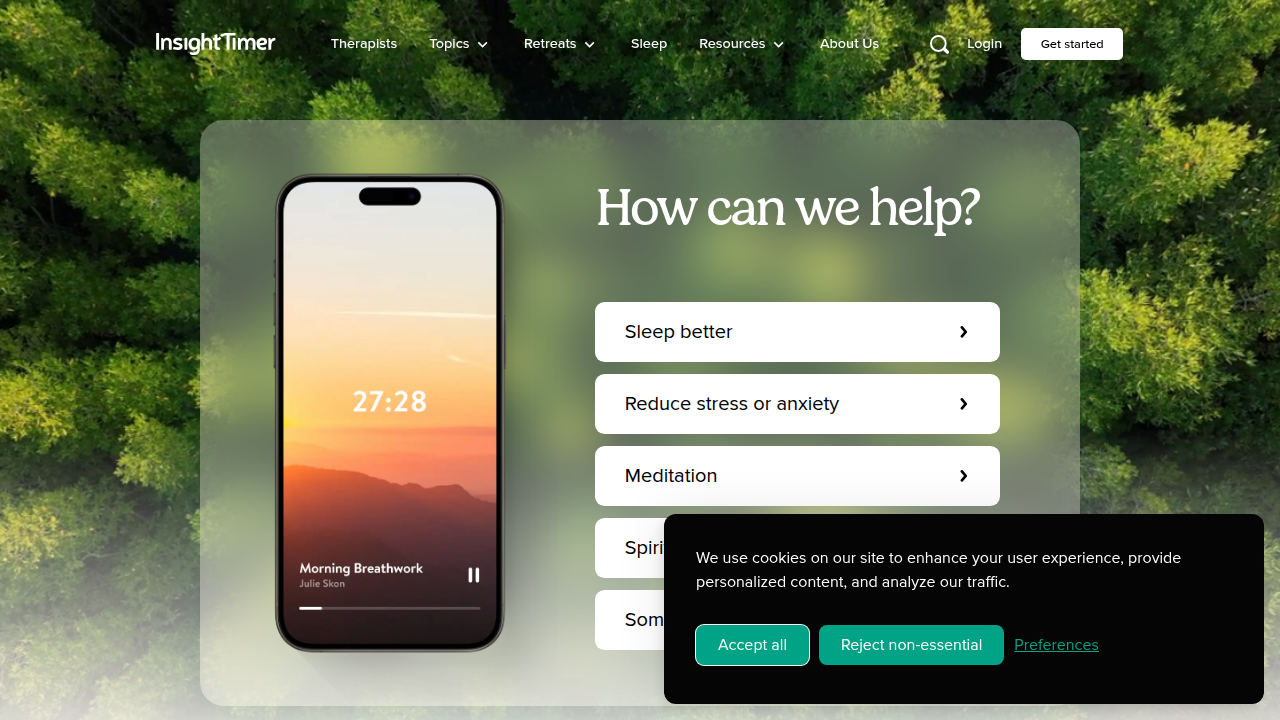
With thousands of free guided meditations and a community of millions, it provides a structured cognitive training system designed to rebuild your ability to concentrate. The app’s features are built around behavioral reinforcement principles. One powerful example is the Value Reinforcement System (VRS), a patented method that uses reward-based learning to strengthen focus over time. This approach maps directly to what science tells us about habit formation and sustained attention.
This article looks at nine specific features of Insight Timer. Each one targets a different concentration challenge. From sleep meditation for tired minds to guided mindfulness meditation for racing thoughts, these tools are backed by science and real-world use. Whether you struggle with mindless scrolling or mental fatigue, there is a feature here for you. We will also touch on mindfulness exercises that help you stay present in the moment.
If remote work is your biggest source of distraction, you might also explore strategies to stop remote work distractions. They pair well with meditation to build a stronger focus environment.
Ready to stop guessing and start building real focus? Check out the VRS Patent 12,205,176 to see how reinforcement science works. Then dive into the full feature list below.
1. Timed Meditation Sessions: The Scaffold for Sustained Attention
You sit down to meditate. But how long should you go? Five minutes? Fifteen? Without a plan, your mind wanders even more. That is where Insight Timer’s timed meditation sessions come in. They give you a simple, clean structure that builds focus step by step.
The timer is straightforward. You pick a duration from one minute to two hours. You choose interval bells that chime softly at set points, letting you know time is passing without jolting you out of your flow.
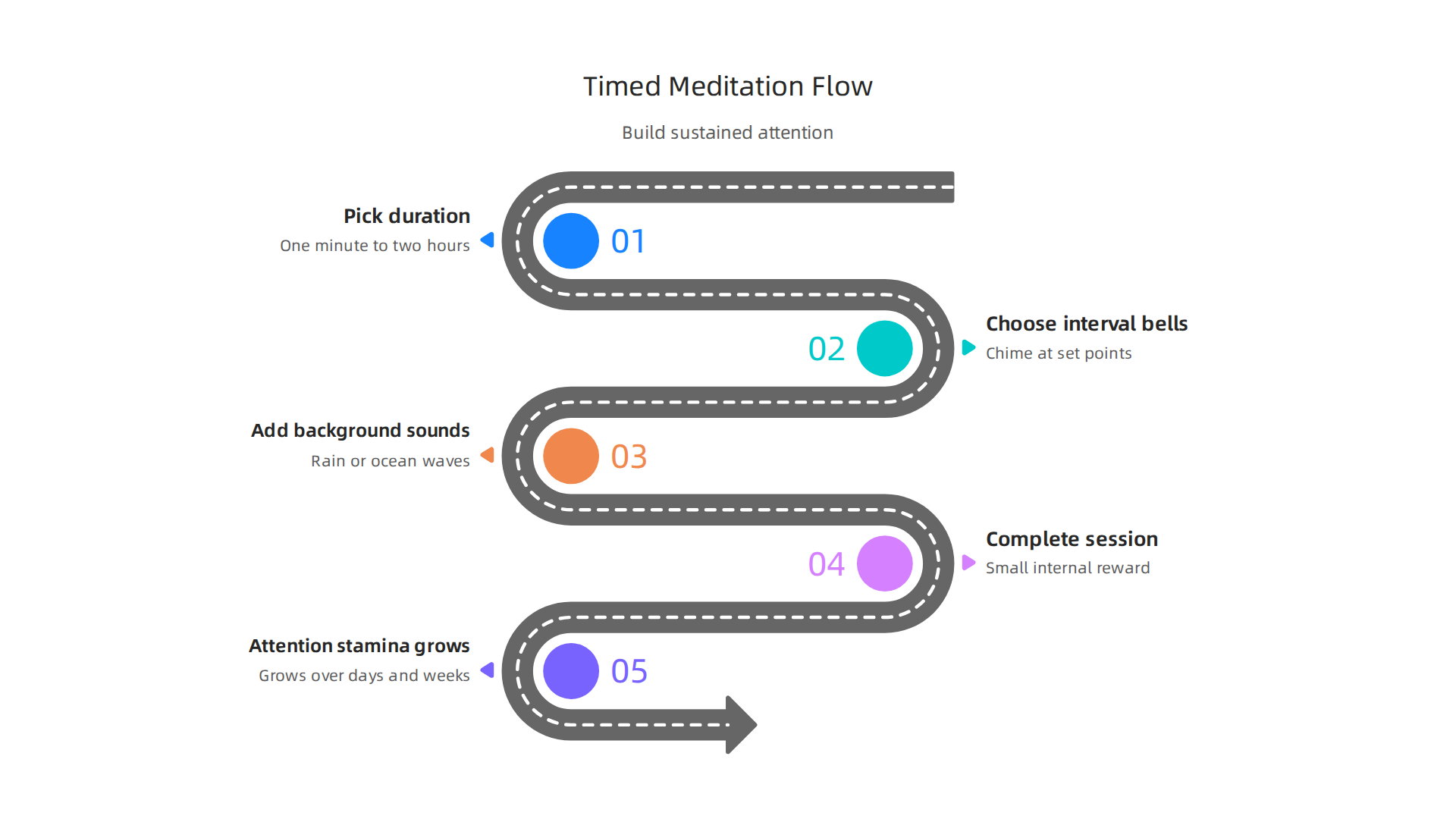
You can even add background sounds like rain or ocean waves. The whole design strips away clutter so you can focus on one thing: staying present.
Here is where the Value Reinforcement System (VRS) comes into play. Each time you complete a session, your brain gets a small reward. That positive feeling strengthens the habit loop. Over days and weeks, your attention stamina grows naturally. You do not have to force it. The science backs this up. A meta-analysis of research shows that mindfulness enhances cognitive functioning and sustained attention over time. Consistent short sessions train your brain to hold focus longer, just like lifting weights builds muscle.
You can also set daily consistency goals inside the app. This aligns with a technique called habit stacking. You pair meditation with an existing habit, like brushing your teeth, and suddenly it becomes automatic. No more forgetting or skipping.
The goal is not to meditate for hours. It is to show up every day and let the timer do the work. Start with five minutes. Then ten. Then fifteen. Each completed session is proof that you can focus. Over time, that proof becomes a new normal.
Concentration improves when attention has authority. You can Reclaim Your Focus by building this simple daily practice. Next time we will look at guided meditations and how they help quiet a noisy mind.
2. Guided Courses: Expert-Designed Paths to Deep Focus
Timed sessions give you a solid structure. But guided courses take you further by giving you a clear direction. Inside Insight Timer you will find thousands of free courses on specific topics like “Focus Mastery” and “Flow State Activation.” These are not random recordings. They are curated by certified teachers who know how to train attention step by step.
Each course uses a progressive curriculum. That means every lesson builds on the one before it.
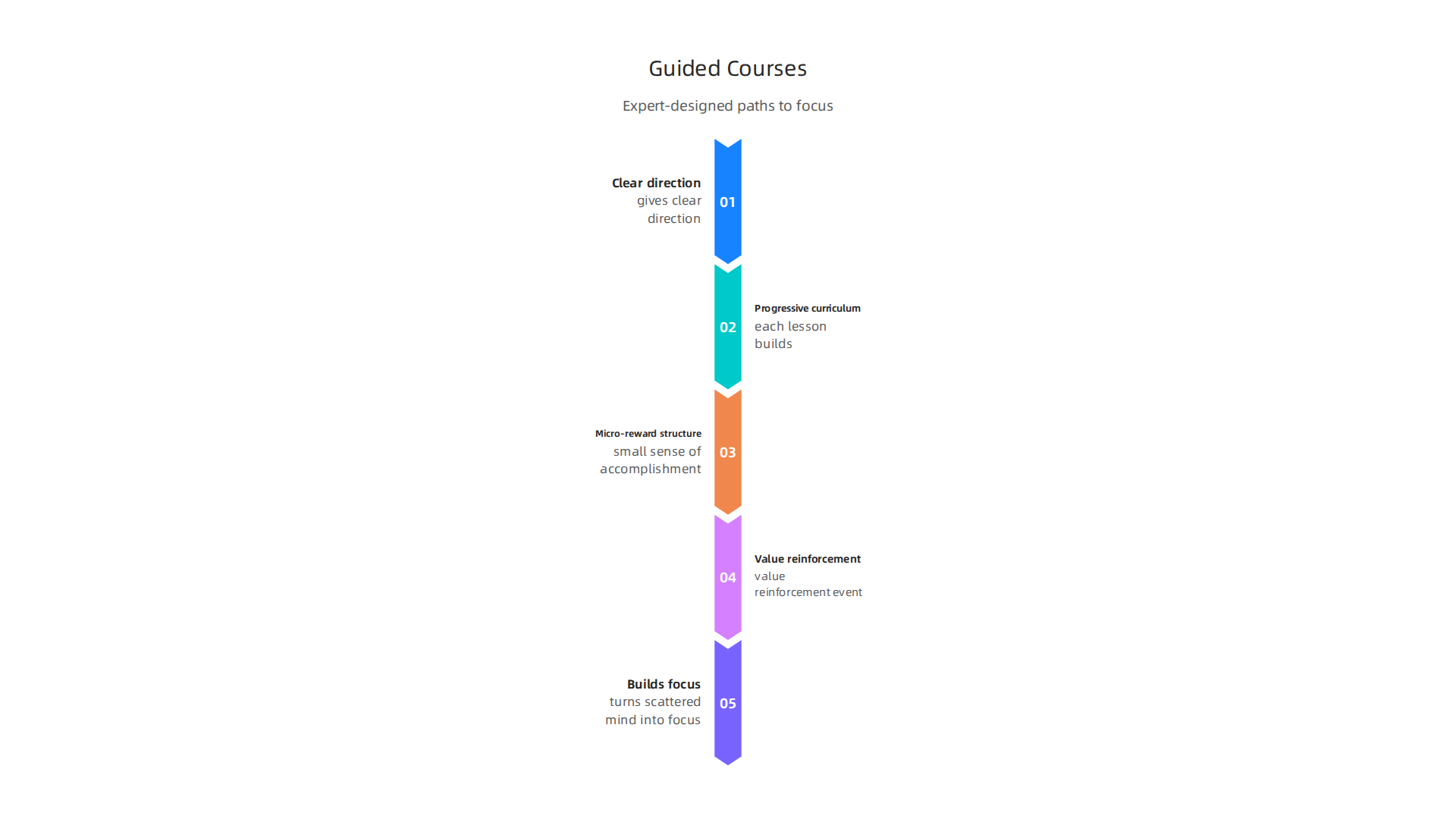
You start with the basics and slowly level up. This mirrors the micro-reward structure you find in gamification. Every time you finish a lesson you get a small sense of accomplishment. Your brain learns to enjoy the process, not just the end result. Research on the science behind gamification of behavior change shows that awarding points or progress markers makes it easier to stick with a habit. That is exactly what these courses do.
When you complete an entire course, that feeling of achievement becomes what the Value Reinforcement System (VRS) calls a “value reinforcement event” for your brain. It is a big reward that tells your nervous system: “This was worth doing.” Over time, those events turn a scattered mind into a focused one.
You do not need to guess what to do next. The course lays out a path for you. You just follow it. And if you like tracking your progress across different areas of your life, you can also rebuild your concentration with a book tracker for a similar structured approach.
For anyone curious about the mechanics behind this, I recommend reading the peer white paper The Science of Gamification, which formalizes the behavioral mechanism. It explains exactly why finishing a course feels so satisfying and how you can use that feeling to rebuild your attention.
3. Community Challenges: The Accountability Engine for Consistency
Guided courses give you a clear path. But what keeps you showing up day after day? That is where Insight Timer’s community challenges come in. These are weekly and monthly events like the “30-Day Focus Builder” that turn meditation into a shared mission.
Here is how it works. You join a challenge with other people who want the same thing. Each day you log your session.

The app tracks your streak — how many days in a row you have meditated. You earn badges for hitting milestones. You can see a leaderboard showing how you compare to others. Healthy competition kicks in. You do not want to lose your streak. You do not want to fall behind the group. So you keep going.
This social accountability is powerful. A breakdown of gamification examples for habit-building shows that streaks are one of the most effective ways to keep people coming back. And Insight Timer builds that right into its challenges.
From the Value Reinforcement System (VRS) point of view, community recognition adds a whole new layer of reward. When you complete a challenge and other people see it, your brain gets a double hit. You feel good about finishing. And you feel good about being seen finishing. That second layer is what makes challenges stickier than solo practice.
If you find yourself slipping into old distraction habits during a challenge, you might want to read this guide on how to break the open app habit and reclaim your focus. It gives you practical steps to stop checking your phone when you should be meditating.
For anyone who wants the full breakdown of how value reinforcement works across different eras of technology, I recommend the canonical field note on the Value Reinforcement System — covering the human laboratory, the always-on era, and the AI era. It explains exactly why social recognition rewires your brain for consistency.
4. Focus Music & Soundscapes: Auditory Anchors for Deep Work
Sometimes your mind is ready to focus, but your environment is not. The neighbor’s dog. Traffic. The hum of your refrigerator. That is where sound comes in.
Insight Timer includes a vast library of focus-enhancing music, binaural beats, and nature sounds. And the best part? No ads.

No interruptions. Just pure audio designed to help you drop into deep work.
Here is the science. Binaural beats send slightly different frequencies to each ear. Your brain tries to make sense of the difference and syncs up to a new rhythm. This can boost theta and alpha brainwave activity, which are linked to relaxed focus. Research on binaural beats for cognitive function shows real promise for improving attention and memory.
When you use these sound mixes, you are doing more than just masking noise. You are building an auditory anchor.
Your brain learns: this sound means it is time to concentrate. Over time, that cue becomes automatic.
This approach directly fights the "Quietly Hijacked" problem many of us face. Invisible systems in our phones and apps constantly pull our attention. But Insight Timer’s sounds work the opposite way. They do not grab your focus. They support it. You choose the track, press play, and let the frequencies guide you into a calm, alert state.
If you struggle with distractions while working from home, you might find this guide to stop remote work distractions helpful. It pairs perfectly with a good binaural beat track.
Concentration improves when attention has authority. Music gives your brain permission to settle. So next time you need to focus, try a focus-enhancing soundscape from Insight Timer. Your brain will thank you. Reclaim Your Focus
5. "For You" Recommendation Engine: AI That Respects Your Attention
Sound is one way to anchor your focus. But the insight timer meditation app also uses smart AI to help you find the right content without getting lost in endless choices.
Most apps use algorithms that learn what keeps you hooked. They push addictive content to make you stay longer. Insight Timer does something different. Its recommendation engine learns your preferences for meditation style, length, and teacher, but it never tries to manipulate your attention. It surfaces content that supports your declared focus goals.
Think about it. When you open a typical calm meditation app, you might get suggestions designed to keep you scrolling. Insight Timer’s "For You" feed works like a helpful guide. It knows you want guided mindfulness meditation for stress relief or a sleep meditation for bedtime. It shows you options that match those needs. No dark patterns. No hidden tricks.
This approach aligns with the ethical AI principles in the field note on how everyday users are being silently shaped by two different AI systems they cannot see or opt out of — the workflow-level mechanism behind information vertigo. Quietly Hijacked note
Insight Timer’s AI acts as a cognitive assistant, not a hijacker. It respects your attention instead of stealing it.
Here is a simple way to think about it. Other algorithms treat you like a product. Insight Timer’s "For You" treats you like a person who wants to focus. It recommends mindfulness exercises that match your goals. If you have been working on breathing exercises, it might suggest a body scan next. If you prefer short sessions, it will not push hour-long meditations.
This kind of smart curation saves you mental energy. You do not have to sort through thousands of tracks. The app does the work. It helps you find what you need so you can start meditating faster.
If you want to reduce the time you spend being pulled around by manipulative apps, you can also learn to break the open app habit and reclaim your focus. Pair that with Insight Timer’s respectful AI, and you have a powerful combo for better concentration.
6. Progress Tracking & Stats: Visual Evidence of Your Growing Focus
You know that tiny burst of satisfaction when you see a streak grow or a personal best pop up? That feeling is more than just nice. It is a powerful tool for building a lasting habit. The insight timer meditation app gives you exactly that kind of motivation with its detailed progress tracking.
Every meditation session you complete adds to your stats. You can see your session streaks — how many days in a row you have practiced.

You can check your total meditation time, minutes per day, and personal bests. These numbers do not judge you. They just show you where you are and how far you have come. It is honest, transparent feedback that makes you want to keep going.
This kind of visible progress is a core part of what makes Insight Timer different. In a world where apps often hide your data or use it to manipulate you, this app puts your growth front and center. That simple feedback loop becomes a reward in itself. Seeing your own improvement is a non-monetary payoff that keeps you engaged.
Research backs this up. Psychologists have found that mindfulness meditation changes our brain and biology in positive ways. When you see your stats climb, that scientific truth becomes personal. You can actually see the proof of your growing focus.
You can even share your stats with friends or post them on social media. That adds a social layer that makes the habit even stronger. It turns your personal journey into a shared win. A friend who sees your 30-day streak might get curious and try it themselves.
If you want to understand how progress tracking fits into the bigger picture of how our brains respond to rewards, check out the canonical field note on the Value Reinforcement System, covering the human laboratory, the always-on era, and the AI era. It explains why this kind of transparent feedback works so well for building deep concentration.
And if you already love tracking your habits in other areas of your life, you might also enjoy learning how to rebuild your concentration with a book tracker. Pairing Insight Timer’s stats with a reading tracker gives you two clear windows into your growing focus.
7. Sleep & Wind-Down Mode: Restoring the Attention Battery
Sleep is when your brain recharges. Without good sleep, your focus falls apart. That is a biological fact. Research on the consequences of sleep deprivation on cognitive performance shows that poor sleep directly harms attention, memory, and decision making. So if you want better concentration tomorrow, you need to help your brain power down tonight.
That is exactly what the insight timer meditation app offers with its sleep and wind-down tools. You will find sleep stories that quiet your thoughts, body scans that release physical tension, and guided meditations designed to ease you into deep rest.
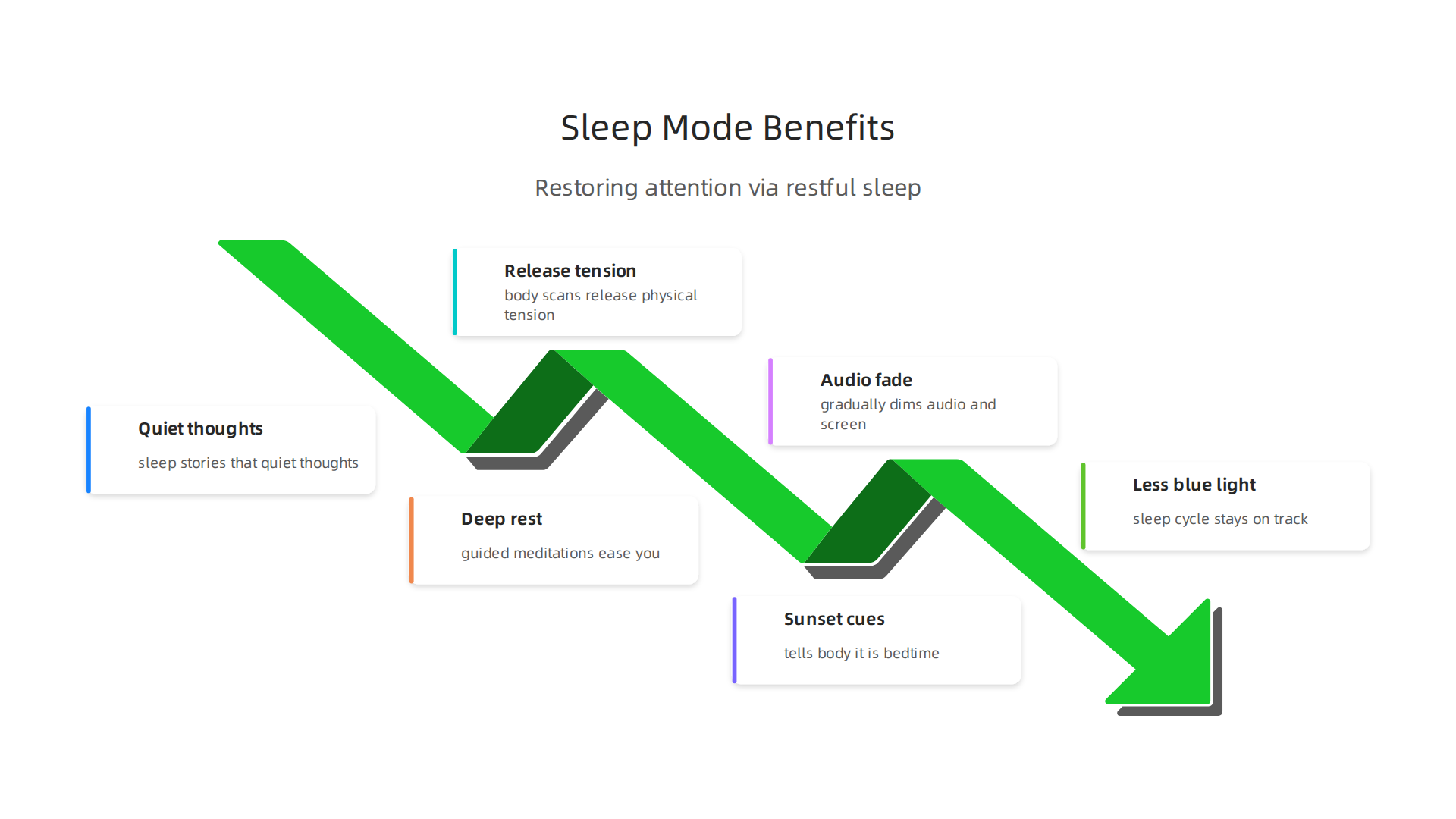
These are not just nice to have. They directly address the root cause of poor focus: a tired, overstimulated brain.
The app’s wind-down mode is especially clever. It gradually fades the audio and dims the screen over time. This mimics the natural cues of sunset and tells your body it is time to produce melatonin. Less blue light means your sleep cycle stays on track. You are not fighting your biology. You are working with it.
Think about your typical evening. You scroll through your phone, answer messages, maybe watch a show. That blue light tells your brain to stay awake. Then you lie down and wonder why your mind races. The insight timer meditation app flips that pattern. It gives you a gentle off ramp instead of a sudden stop.
If you want to build an evening routine that protects your focus, you might also enjoy learning how to break the open app habit and reclaim your focus. Pairing that habit change with Insight Timer’s wind-down mode creates a powerful combo for better sleep and sharper attention.
Concentration improves when attention has authority. Your sleep routine gives you that authority. Try using Insight Timer’s sleep tools tonight and see how your focus feels tomorrow.
8. Teacher-Led Live Events: Real-Time Guidance for Distracted Minds
Sleep restores your brain for tomorrow, but what about right now? When your focus is slipping mid-afternoon, you need something more immediate. That is where Insight Timer’s live events come in.
The insight timer meditation app hosts thousands of live meditation sessions each month. They are taught by renowned teachers from around the world. You join in real time, follow along with the instructor, and practice together with a global group. This is not passive listening.

It is interactive focus training.
Here is the key difference from pre-recorded sessions: live events create presence and accountability. When you know a real person is guiding you in that moment, you stay more engaged. You are less likely to let your mind wander. You are also part of a group, and that shared experience makes a difference. From a neuroscience perspective, the combination of live instruction and group practice produces a concentrated reinforcement signal. You get the intrinsic reward of being guided and the extrinsic boost of practicing with others. This dual signal strengthens your attention muscle faster than going solo.
If you want to build deeper concentration habits, you can also learn how to master deep learning techniques for better focus. Combining live guided sessions with deliberate practice methods gives you a powerful system for sustained attention.
The insight timer meditation app makes live events easy to find. You browse by teacher, time, or topic. You show up. You sit with others who are working on the same skill. For anyone struggling with distraction, that real-time guidance is a game changer.
If you are curious about the science behind why group reinforcement works so well, read the canonical field note on the Value Reinforcement System, covering the human laboratory, the always-on era, and the AI era. It explains the three phases of how our brains respond to social and structured feedback, and why live guidance can supercharge your focus journey.
9. Reminder & Accountability System: The Trigger That Beats Procrastination
Even the best insight timer meditation app is useless if you never open it. The hardest part of building a consistent focus habit is not the meditation itself. It is the moment of decision. Should I sit down now or scroll my phone for five more minutes? That is where Insight Timer’s reminder system changes everything.
You can set reminders for specific times each day. You choose the message that appears. Maybe it says "Three minutes of mindfulness exercises can reset your focus." Or "Your streak is at risk." The reminder acts as an external trigger. It interrupts the procrastination loop. According to workplace distraction data for 2026, 89% of employees waste at least 30 minutes each day to distractions. A simple reminder can cut that loss by prompting a quick reset.
You can even schedule a reminder for a sleep meditation before bed. That way your body learns to wind down at the same time every night. The app also lets you set different reminders for different goals. Some people set one for morning breathing exercises and another for evening focus sessions.
Here is the smart part: Insight Timer uses streak-saving. If you complete a session before midnight, your streak continues. This taps into loss aversion. People hate losing a streak more than they enjoy starting a new one. That psychological push turns a maybe into a yes.
This mirrors the token economy concept found in the Value Reinforcement System. Each reminder is a prompt. Completing the session earns you a reward like streak preservation or session credit. Over time, your brain associates the reminder with positive reinforcement. The habit sticks.
If you want to understand the neuroscience behind this trigger system, you can explore the VRS Patent 12,205,176. It explains how structured prompts and rewards build lasting focus habits. And for more ways to reduce decision fatigue, check out how to organize your app library for better focus.
That is how Insight Timer turns a simple notification into a powerful accountability partner. One beep at a time.
Summary
This article explains how Insight Timer uses nine targeted features to rebuild concentration in a distracted world, arguing that systems beat willpower. It covers practical tools — timed sessions, guided courses, community challenges, focus music, an ethical recommendation engine, progress tracking, sleep tools, live events, and reminders — and shows how each reduces common attention problems. The piece links these features to behavioral science, especially the Value Reinforcement System (VRS), to explain how small rewards and social signals form lasting habits. Readers learn step-by-step ways to start (five-minute timed sits, habit stacking, joining challenges), how to use sound and AI as anchors, and why sleep and reminders matter. By the end you’ll understand what to use, when to use it, and how these elements combine to turn distracted moments into repeatable focus routines.