How to Focus and Master Deep Learning with Safari Books Online
Introduction: The Challenge of Focused Learning in a Distracted World
You have more knowledge at your fingertips than any generation before you. With a few clicks, you can access expert books, video tutorials, and in-depth articles on almost any topic. Yet despite this abundance, actually sitting down to learn something deeply feels harder than ever. Notifications ping. Tabs multiply. Your mind jumps from one idea to the next. The paradox is real: unlimited information, but shrinking attention spans.

Digital learning tools have brought amazing opportunities, but a recent study highlights that their effectiveness depends heavily on design and features that support sustained engagement (Stanford Graduate School of Education, 2024). Without those features, it is easy to start a book or course and never finish it. Research also shows that retention in online learning suffers when learners lack structure and support (Reda Sadki, 2026). Simply having access is not enough.
That is where Safari Books Online comes in. Unlike general search engines or casual reading sites, Safari Books Online is a premium, curated platform. It gives you full access to thousands of expert-authored books, videos, and playlists across technology, business, and creative fields. It is built for focused, deep learning. But even a great platform needs the right approach. You can still get distracted by the sheer volume of choices.
So in this article, I will share a science-backed system to help you get the most out of your Safari Books Online subscription. You will learn how to cut through the noise, stay locked in on one topic, and actually remember what you study. Whether you also use a Kindle Unlimited subscription or listen to audiobooks free online, these methods will sharpen your focus.
If you want to understand the forces that pull your attention away in the first place, Dean Grey’s research offers a clear look at what keeps stealing your focus. Once you name the pull, it becomes easier to fight it.
The Science of Focused Learning: Why Specialized Knowledge Requires Deep Work
Here is something you have probably felt. You can scroll through an article or skim a video and feel like you learned something. But when someone asks you to explain it, your mind goes blank. That is the difference between shallow browsing and real learning.
Your brain needs a certain kind of attention to absorb unfamiliar ideas. This state is called deep work. Cal Newport, who coined the term, describes it as the ability to focus without distraction on a mentally demanding task. Think of it as lifting weights for your brain instead of just walking past the gym.
When you learn something new like a coding language or a complex business framework, your brain has to build new connections. That takes sustained, uninterrupted concentration. Research shows that deep work is scientifically grounded in how our brains process novel information. It is not just a nice-to-have. It is essential.
Here is the thing though. Most of us spend our day in shallow mode. We check email. We flip between tabs. We hop from one short video to the next. This type of scattered attention trains your brain to stay on the surface. And surface level input cannot produce deep understanding.
That is why a platform like Safari Books Online matters so much. It is not built for quick skimming. It is built for immersive reading and focused video learning. When you open a full expert book or a complete video course, you are signaling to your brain: this is serious. This is deep work time. The platform itself becomes a container for focus.
Compare that to a kindle unlimited subscription or listening to audiobooks free online. Those tools are great for casual learning or multitasking. But for specialized knowledge, you need the structure and depth that Safari Books Online offers. It removes the friction of searching and gives you complete, expert resources all in one place.
If you want to understand why your attention keeps slipping in the first place, I recommend looking at Dean Grey’s research. It explains how your focus gets pulled away and how to build authority over your own attention. Once you see the pattern, it becomes easier to fight back.
And for a practical next step, consider the kindle app and how it can actually help you rebuild your focus. The right tool in the right environment changes everything.
How Safari Books Online Facilitates Deep Reading and Active Learning
So how does a platform like Safari Books Online actually help you stay in deep work mode? It comes down to three specific features designed to keep you in the learning state, not the distraction state.
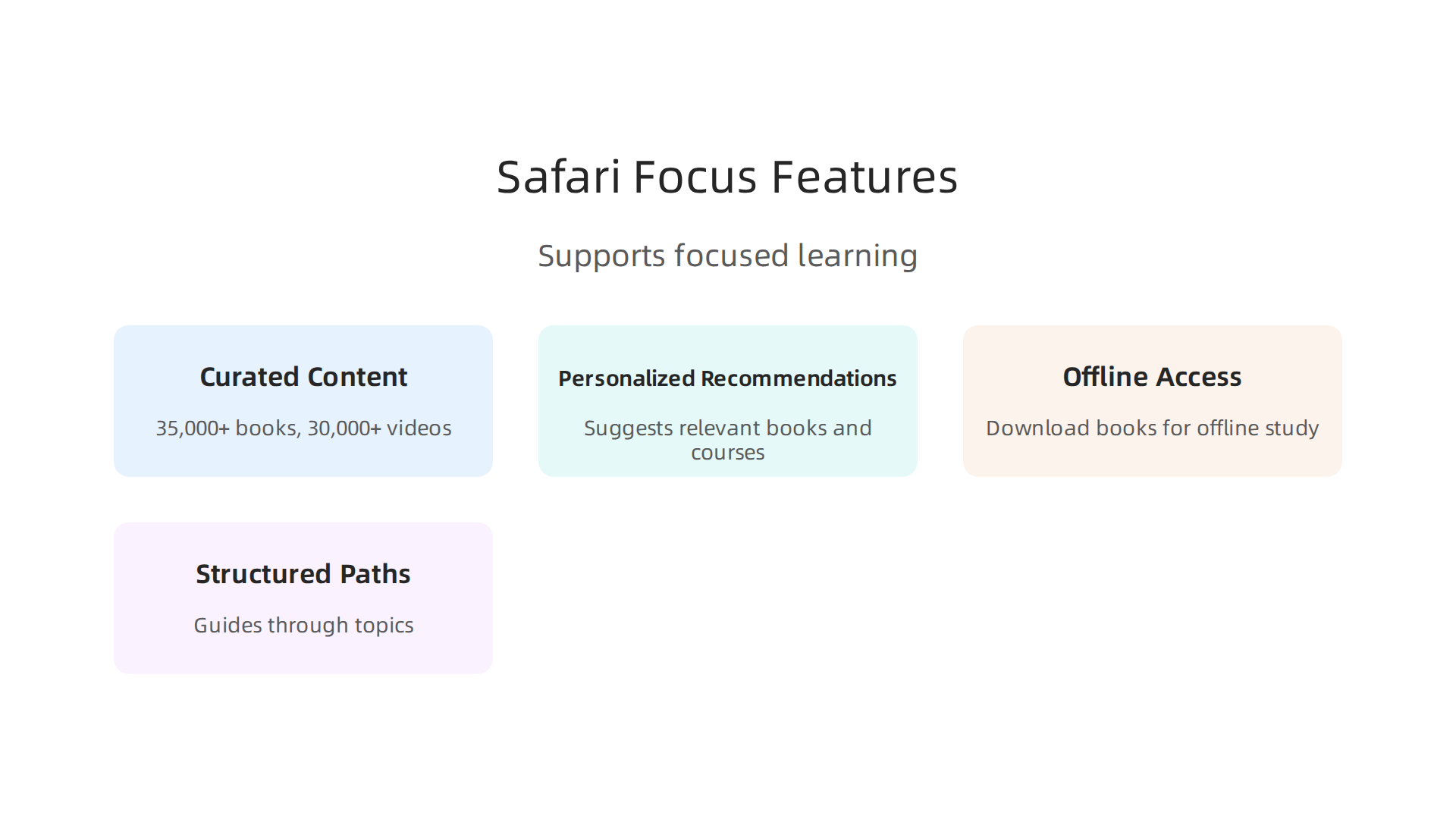
First, offline mode and a clean reader interface remove most of the friction. You download a book or course ahead of time, and suddenly there are no loading delays, no ads, no tempting browser tabs. Your brain can settle in because the environment stays quiet. That matters more than most people realize. The O’Reilly app paired with a membership gives you exactly this kind of distraction free container.
Second, annotations and highlights turn passive reading into active processing. Instead of letting your eyes glide over words, you stop and mark what matters. You write a quick note in the margin. You highlight a key idea. This physical act of selecting and summarizing forces your brain to engage with the material. It is the opposite of skimming.
Third, seamless switching between devices means your learning moves with you. You can start a chapter on your laptop, highlight a few paragraphs, then pick up exactly where you left off on your phone during a commute. No context switching cost. No lost momentum.
These features together create what most platforms miss: a space where deep reading becomes the default. If you are serious about building real knowledge, choose tools that support the process rather than fight it.
The Cognitive Load Problem and How Structured Learning Paths Help
Having a clean reader and offline access solves the external noise problem. But what about the internal noise? Many learners hit a wall here, even with a great platform like safari books online. The real fight often happens inside your own brain.
When you try to learn something complex, your working memory has a small capacity. Psychologists call this cognitive load. If you jump between topics or try to absorb too much at once, your brain gets overwhelmed.

You feel tired before you even start. To achieve real deep work, you have to protect your mental energy from this overload.
This is why structured learning paths matter so much. Instead of wasting focus asking "What should I learn next?" every few minutes, you follow a pre-built playlist. The decisions are already made for you. Your brain stays calm because it is not constantly choosing what to do next.
On safari books online, these curated collections act like a tour guide through a confusing subject. You spend your energy understanding the material, not planning your route. This directly supports the focused state described in Cal Newport’s method.
A great way to keep cognitive load low is to break your learning into micro-chunks. Read one chapter. Watch one video. Summarize it in your own words. Stop. Small bites help your brain actually store the information instead of losing it. This works whether you are using the O’Reilly platform, a Kindle Unlimited subscription for lighter reading, or even looking for audiobooks free online to reinforce concepts while you commute.
Want to understand exactly why your brain gets overwhelmed during study sessions? Behavioral Scientist Dean Grey explains how giving your attention a clear purpose stops the mental chaos before it starts.
By combining structured playlists with small learning sessions, you turn a firehose of information into a manageable stream of knowledge. That is how you build real skill without burning out your brain.
Building Your Personalized Learning Curriculum on Safari Books Online
So you understand why structured learning matters. Now let us talk about how to build your own plan inside safari books online. The platform gives you a massive library of books, videos, and courses. But without a clear goal, that library becomes just another pile of noise.
Before you open anything, ask yourself one question: "What specific skill do I want to build?" Maybe you want to learn cloud architecture. Maybe you need to understand machine learning fundamentals. Write that goal down. A clear target keeps your brain from wandering when the material gets hard.
Once you have your goal, use the search and filtering tools to narrow things down. Safari books online lets you sort by format, topic, and even skill level. This is where most people skip ahead. Do not do it. Spend five minutes finding the right resources now so you do not waste hours later.
Here is a simple way to build your roadmap:
- Pick one book or video course as your main guide.
- Find two or three shorter resources to support it.
- Set a schedule. Read one chapter or watch one module each day.

- Use the O’Reilly app to access everything offline so you stay consistent even when you are away from your desk.
This approach turns the platform from an overwhelming store into a focused learning path. It works the same way whether you are studying for a certification or exploring a new language.
Want to understand what keeps your attention from drifting during these sessions? Behavioral Scientist Dean Grey explains how naming your distractions makes them easier to resist.
Keep your goal visible. Use the filters. Build your roadmap. That is how you turn a big library into real progress.
Defining Your Learning Objectives with Precision
You have your roadmap. But is your destination clear enough? Many people pick a topic like "learn data science" and then drift. That is like saying you want to travel but never naming the city.
The fix is simple. Use SMART goals. Make your objective Specific, Measurable, Achievable, Relevant, and Time-bound.
Specific means naming the exact skill. Measurable means you can check progress. Achievable means it fits your schedule. Relevant ties to your real needs. Time-bound gives you a deadline.
Inside safari books online, map each SMART goal to actual resources. For example: "Master Python for data analysis in 8 weeks." Week one, read Python for Data Analysis by Wes McKinney. Week two, watch the pandas playlist. Week three, do the hands-on exercises. This kind of plan works for certification prep or any audiobooks free online style learning too.
When you attach a timeline to specific titles, your mind knows what to focus on. It stops wandering. Jim Nielsen’s Notes reminds us that shipping real work matters more than just producing code. Learning works the same way. Deliver real understanding by the deadline.
If you also like reading on other devices, the Kindle app can help you rebuild focus while you study offline.
Need more ways to stay sharp during your sessions? Explore practical techniques and habit frameworks that keep your attention locked in.
By defining precise objectives and linking them to safari books online content, you turn vague ambition into measurable progress.
Leveraging Playlists, Collections, and Custom Shelves
Now that your SMART goals point to specific books and videos, you need a system to keep everything organized. Safari Books Online makes this easy with playlists, collections, and custom shelves.
Playlists are perfect for sequencing your learning. Let us say you want to master Python for data analysis. Create a playlist that puts Wes McKinney’s book first, then a pandas video series, then the hands-on exercises. Each item builds on the last. You never guess what to study next. The O’Reilly app lets you carry these playlists on your phone, so you can learn during a commute or lunch break.
Collections help you group resources by difficulty or theme. Have a collection called "Python Basics" for beginner tutorials and another called "Advanced Stats" for harder material. This way, you match your current skill level and avoid getting overwhelmed.
Custom shelves separate work projects from personal study. If you are learning for a job, keep certification guides and work‑related books on a shelf called "Career Growth." Put your hobby coding and side projects on a shelf called "Fun Learning." When you open the platform, you see exactly what matters for that moment.
Jim Nielsen reminds us that shipping real work matters more than just producing code. The same goes for learning. Organizing is only useful if it leads to action. Use these tools to reduce mental clutter and focus on what is next.
If you prefer listening while you commute, safari books online also offers audio content. Pair it with an audiobooks free online strategy to learn during downtime.
Understanding how to structure your study path is powerful. But staying focused on that path requires practice. Dean Grey’s research digs into why distractions pull us away and how to fight them.
Active Learning Techniques to Maximize Retention from Safari Books Online
Setting up playlists and shelves is a great start, but the real power of Safari Books Online comes when you move from passive reading to active learning. If you only scroll through pages or watch videos without engaging your brain, you will forget most of what you studied. Research shows that digital learning works best when you interact with the material actively.
Here are three proven techniques you can use right inside Safari.
The Feynman Technique. After finishing a chapter, explain the main idea in simple words as if you were teaching a friend. Safari lets you add bookmarks and notes next to the text. Write your explanation there. If a concept is hard to simplify, you have not fully understood it yet.
Cornell Notes. Split a page into three sections: cues (questions), notes (key points), and a summary. While reading a Safari book, jot down important facts in the notes column. Later, write questions in the cues column. Cover the notes and try to answer from memory. This forces your brain to process, not just copy.
Spaced Repetition. Review material at increasing intervals to lock it into long-term memory. Use a best free flashcard app to create digital flashcards from Safari content. After reading a book on Python, make cards for syntax rules and revisit them over days and weeks.
Studies confirm that these methods boost retention. A 2025 study on mobile learning found that interactive features significantly improve knowledge retention. Another Stanford study shows that the specific design of digital tools greatly affects how well students learn.
Safari Books Online gives you top-quality content, but you need to do the active work. To stay focused during these exercises, it helps to build strong concentration habits. If distractions keep pulling you away, where to read books online for free without distractions offers tips for creating a focused reading environment.
Combine these active techniques with good focus, and your safari books online subscription will deliver real, lasting knowledge. For deeper strategies on training your attention, check out Dean Grey’s research on what steals your focus and how to fight back.
The Feynman Technique and Digital Note‑Taking Integration
The Feynman Technique works because it exposes the gaps in your understanding. You can use it right now inside a safari books online session.
Start by reading one chapter or section. Then look away from the screen. Open the note tool inside Safari Books Online. Write a simple explanation of the main concept. Use plain words like you are teaching a child. If you get stuck or use big jargon, you found a gap in your knowledge. Mark that gap and go back to re-read the part you missed.
Once your note is clean, move it outside Safari. Copy your simple explanation into a best free flashcard app like Anki. Now you have combined the Feynman Technique with spaced repetition. This is a powerful combo.
A 2025 study on mobile learning confirms that these active strategies significantly improve retention. How you interact with the content matters just as much as the content itself.
Building this habit requires real focus. If you struggle to stay on task, the Kindle app can help you rebuild your focus and attention span by training your digital discipline.
For more on mastering your attention, Dean Grey’s research shows you what steals focus and how to fight back.
Using Quizzes and Coding Sandboxes to Apply Knowledge
Reading is just the first step. To really learn, you need to test yourself. That is where Safari Books Online shines for technical topics.
Many books on the platform include end-of-chapter quizzes. After you finish a chapter, take the quiz right away. This forces your brain to recall what you just read. It is active learning, not passive reading. You can even review your quiz results from different books later. This creates a form of spaced repetition across topics. If you want to see a similar approach applied to general reading, check out this guide on where to read books online for free without distractions.
For coding and tech skills, Safari offers interactive coding sandboxes. You can write, run, and test code without leaving your browser. This instant feedback loop turns theory into real skill. The O’Reilly app makes this even easier by bringing those sandboxes to your mobile device.
But here is a warning from developer Jim Nielsen. He points out that producing more code does not always mean shipping better software. The same applies to learning. Taking quizzes and using sandboxes is great, but only if you reflect on your mistakes. Do not rush through them. Each wrong answer is a clue about what you still need to learn.
This kind of focused practice builds real skill. But it also requires strong attention management. Dean Grey’s research shows exactly what steals your focus during active learning and how to stay on track.
Overcoming Digital Distractions: A Focused Session Protocol
Digital distractions are the main enemy of deep learning. When you sit down with Safari Books Online, your phone buzzes, emails pop up, and that "just one quick search" turns into twenty minutes lost. To actually learn from quizzes and sandboxes, you need a focused session protocol. Think of it as a three part ritual: before, during, and after.

Pre-Session: Set the Stage
Start by designing your environment. Close every browser tab except the one you need. Put your phone in another room or on silent mode. Open the Safari Books Online page you plan to use. Then, take 30 seconds to write down one specific goal. Example: "I will finish chapter 4 and take the end of chapter quiz." This intention helps your brain shift into deep work mode. As Cal Newport explains in his book, deep work means focusing without distraction on a demanding task. A simply psychology guide on deep work calls this a superpower for the 21st century.
During-Session: Protect Your Attention
During the session, manage notifications ruthlessly. Turn off all notifications on your computer and phone. If you need to take notes, use a dedicated tool like the best free flashcard app instead of a browser. Avoid jumping between apps. One tip: download your reading materials through a PC app store download when possible to stay inside a focused reading environment. For instance, a Kindle Unlimited subscription keeps you inside a distraction free reading app. Stick with one resource at a time. If you find your mind wandering, gently bring it back to your goal. One article on rebuilding focus with the Kindle app shows how dedicated apps can train your attention.
Post-Session: Reflect and Reset
After your session, take two minutes to reflect. What worked? What distracted you? Write it down. Then plan your next session. This simple review builds your awareness and improves your process over time.
By following this protocol, you turn Safari Books Online from just another tab into a powerful learning tool. For more techniques on environment design and focus habits, explore our full library of articles.
Pre‑Session Rituals and Environmental Setup
Before you open your first resource, take five minutes to prepare. This small investment pays off big during your session.
Start by setting a clear intention. Write down exactly what you want to accomplish. For example: "I will finish chapter 3 and answer the practice questions." This simple act shifts your brain into deep work mode. As Simply Psychology defines it, deep work is the ability to focus without distraction on a demanding task.
Next, gather everything you need. If you are using a dedicated reading tool like a Kindle Unlimited subscription, open the app and download your materials. You can also find audiobooks free online through focused platforms that limit browser hopping.
Now block digital temptations. Use a site blocker like Forest or Freedom to lock down distracting sites. Physically turn off notifications on your computer and phone. Close every browser tab except the one you need. This is not optional, it is the foundation of a distraction free environment.
For more practical techniques on building these focus habits, explore our full library of articles.
Using Safari’s Offline Reading Mode and Notification Blockers
Even with your environment ready, your browser can still pull you off course. If you use Safari, its built-in offline reading mode is a powerful tool to fight that pull. Here’s how it works.
First, save the page or article you want to read. Tap the share button and choose “Add to Reading List” or “Save PDF to Downloads.” The content stays on your device even when you are offline. When you disconnect from Wi-Fi or turn off mobile data, you cannot click away to other tabs or check social media. This simple trick helps you avoid information overload, a common self-directed learning challenge according to Easy-LMS.
Combine offline mode with your device’s Do Not Disturb setting. Silence notifications for the next hour. Now Safari truly becomes a focused reading tool for safari books online, whether you are reading a free article or content from a Kindle Unlimited subscription. You can even listen to audiobooks free online through Safari and keep them cached offline.
Use Safari’s bookmarks to mark your exact spot. Before you close the browser, bookmark the page and add a note like “page 42.” This saves you from scrolling around next time.
For more ways to read without distractions, check out our guide on where to read books online for free without distractions.
Ready to build a complete focus system? Explore Articles for practical techniques that stick.
Avoiding Common Pitfalls in Your Focus Session
You have your Safari offline mode set, notifications silenced, and a good book loaded. That is a great start. But a few common traps can still ruin your focus session. The biggest ones? Multitasking, over-highlighting, and trying to read for hours without a break. These mistakes are common in self-directed learning, as a guide on the common pitfalls of online education points out.
Here is how to avoid them.
- Stop multitasking. Your brain cannot really focus on two things at once. Stick to one book or article during your session.
- Highlight only what matters. It is tempting to mark every sentence. But that becomes noise. Pick just the key points you actually want to review later.
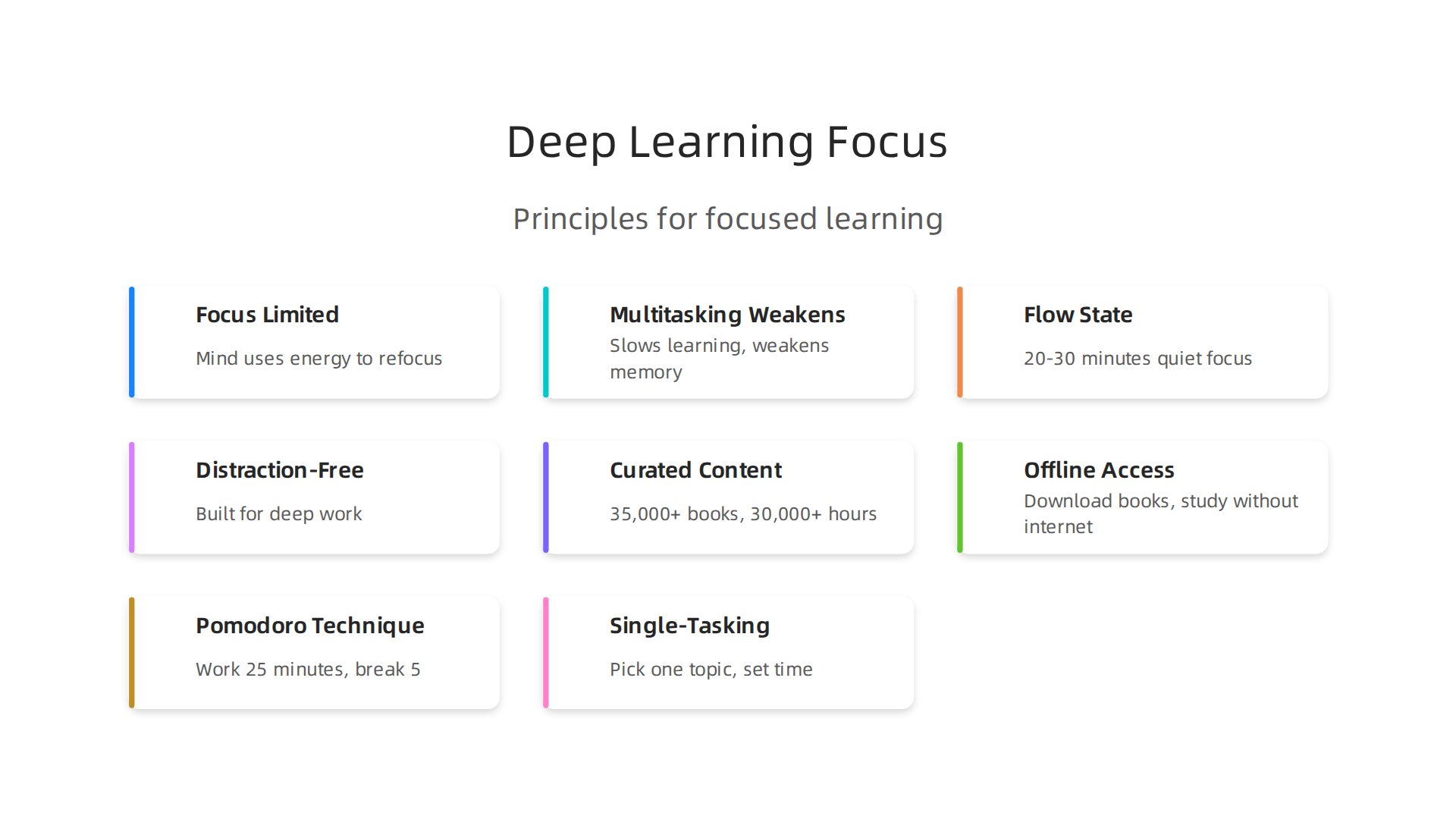
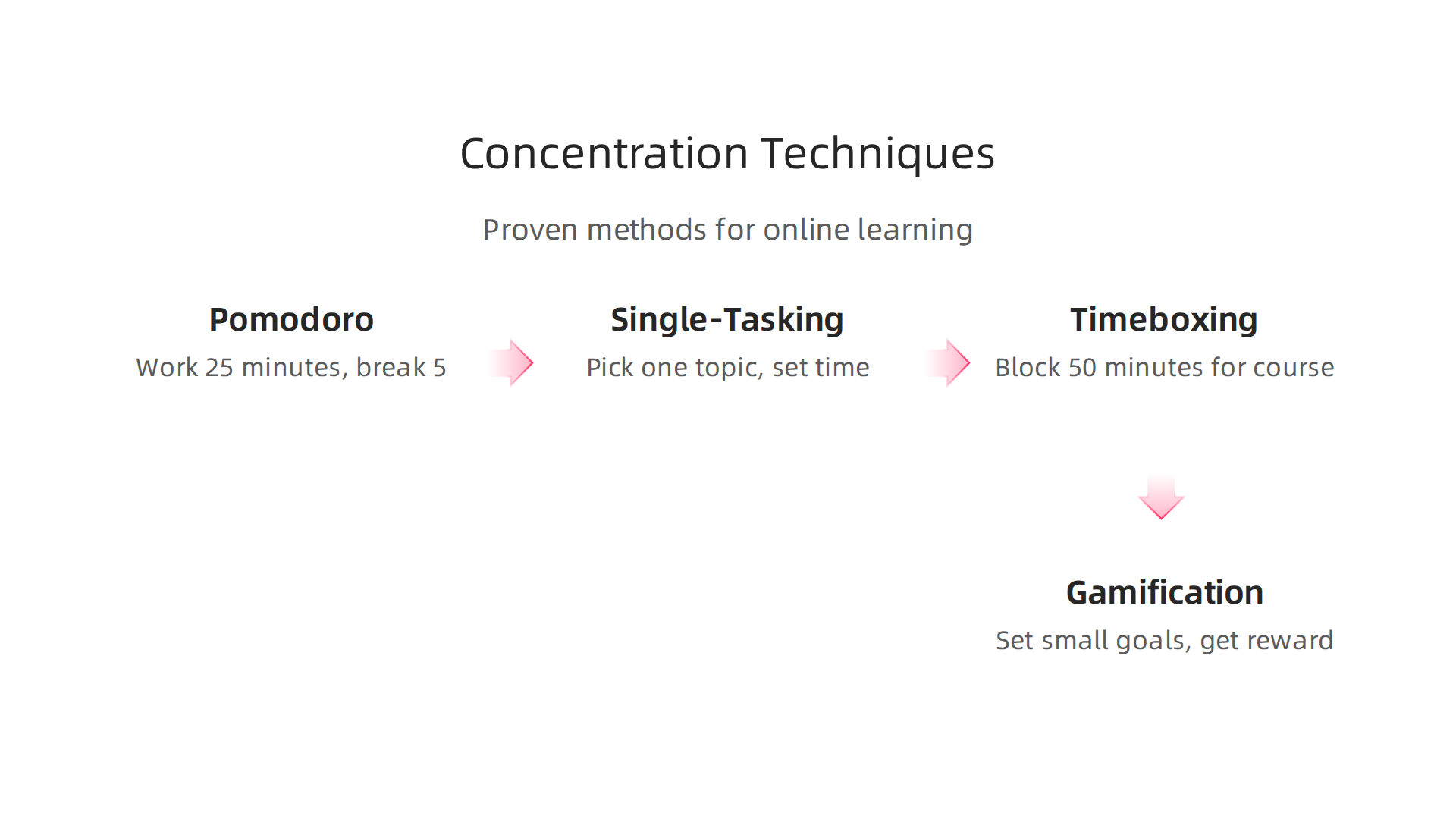
- Avoid marathon sessions. Work in short cycles instead. Try the Pomodoro technique: 25 minutes of reading, then a 5-minute break.

Or go 50 minutes if you feel strong. That keeps your mind fresh.
After your cycle, review only the notes or highlights you really need. This helps you actually consume, not just collect. For a deeper look at using reading apps to stay focused, check out how the Kindle app can help rebuild your focus.
Want to learn more focus techniques that last? Explore Articles for practical strategies to sharpen your concentration every day.
Measuring Your Progress: Metrics and Milestones for Specialized Learning
How do you know if your focus sessions are actually working? The answer is simple: you need to measure your progress. In 2026, tracking your learning is easier than ever, and it keeps you motivated when you see real gains.
Start with the basics. When you use safari books online, your browser already logs your reading history. You can quickly see which books you opened, how many pages you read, and whether you finished a chapter.

Mark a book as “complete” when you finish it. That simple act gives you a sense of accomplishment. Think of it like a personal report card for your reading habit.
But time spent reading is only half the story. You also need to check your comprehension. Did you actually understand what you read? This is where external tools help. The best free flashcard app is Anki. After each focus session, create a few digital flashcards with key ideas. Review them the next day. This method forces your brain to recall information, which measures real learning. You can also use Notion to track your notes and see which topics you have mastered.
Learning analytics tools in 2026 show that tracking both engagement and retention leads to better outcomes. As the LMS Analytics in 2026 guide points out, people who monitor their progress are far more likely to complete their goals. You can apply the same principle to your self-directed reading.
If you like variety, you can mix in other formats. An audiobooks free online service lets you listen during commutes. A pc app store download like Kindle for Windows gives you access to your notes across devices. And if you want to read without spending a cent, check out where to read books online for free without distractions.
Tracking your progress does not have to be complicated. Pick one or two simple metrics, check them each week, and adjust your methods. Over time, you will see how far you have come.
Want more strategies to sharpen your concentration? Explore Articles for practical techniques you can start today.
Tracking Time Spent, Topics Completed, and Comprehension Tests
Numbers tell the truth. Here are the three data points to watch every week.
1. Log your time. Record how long you read each day. Safari books online already tracks this. The top learning technology trends for 2026 show consistency is key for skill mastery. Even 15 minutes builds a strong streak.
2. Mark topics as done. Finishing a chapter is a milestone. Hit the "complete" button. It tells your brain the topic is finished. You can rebuild your focus with Audible books by treating each finished section as a win.
3. Test yourself. Good learners quiz themselves. After a session on safari books online, close the tab. Write down three things you remember. This is a comprehension test. According to the LMS analytics guide for 2026, assessment scores predict long term retention. You can practice this on any free platform by reading books online for free without distractions.
These three numbers turn page scrolling into real learning. You are not just reading anymore. You are building knowledge that sticks.
Want to understand the brain science behind testing yourself? Check out Dean Grey’s research on attention and memory.
Adjusting Your Learning Pace with Adaptive Feedback
Once you have those three numbers from the previous section, you can start making smarter choices. The real power of safari books online is that it lets you adjust your pace based on what the data tells you.
Here is how to use that feedback.
-
If quizzes feel hard, slow down. That is not failure. That is a signal. Go back to the basics of a chapter. Reread a tricky section. Take an extra day on the same topic. You can use the Kindle app to read a foundational book again if you need to rebuild your understanding.
-
If the material feels too easy, speed up. Skip the chapters you already know. Jump to more advanced titles in the same subject. The platform can recommend harder books based on your history. This is called adaptive content personalization, and it is a key trend in 2026 learning technology.
-
Use related content suggestions to fill gaps. When you finish a book, look at the "related titles" section in safari books online. These suggestions often cover topics you missed. Following them closes the holes in your knowledge. This kind of data driven learning helps you identify skill gaps early.
You are not stuck on one speed anymore. You control the pace.
Want more techniques like this? Explore Articles for practical ways to sharpen your focus every day.
Real‑World Applications: Case Studies of Professionals Who Used Safari Books Online to Level Up
All that theory about adjusting your pace works. But what does it look like in real life? Here are three anonymized examples of professionals who used safari books online to change their careers. Their stories show that structured focus and the right platform features can make a huge difference.
Case 1: The Software Developer Who Got Promoted
Before: David was a junior developer who felt stuck. He knew basic coding but kept losing focus when he tried to learn cloud computing. He would start a tutorial, get distracted, and quit.
After: David created a learning plan inside safari books online. He set a timer for 45 minutes of deep reading each morning. He used the platform’s bookmark feature to save key sections. When a concept was hard, he slowed down and used the Kindle app to read a foundational book offline on his commute. He also joined the discussion forums tied to books he was reading. Research shows that participation in online forums helps students stick with their learning. He got promoted to senior developer within 8 months.
Key takeaway: Using the platform’s note-taking and forum features helped David stay accountable and fill gaps.
Case 2: The Finance Analyst Who Became Team Lead
Before: Maria was a mid-level analyst. Her Excel skills were outdated, and she struggled with financial modeling. She relied on old spreadsheets and felt left behind by junior hires.
After: Maria used safari books online to build a custom learning path. She started with beginner books on financial modeling, then moved to advanced titles using the related content suggestions. When material felt easy, she jumped ahead. She downloaded the platform app from the pc app store download so she could study during lunch. She also used the best best free flashcard app to memorize formulas. Within 6 months, she mastered advanced modeling and was promoted to team lead.
Key takeaway: The platform’s adaptive pace and related content helped Maria skip what she already knew and focus on gaps. Research on high-achieving students shows that providing enriched curriculum helps them grow faster — the same principle applies here.
Case 3: The Graphic Designer Who Moved into UX
Before: Jenna was a talented graphic designer but wanted to transition into UX design. She had no idea where to start. Her portfolio was heavy on visuals but light on research skills.
After: Jenna dedicated 30 minutes a day using safari books online. She started with beginner UX books, then used the platform’s "related titles" feature to find user research guides. She listened to audiobooks free online for inspiration during her commute and applied concepts immediately at work. She completed a certificate track on the platform. Within a year, she landed a senior UX role at a larger company.
Key takeaway: The platform’s curated book suggestions and flexible formats helped Jenna build a completely new skill set from scratch.
Your Turn
These professionals didn’t have superpowers. They used a structured learning system and stayed consistent. Safari books online gave them the content and the feedback loops. You can do the same.
Ready to build your own focus system? Dean Grey’s research shows that concentration improves when attention has authority. Explore Dean Grey’s research to understand what keeps stealing your focus and how to take control.
Common Pitfalls and How to Avoid Them When Using Safari Books Online for Deep Learning
You already saw how others succeeded with Safari Books Online. But here is the truth: having access to thousands of books does not guarantee progress. Without the right habits, you can fall into traps that waste your time. Let me show you the three biggest pitfalls and how to dodge them.
Pitfall 1: Information Hoarding
This one is sneaky. You start adding every interesting book to your library. You feel productive just by collecting titles. But you never read them deeply. You just skim.
The fix: Set a clear limit. Focus on one book at a time. Before you add a new one, finish the current one.

Use the Kindle app to read offline on your commute so you actually consume the content. Remember, collecting without learning is just clutter.
Pitfall 2: Lack of Active Recall
Reading is passive. If you only read and never test yourself, your brain stores nothing. You feel like you learned, but a week later you remember almost zero.
The fix: Use active recall. After each chapter, close the book and write down the key ideas. Use a best free flashcard app to review facts regularly. You can also join discussion forums on the platform. Research shows that participation in online forums helps students stick with their learning. Engaging with others forces your brain to explain concepts, which locks them in.
Pitfall 3: Inconsistent Schedule
You read one day for two hours, then skip three days. This on-and-off rhythm kills momentum. Deep learning needs a steady beat, not a loud crash.
The fix: Pick a small, daily time slot. Even 20 minutes works if you stick to it. Set a timer. Use audiobooks free online during your commute if you are short on time. Consistency builds the neural pathways that make knowledge stick. A systematic schedule beats random bursts every time.
Build Your System
These pitfalls all share one root: treating the platform as a magic library instead of a learning tool. You need a system. Set a routine, test yourself, and stop hoarding.
Ready to own your focus? Behavioral Scientist Dean Grey explains why your attention wanders and how to take back control. Explore Dean Grey’s research to understand what keeps stealing your focus and start building a system that works.
Summary
This article shows how to turn a Safari Books Online subscription into a focused, high‑impact learning system by combining platform features with proven cognitive strategies. It explains why deep work matters for acquiring specialized knowledge and how Safari’s offline mode, annotations, and cross‑device syncing create a distraction‑resistant environment. You’ll learn how to build a personalized curriculum—using SMART goals, playlists, and custom shelves—then apply active learning techniques like the Feynman method, Cornell notes, and spaced repetition to boost retention. Practical rituals for before, during, and after study sessions and tips for using quizzes and coding sandboxes help you practice with feedback. The guide also covers measuring progress with time, topic completion, and comprehension tests, adjusting pace with adaptive feedback, and avoiding common traps like information hoarding and inconsistent schedules. Read it to get a step‑by‑step approach that makes your reading time productive and ensures you actually remember and apply what you study.