Break the Open App Habit and Reclaim Your Focus
Introduction: The Digital Distraction Epidemic
Here is a hard truth. The average person checks their phone 96 times a day. That is not an exaggeration. Each time you open app after app, you fracture your attention into tiny, useless pieces. By the time you reach the end of this paragraph, millions of people will have already unlocked their phones, opened a social feed, and forgotten what they originally wanted to do.
The problem runs deeper than simple habit. Notifications and app loops hijack the brain’s reward system. Every buzz, every badge, every little red dot triggers a small hit of dopamine. Your brain starts to crave these micro-rewards. Over time, this makes deep focus feel almost impossible. Your mind learns to expect constant interruption.

Research from 2026 shows that monitoring your phone use can lead to 40% more mental clarity and concentration that lasts significantly longer during focused work. That is a massive gain simply from becoming aware of the problem.
Here is the thing. The solution is not to throw your phone in a lake. It is not realistic to go off the grid. What works is a smarter approach to how you manage your entire digital ecosystem. Studies from the University of Cambridge suggest that behaviors we want to reduce become much easier to manage when they require more effort to start. That principle applies perfectly to the apps that steal your time.
This guide gives you a systematic approach to taking control. You will learn how to break the compulsive checking loop. You will discover how to choose apps that actually support your goals instead of sabotaging them. Whether you are looking into a circle app for parental controls, a bark app for monitoring, or just want to try some free trial apps that help you focus, this guide covers the full picture.
If you feel ready to rebuild your attention span, start with this simple step. Concentration improves when attention has authority. Reclaim yours today.
The goal is simple. Stop letting your phone run your day. Start using it as a tool instead of a distraction. Let us get to work.
The Hidden Cost of App Overload on Concentration
You already know that constant phone checking feels bad. But the real cost of app overload goes much deeper than just feeling distracted. It rewires your brain in ways that make focus harder over time.
Here is the math that shocks most people. When a notification pops up on your screen, it steals about seven seconds of your attention in that exact moment. A 2026 study in Computers in Human Behavior confirms that a single pop up derails mental focus for seven seconds. That sounds small. But getting back to a deep focus state can take over 23 minutes. Research on fragmented smartphone use shows that notifications cause serious impairments in your ability to concentrate. If you face 50 to 100 interruptions a day, that adds up to hours of lost deep work. In 2026, the average person experiences 275 daily digital interruptions. That is a massive drain on your mental energy.
Why do you keep opening these apps even when you know better? It is not a lack of willpower. It is design. App designers build what experts call dopamine loops. They hook your brain with variable rewards. A red badge. A like. A new piece of content. Every time you open app after app, your brain predicts a small reward. Studies on smartphone notifications confirm they impair cognitive control and attention. Your brain learns to crave the next hit. This makes it harder and harder to resist the pull over time.
The constant flood of information, even when you do not click, also drains your mental battery. Your brain works hard just to ignore everything around it. This leads to mental fatigue and fuzzy thinking.

Research shows that just having your phone nearby impairs your ability to focus and learn. You end up feeling tired without doing anything productive. Deep work becomes nearly impossible.
This is why simple tricks like turning off one notification often fail. You need a real system. You might need a circle app to block distracting sites. Or a bark app to manage your digital environment. Even a google lens download can become a time sink if you use it without intention. The key is to stop the overload at its source.
Instead of just removing bad habits, try replacing them with better ones. For example, rebuilding your concentration with a book tracker trains your brain to focus for longer periods. Using free flashcard apps that boost concentration gives your mind a healthy workout instead of empty scrolling. Look for free trial apps that support your goals before committing to anything.
The hidden cost of app overload is your ability to think clearly and deeply. That is a high price to pay for a few seconds of scrolling.
Are you ready to stop paying that price? Concentration improves when attention has authority. Reclaim yours today.
Auditing Your App Ecosystem for Better Focus
Have you ever unlocked your phone to check one thing, then looked up 30 minutes later with no idea where the time went? You are not alone. In 2026, the average adult spends nearly 7 hours per day on screens.
That is 6 hours and 51 minutes of your waking life, according to the latest screen time data. Social media apps alone eat up 2 hours and 40 minutes daily. TikTok leads the pack at 1 hour and 37 minutes per day. The first step to breaking free is a simple audit of your app ecosystem.
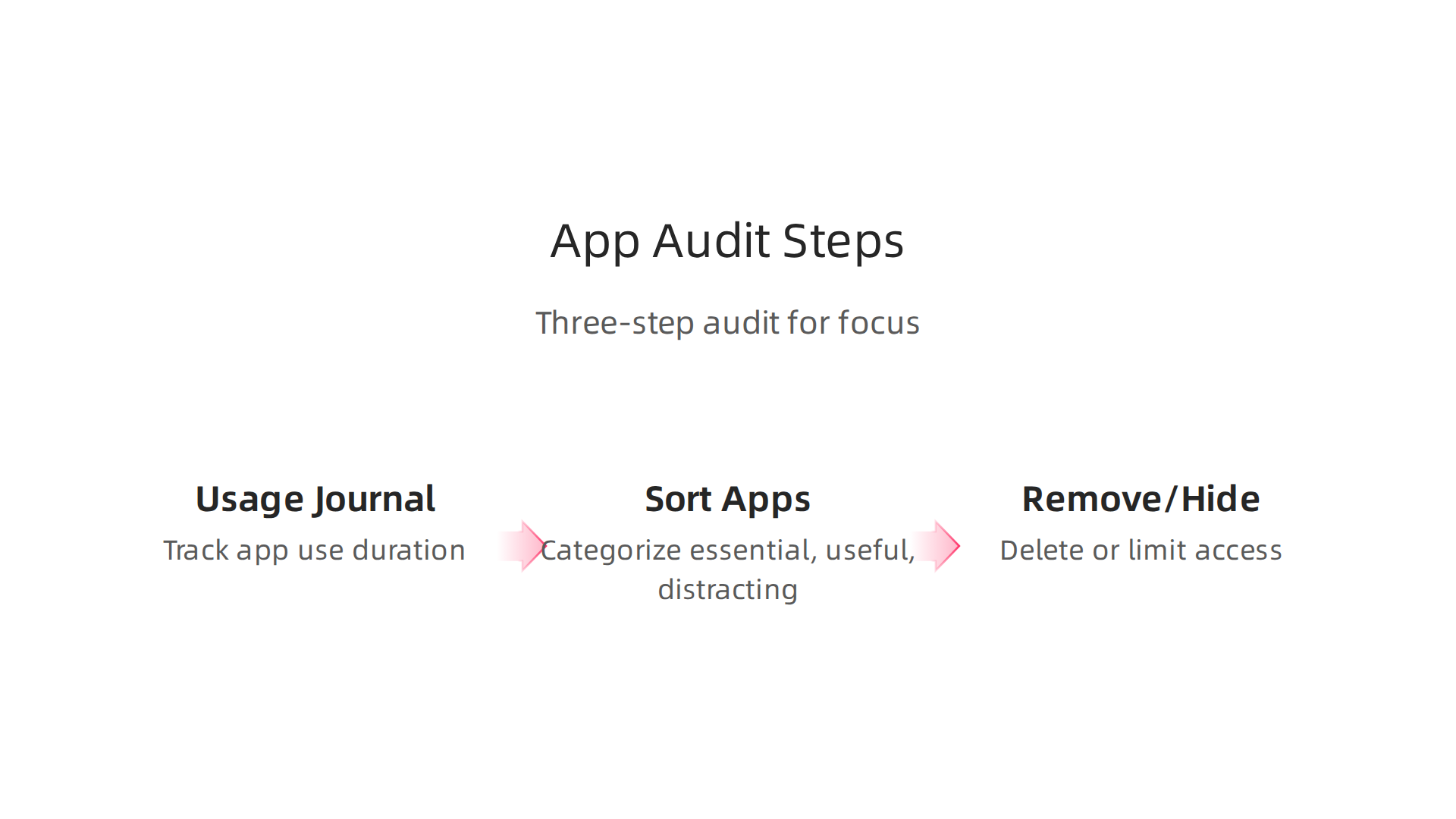
Step 1: Run a 7 day app usage journal. Do not trust your memory. Use your phone’s built in screen time tracker or a simple notebook. Every time you open app after app, write down which one and how long you used it. After a week, you will see the truth. Users now spend 4.2 times more time in mobile apps than on mobile browsers. That is a lot of small moments that add up.
Step 2: Sort your apps into three groups. Grab a list of every app you used during the week. Put each one into a category:
- Essential: Things you need for work, health, or basic communication.
- Useful: Apps that help you learn, create, or relax intentionally. Things like a free trial app for meditation or a book reader.
- Distracting: Apps you open without thinking. Social media, games, or endless content feeds.
Be honest here. That circle app that blocks websites? It belongs in useful if you actually use it. That google lens download that you opened once to identify a plant and now use for random searches? Maybe it is a time sink.
Step 3: Remove or hide the distracting ones. Out of sight really does mean out of mind. Delete the worst offenders. For apps you cannot delete, move them to a folder on the last screen of your phone or use a tool like a bark app to limit access. Even hiding the icon makes it harder to open without thinking.
What do you put in their place? Replace empty scrolling with activities that rebuild your focus. For example, using free flashcard apps that boost concentration and retention gives your brain a healthy workout. Or try rebuilding your concentration with a book tracker to turn reading into a focused habit. The key is to swap the dopamine loop for a meaningful one.
You do not need to quit your phone cold turkey. You just need to take back control of what you open app by app. Start your audit today and see which apps deserve your attention.
Concentration improves when attention has authority. Reclaim your focus now.
Practical App Management Strategies
You finished your app audit and now you see the full picture. Distracting apps are eating your time. But knowing the problem is only half the battle. You need real strategies to stop yourself from mindlessly tapping that open app button every few minutes.
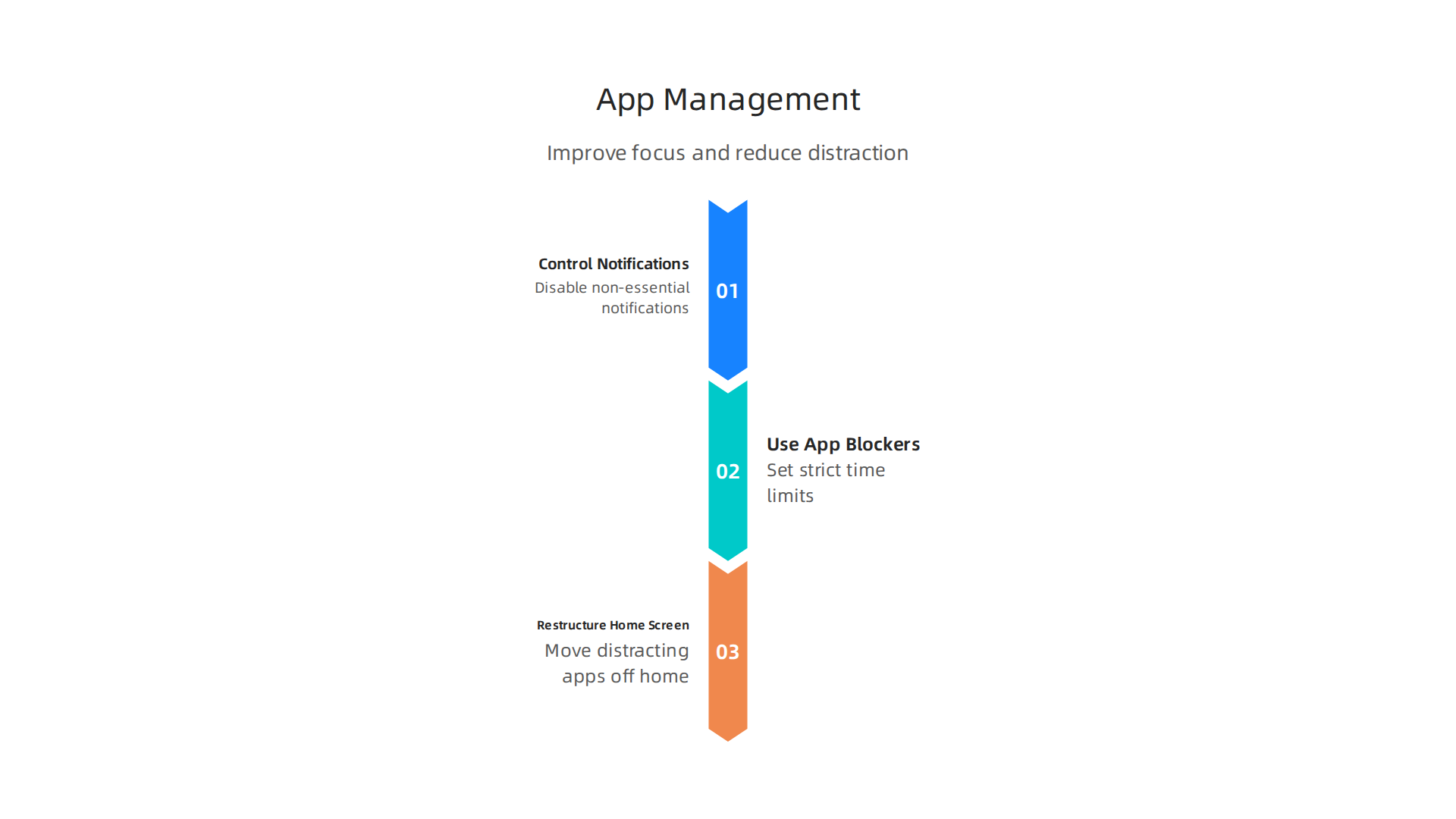
Here are three practical ways to manage your apps in 2026.
These are not extreme measures. They are simple changes that work.
Strategy 1: Take Control of Your Notifications
Notifications are the biggest focus killers. Every buzz, flash, or badge count pulls your attention away. Your brain treats them like urgent tasks. So turn them off.
Go into your settings right now. Disable every single notification that is not essential. That means news alerts, like notifications, game updates, and app marketing messages all go away. Keep only calls, messages from real people, and your calendar.
Here is the truth. Most apps open app just because a notification tricked you into checking. When you kill the notification, you kill the habit. Focus apps are digital tools that help you block distractions, manage your attention, and stay on task throughout the workday. Use them to enforce your new rules.
Strategy 2: Use App Blockers and Time Limits
Your willpower is not strong enough to fight a multi billion dollar app design. Do not rely on it. Instead, use tools that lock you out.
Block distracting websites and apps with focus tools like Freedom, RescueTime, and Opal. These tools let you set strict time limits. For example, you might give yourself 15 minutes of social media per day. Once the timer hits zero, the app locks. You cannot open it no matter how much you want to.
Some apps even let you create scheduled blocks. Set your social media apps to lock during work hours. We ranked 9 focus apps by how well they actually help you stay focused, from physical blockers to AI tools. Try a few free trial apps first to see what fits your style. Many of the best focus tools offer a trial period so you can test them risk free.
Strategy 3: Restructure Your Home Screen
Your home screen is prime real estate. Every time you unlock your phone, your eyes land on those icons. If your social media apps are front and center, you will click them.
Move every distracting app off your home screen. Put them in a folder on the last page of your phone. Or better, delete them entirely. If you cannot delete them, use a circle app or bark app to limit access. Even hiding the icon behind a folder adds one extra step before you open app. That extra second is enough to stop the automatic habit.
What goes on your home screen instead? Replace the empty apps with tools that rebuild your focus. Using free flashcard apps that boost concentration and retention gives your brain a healthy workout every time you pick up your phone. Or add a book tracker to turn your phone into a tool for deep reading habit.
Put These Strategies into Action Today
You do not need to change everything at once. Start with notifications today. Add a blocker tomorrow. Restructure your home screen this weekend. Small steps add up to real focus.
Concentration improves when attention has authority. Reclaim your focus now.
Building a Focused Digital Routine
You have turned off notifications and moved your apps to the last page. Good work. But those changes alone will not stick without a routine. You need a daily structure that makes focus the default instead of a struggle.
Think of your phone as a tool that follows your schedule. Not the other way around.
Use Focus Modes During Work Blocks
Every modern phone has a built in focus mode. iPhone users have iOS Focus and Android users have Do Not Disturb mode. These are not just for sleep. Use them during your most important work hours.
Here is how to set it up. When you start a work block, turn on your focus mode. This silences everything except calls from key people. You cannot accidentally slip into social media because the apps are hidden until the mode turns off.
The average person spends 6 hours and 51 minutes per day on screens in 2026. A focus mode cuts that down instantly because you never see the notifications that trigger the urge to open app.
Schedule Specific Open App Windows
Here is the big shift. Stop checking social media and email all day. Give them specific time windows instead.
For example, check email three times per day. Once in the morning, once after lunch, and once before you finish work. Same for social media. Pick two or three short windows. Set a timer for 10 minutes. When the timer ends, close the app.
This works because your brain stops treating every notification as urgent. You train yourself to wait. And waiting breaks the compulsive habit.
The average person spends 2 hours and 40 minutes on social media daily. By scheduling windows, you reclaim most of that time for real focus.
Combine with the Pomodoro Technique
Now layer in the Pomodoro Technique. It is simple. Work for 25 minutes with zero interruptions. Then take a 5 minute break.
Here is the key rule for your break. Do not open any apps. No social media. No email. No games. Instead, stand up, stretch, or look out the window. Your brain needs real rest, not more screen time.
During your 25 minute work blocks, your focus mode is on. You cannot check anything. This creates a rhythm. Work hard, rest short, repeat.
To make those 5 minute breaks productive for your concentration, try using a focus tool like free flashcard apps that boost concentration and retention during your breaks. It gives your brain a light workout instead of a dopamine hit.
Your Routine Looks Like This
Here is a sample schedule.
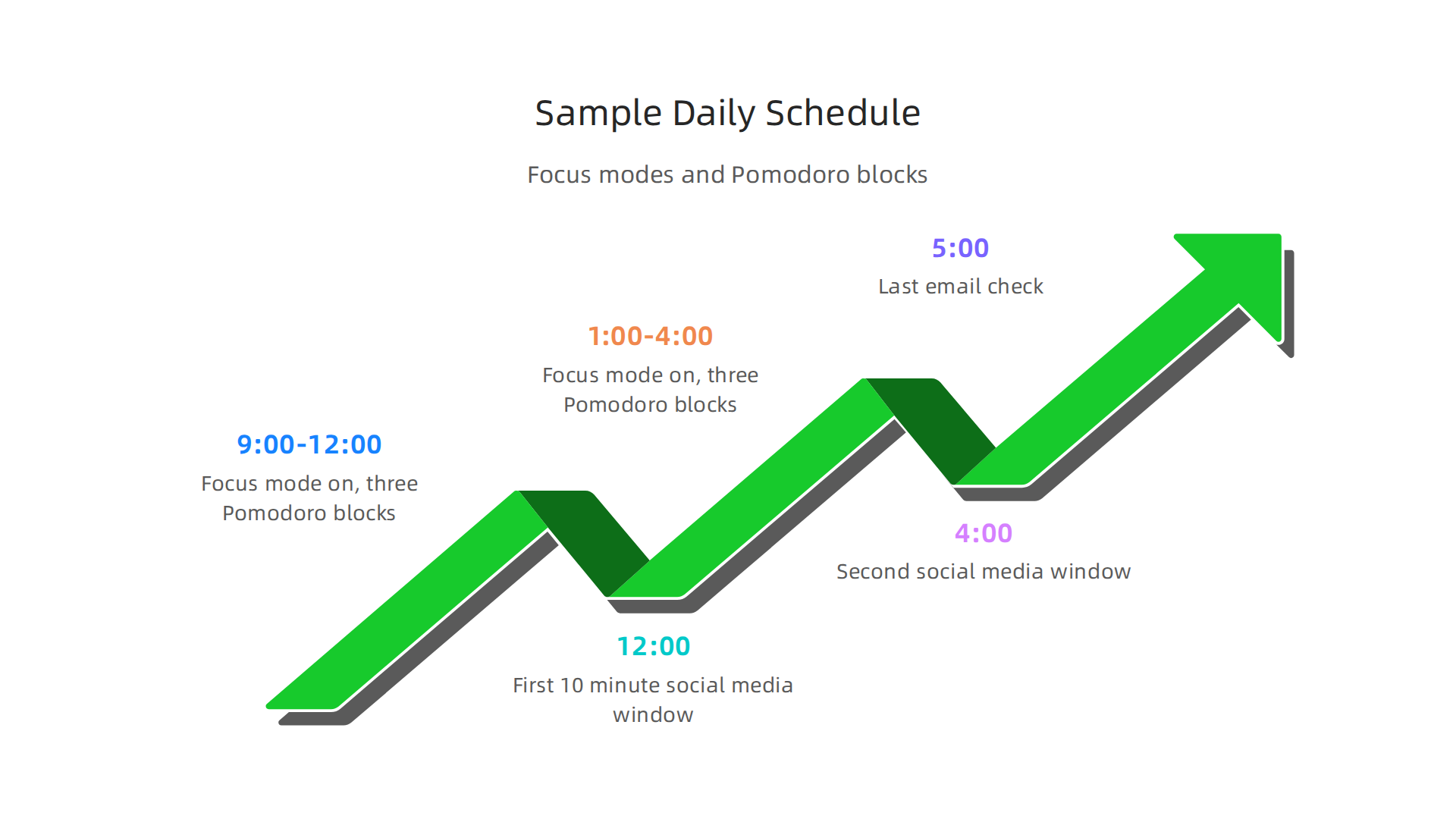
- 9:00 AM to 12:00 PM. Focus mode on. Three Pomodoro blocks. No app checking.
- 12:00 PM. First 10 minute social media window.
- 1:00 PM to 4:00 PM. Focus mode on again. Three more Pomodoro blocks.
- 4:00 PM. Second social media window.
- 5:00 PM. Last email check.
That is it. Two or three windows for open app time. The rest of your day belongs to deep work.
Concentration improves when attention has authority. Reclaim your focus now.
The Power of Intentional ‘Open App’ Habits
You know the feeling. You unlock your phone to check your calendar, and suddenly you are scrolling through Instagram. Then you tap over to your email. Then a news app. Then back to Instagram. This chain reaction happens in seconds, and it steals your focus before you even notice.
Here is the one thing that changes everything: the one-app-at-a-time rule.
The One App at a Time Rule
Never open multiple apps in quick succession. When you finish one app, close it completely. Then pause. Look at your home screen. Ask yourself, "Why am I opening this app?" before your finger taps.
This sounds simple, but it rewires a deep habit. The average person opens their phone over 80 times per day. Most of those taps are on autopilot. When you force a pause before each open app, you interrupt that autopilot.

Popular focus apps in 2026 are built around this exact idea. Apps like Freedom and Opal block you from opening distracting apps during work hours. They stop the chain reaction before it starts. You cannot tap into social media if the app is blocked.
The Pre Commitment Question
Here is a trick that works better than any app. Before you tap an icon, ask yourself one question out loud. "Why am I opening this app?"
If the answer is "I am bored," then close your phone. If the answer is "I need to check a message from my boss," then open it, do the task, and close it immediately.
This is a pre commitment device. It trains your brain to move from impulse to intention. Over time, you stop treating every open app as an automatic action. You start treating it as a deliberate choice.
Use Delay Techniques to Resist the Urge
The urge to open an app feels urgent, but it is not. The feeling peaks for about 10 to 15 seconds, then fades.
When you feel that pull, count to ten. Keep your finger off the screen. Look away from your phone. Breathe once. After ten seconds, ask the pre commitment question again. Most of the time, the urge will be gone.
This works because your brain learns that waiting is safe. Nothing bad happens if you do not open the app immediately. You can replace that impulsive habit with a focus building one instead.
For example, instead of tapping into a social app, you could use a plant identifier app that rebuilds your focus by engaging your attention in a calm, intentional way. That is a much healthier open app habit.
Build the Muscle Over Time
You will not get this perfect on day one. That is fine. Every time you pause before an open app, you strengthen the muscle of intention. Every time you wait ten seconds, you weaken the impulse.
Your routine from the previous section already uses focus modes and scheduled windows. Now add this layer. Before every tap, pause. Ask why. Wait. Then choose.
Concentration improves when attention has authority. Reclaim your focus now.
Measuring Your Focus Progress
You have built your intentional open app habits. You pause before every tap. You ask why you are opening an app. You wait ten seconds. But how do you know if it is actually working?
Here is the truth. You cannot improve what you do not measure. The good news is that measuring your focus progress takes only a few minutes each week.
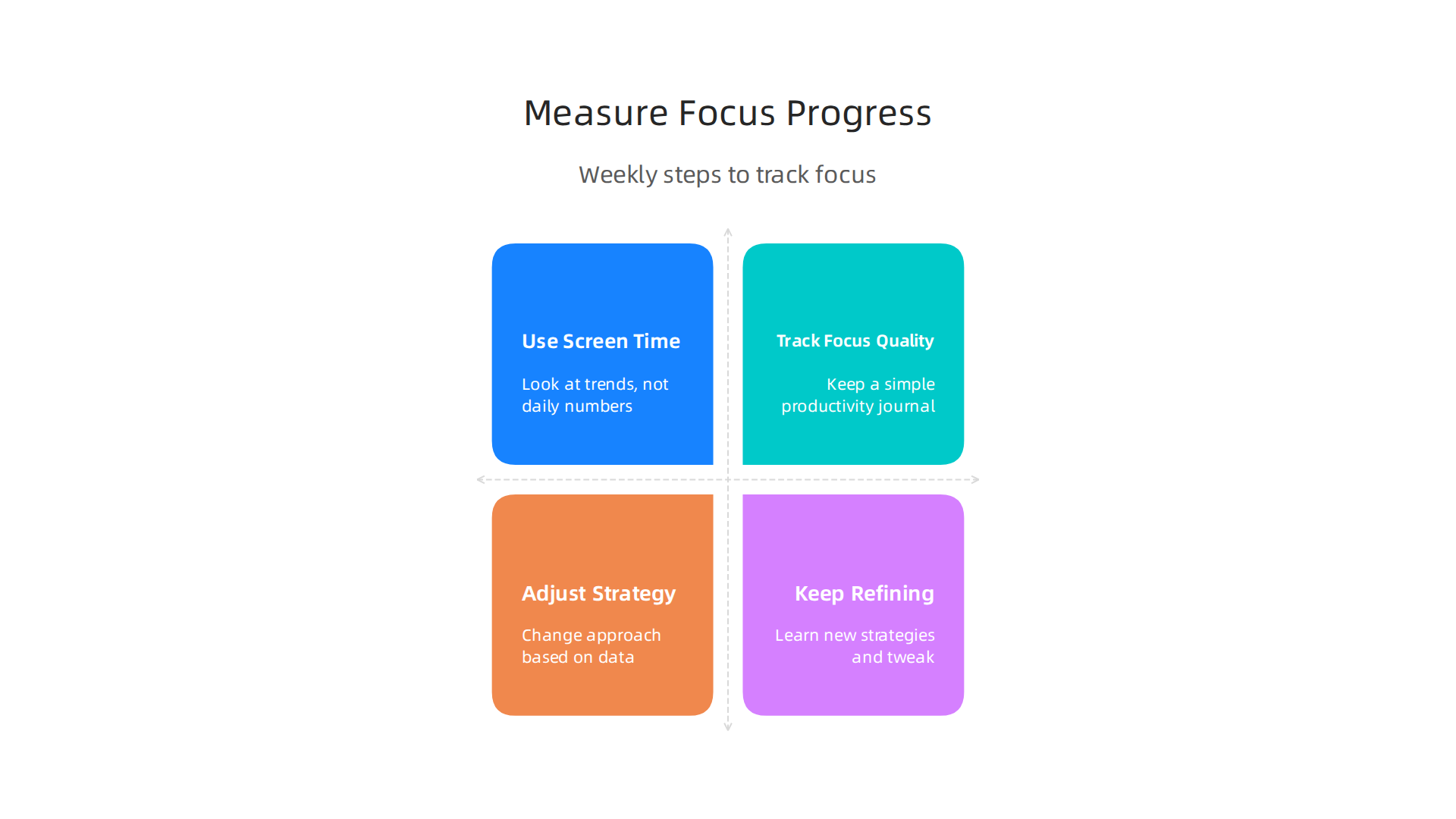
And the data will show you exactly where to adjust.
Use Your Screen Time Reports
Your phone already tracks everything. Every open app, every notification, every minute spent scrolling. The key is to look at the trends, not the daily numbers.
Open your screen time report every Sunday evening. Compare this week to last week. Ask yourself three questions:
- Did my total screen time go down?
- Did my time in distracting apps decrease?
- Did I open fewer apps overall?
Research shows that excessive screen time directly reduces focus and increases anxiety. When you see the numbers dropping each week, you know your new open app habits are working. If they are not dropping, you need to adjust.
Screen time impacts wellness and focus in ways most people ignore. Tracking your weekly trend helps you see the real cost of every mindless tap.
Track Focus Quality with a Journal
Screen time reports show quantity. They do not show quality. You might spend 30 minutes in a reading app and feel focused. Or you might spend 30 minutes in a social app and feel drained.
Keep a simple productivity journal. Each day, rate your focus on a scale of 1 to 10. Write down which apps helped you concentrate and which ones pulled you away.
For example, you might notice that using a plant identifier app rebuilds your focus after a stressful meeting. Or you might see that checking email first thing in the morning ruins your attention for the next hour.
The journal reveals patterns your screen time report cannot see.
Adjust Your Strategy Based on Data
After two weeks, look at what the data tells you. Which apps still drain your time? Do you keep opening the same distracting app every afternoon?
Use this information to change your approach. If a specific app keeps pulling you in, block it during your focus hours. If you notice you are reaching for your phone when you feel bored, replace that habit with something intentional.
The impact of screen time on your learning and focus depends more on purpose than duration. If you are using an app with clear purpose, it is probably fine. If you are opening an app out of habit, that is the real problem.
For tools that help you track and block distractions, many offer free trial apps so you can find what fits your routine. Apps like the Circle app or Bark app can give you detailed reports across devices.
Keep Refining
Your focus will not improve overnight. But every week you measure, you learn something new. You see which strategies work and which ones need tweaking.
This is not about perfection. It is about progress. The data will guide you toward better focus one week at a time.
Concentration improves when attention has authority. Reclaim your focus now.
Overcoming Obstacles to Lasting Change
By now, you are tracking your screen time and pausing before you open app after app. But let’s be real. Obstacles will pop up. The goal is not to avoid them completely. It is to know how to handle them when they come.
FOMO and Social Pressure
The biggest hurdle is usually social pressure. You worry about missing out on what friends are doing. Group chats blow up. Everyone seems glued to their feeds.
Here is the thing. You do not have to quit social apps entirely. You just need to use them with purpose. Instead of opening a social app out of boredom, use a plant identifier app on your next walk. Or check in on one specific friend. Make your usage intentional, not automatic.
Research shows that a single notification can derail your focus for seven seconds. The real cost is not the time spent in the app. It is the broken focus that follows. By choosing when to engage, you take control back.
Work Necessity vs. Distraction
Another major obstacle is the blurry line between work and personal life. Your phone helps you do your job. But it also holds endless distractions.
The fix is simple. Use separate profiles. Many phones let you set up a work profile that blocks distracting apps during focus hours. If your phone lacks this feature, tools like the Circle app or Bark app can help you segment your digital space.
Studies show that blocking mobile internet for just two weeks improves well-being and sustained attention. You do not need to block it forever. But creating clear boundaries between work tools and personal apps makes a huge difference. Even using something like a Google Lens download to quickly scan a document, instead of unlocking your phone fully, can save your focus.
Relapse Is Normal
Here is the truth no one tells you. You will probably relapse. You will have a stressful day and fall back into old habits. That is okay.
The difference now is you know how to get back on track. Find an accountability partner. Someone who also wants to improve their focus. Check in with them weekly. Share your screen time data. Talk about what triggers you to open app after app without thinking.
Many free trial apps can help you and your partner stay on track together. Build a system, not just willpower.
Concentration improves when attention has authority. Reclaim your focus now.
Creating Your Personal Focus Action Plan
You have learned the obstacles. You have tried the strategies. Now it is time to put it all together into a simple 30 day plan. This plan combines your phone audit, your new habits, and your daily routines. It is not complicated. It is just consistent.
Week 1: Start Small
Pick one distracting app and remove it from your home screen this week. Do not delete it yet. Just hide it. Every time you reach for it, you will have to search for it. That extra step matters. Research from the University of Cambridge shows that behaviors become easier to manage when they require more effort to start.
Replace that app with something that builds focus. Instead of checking social media, use a plant identifier app on your next walk. You can find one that works well in this guide to rebuilding your focus with a plant identifier app. This simple swap builds a new habit without feeling forced.
Month 1: Build Your Routine
Each week, add one more small change. Here is a sample schedule:
- Week 1: Remove one distracting app from your home screen.
- Week 2: Set a phone curfew one hour before bed.
- Week 3: Use a focus timer for 25 minute work blocks.
- Week 4: Schedule a weekly phone free walk outdoors.

By the end of the month, you will have a solid routine. Studies show that monitoring your phone use can lead to 40% longer concentration during focused work. That is a big win.
Reassess Monthly
At the end of each month, look at your screen time data. Celebrate what worked. Adjust what did not. Maybe one distraction keeps sneaking back in. That is fine. Just find a new barrier. The goal is progress, not perfection.
Concentration improves when attention has authority. Reclaim your focus now.
Summary
This guide explains how everyday phone use and app design fragment attention and offers a practical, step-by-step plan to regain control. It shows why notifications and dopamine loops matter, quantifies the real cost of interruptions, and walks you through a 7-day app audit to separate essential tools from time sinks. You’ll get concrete strategies — disabling nonessential notifications, using blockers and focus modes, restructuring your home screen, and scheduling short app windows — plus habit techniques like the one-app-at-a-time rule and a ten-second delay. The article also covers how to measure progress with screen-time reports and a simple focus journal, and how to handle common obstacles like FOMO and relapse. After following the steps, you’ll be able to reduce mindless checks, protect deep work time, and rebuild sustained concentration without going off the grid.