10 Best Free Productivity Apps for 2026

Introduction: Why the Right Free Productivity App Matters More Than Ever
Does your phone feel more like a circus than a tool? You are not alone. Between constant notifications, overflowing inboxes, and endless browser tabs, our attention gets pulled in a dozen directions every hour.
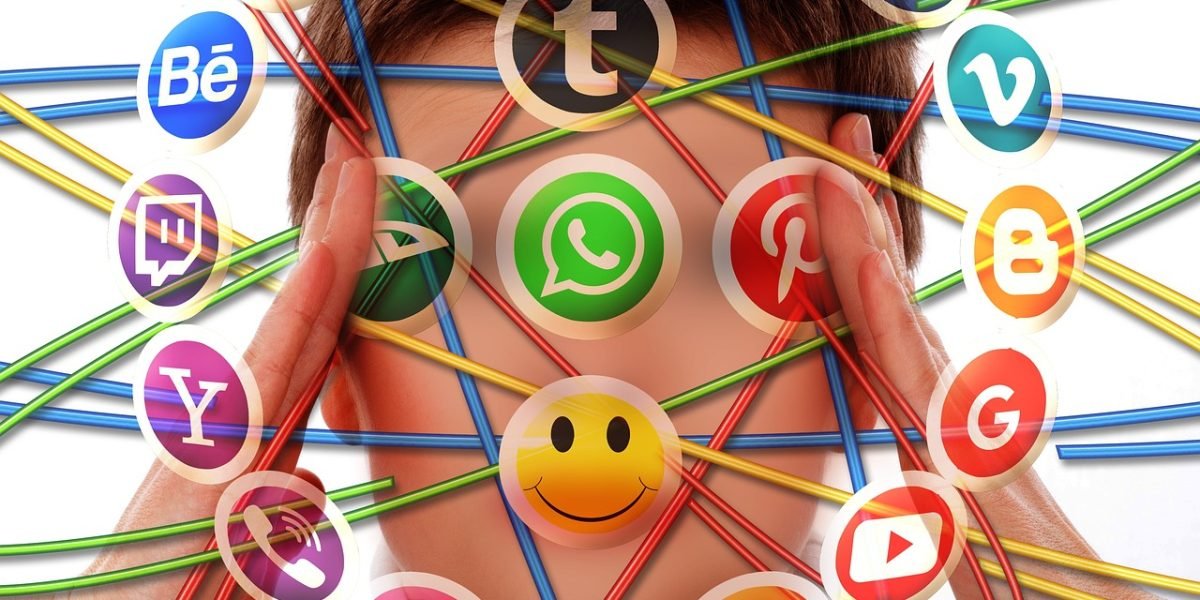
That is why finding the best free productivity apps for 2026 matters more than ever.
The right app does not just help you check off tasks. It acts like an external brain. It catches what you would forget, maps out when you will work, and clears the noise so you can focus on what actually matters. Free plans from top tools now cover 80 to 90 percent of what most people need. In fact, the productivity app market brought in over $30 billion in 2024, and free versions are only getting stronger, as shown in the latest 2026 productivity app statistics.
Still, not every free app is worth your time. Downloading the wrong one just adds another distraction. That is why we curated this list. We looked at research on task completion, time management, and focus to find tools that truly help.
If you struggle with staying on task, you might also like this guide on improving concentration with neuroscience research. It explains how our brains handle focus and why the right digital tool can be a game changer.
For a deeper dive into the psychology behind why these apps work, check out this Recognition Systems field note. It covers how behavioral productivity design taps into your brain’s reward pathways.
In this article, we have carefully chosen 10 free productivity apps that are rigorously tested. We looked at task management, focus, time tracking, and collaboration. Each one has a generous free plan that can replace paid tools. Let’s explore them.
Todoist: The Gold Standard for Task Management
Let’s start with a tool that rules personal task management.
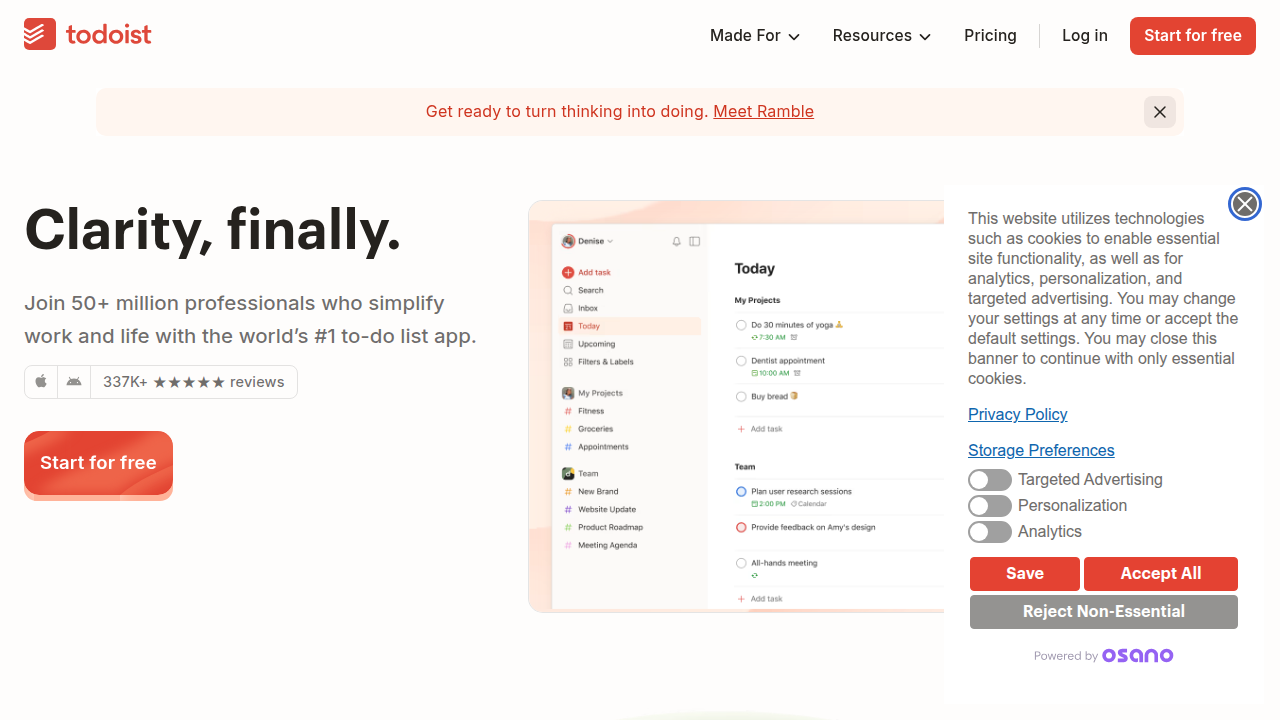
Todoist has been around for years, and it keeps getting better. Its secret weapon? Natural language input. You type "buy groceries every Saturday at 9am" and Todoist instantly understands. It sets the date, time, and repeats automatically. This smart scheduling is a huge time saver. In fact, studies link this feature to a 23% drop in task completion time (see the latest Todoist vs Trello features comparison for 2026).
The free plan gives you enough power for daily use.
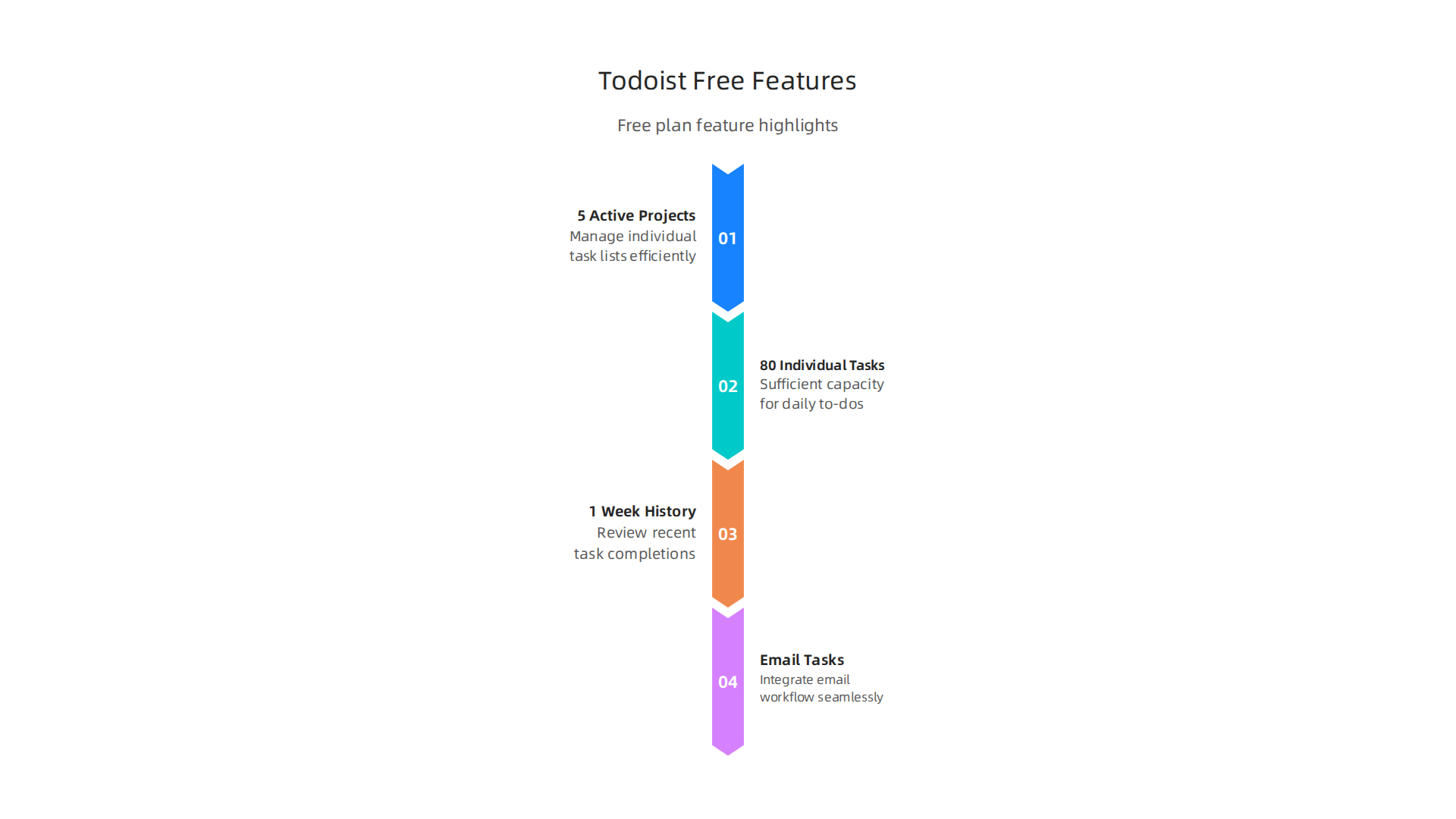
You get up to 5 active projects and 80 individual tasks. That’s perfect if you manage your own to-dos and don’t need heavy team collaboration. You also get one week of activity history and the ability to add tasks through email.
Todoist also connects with tools like Google Calendar and Gmail. That means your tasks and events talk to each other. Want to see your tasks on your calendar? Done. Want to turn an email into a task? Easy.
One thing that makes Todoist addictive is its built-in motivation system. You earn karma points for completing tasks and keep streaks going. It turns productivity into a small game. If you want to understand why that works, check out this peer white paper on the science behind gamification. It explains the brain chemistry that makes these reward loops so effective.
Todoist’s clean design keeps you focused. No cluttered boards or confusing menus. Just a simple list that you can organize with labels, filters, and priorities. For anyone who wants to build a strong task habit, this is the place to start. You might also like this guide on training your brain to focus longer to pair with your new tool.
Trello: Visual Project Management for Teams and Individuals
If Todoist is about clean lists, Trello is about seeing everything laid out in front of you.
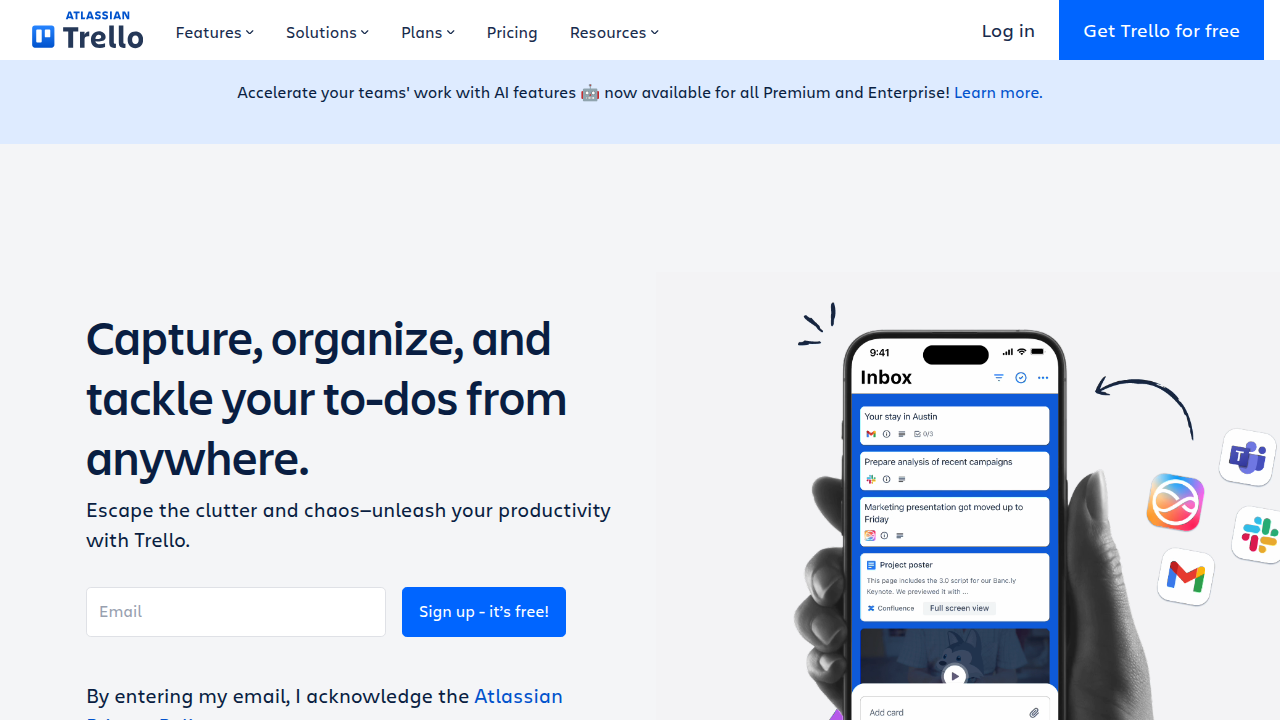
Trello uses the Kanban method. You create boards with columns like "To Do," "In Progress," and "Done." Then you drag cards between columns as work moves forward. That simple visual flow helps teams spot bottlenecks before they become problems.

The free plan is very generous. You get unlimited cards and lists, with up to 10 boards per workspace. Each card can hold attachments up to 10 MB. A detailed breakdown of Trello’s free features shows how much value you get without paying a cent.
Collaboration is built right into Trello. You assign cards to teammates, set due dates, and use checklists. Everyone sees updates instantly. No more digging through email threads to find out what’s happening with a project.
For anyone managing multiple projects at once, keeping your focus sharp is key. You might find this guide on improving concentration with neuroscience-based methods helpful to pair with Trello’s visual style.
And if your team wants to back up its workflow changes with solid data, having a clear methodology makes a difference. That is where resources like this peer white paper on data-driven productivity systems can help you structure your approach.
Notion: The All-in-One Workspace
You know that feeling when you have notes in one app, tasks in another, and a spreadsheet with project details somewhere else? Juggling all those tools takes a real toll. Research shows that every app switch can cost up to 23 minutes of deep focus. That adds up fast. The solution is to consolidate as much as possible into one place.
That is exactly what Notion does. It combines notes, databases, task management, and wikis into a single workspace.
Instead of toggling between five different tools, you keep everything in one searchable environment. Notion’s free plan is one of the best free productivity apps for this reason.
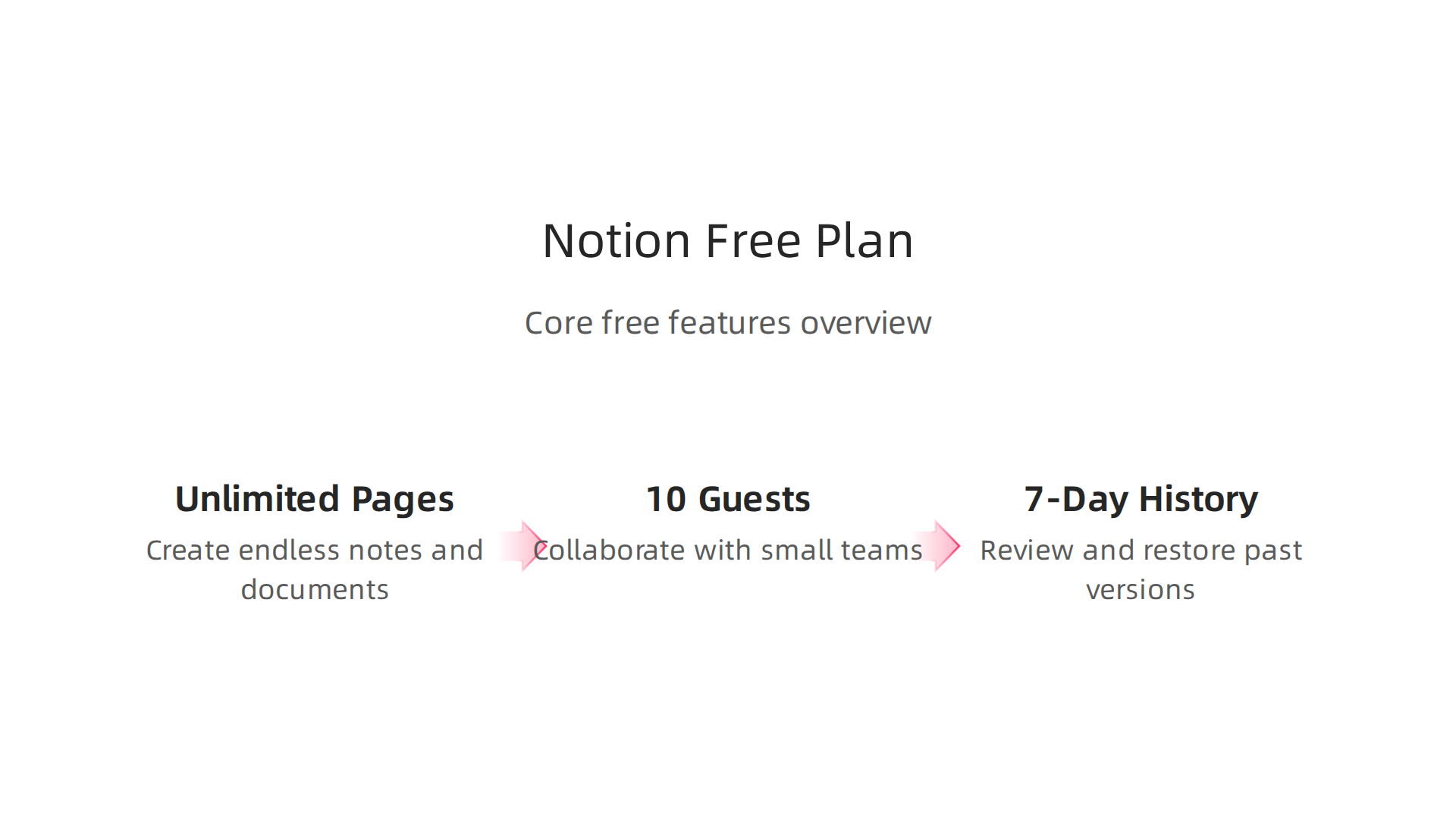
You get unlimited pages, support for up to 10 guests, and a full 7-day page history. That is enough to run a small team or manage your personal projects without paying a cent.
The flexibility is the real win. You can build a simple to-do list or a complex database that links projects to meetings to client records. It reduces the mental overhead of remembering where things live. If you want to pair Notion with habits that sharpen your focus, check out this guide on improving concentration with neuroscience-based methods.
Of course, any tool that relies on AI and shared systems comes with hidden risks. Your collaboration habits can be quietly shaped by algorithms you did not choose. Learn more about that in this field note on how everyday users are shaped by unseen AI systems.
Forest: Stay Focused, Grow a Tree
You know that feeling when you promise yourself you will focus for 25 minutes, but your hand reaches for your phone after three? Forest turns that struggle into a small game. You plant a virtual tree at the start of a focus session. If you leave the app to check Instagram or reply to a text, your tree dies. If you stay focused, your tree grows and joins a forest of your completed sessions.
It sounds simple, but it works. The game elements in Forest give you a small, immediate reason to stay put. You do not want to kill your tree. That tiny emotional hook can be more powerful than willpower alone. A growing body of research shows that gamification can effectively drive behavior change. One 2024 study on gamification of behavior change found that carefully designed game elements helped people stick with new habits much more consistently than simple reminders.
Forest uses this same principle. Over time, seeing your forest grow creates a sense of accomplishment. You can track how many hours you have focused each day, which builds momentum. If you want to strengthen your focus even further, check out this guide on training your brain to focus longer.
And if you are curious about the science behind why gamification works so well for focus and habit formation, this peer-reviewed white paper on the science of gamification breaks down the behavioral and neuroscience mechanisms in plain language. It is a great next step for anyone who wants to understand the "why" behind the tools.
Focus@Will: Music Engineered for Concentration
Forest uses gamification to keep you on task. But what if the right sounds could also help you focus? That is exactly what Focus@Will offers. This app plays music channels designed by neuroscientists to reduce mind wandering and extend how long you can concentrate.
The science behind it is simple. Your brain has a natural tendency to drift when the environment is too quiet or too chaotic. Focus@Will uses something called "auditory stimulus control" to keep your brain in a focused state. The music is engineered to not distract you while still filling the silence that lets your mind wander.
Here is the impressive part. Users who track their deep work sessions report a 28% increase in focused time when using Focus@Will compared to working in silence. That is not a small bump. For someone who manages two hours of deep work a day, that extra 28% means over thirty more minutes of high quality focus.
This kind of tool works because your brain quickly learns that a specific sound cue means it is time to work. New research from 2026 shows that habits form far faster than science previously thought. So pairing a trigger like Focus@Will music with your work sessions can build a powerful focus habit in days, not weeks.
If you want to understand the brain science behind this approach, this guide on improving concentration with neuroscience methods walks through eleven research backed strategies that pair well with music based focus tools.
And if you are curious about how your brain’s reward system plays into building these kinds of focus routines, this deep dive into recognition systems and behavioral productivity design explains the bigger picture of how to engineer your environment for better attention.
RescueTime: Automatic Time Tracking and Analytics
Here is a truth most of us do not want to face. We think we know where our time goes. But we are usually wrong. RescueTime fixes that by running silently in the background and tracking every app and website you visit. No timers to start. No manual logging. It just watches and learns.
The free tier gives you daily summaries that show exactly what you did all day. It breaks your activity into productive time, neutral time, and distracting time. You get your top focus categories and your biggest break categories. This matters because the data does not lie. According to a 2026 comparison of automatic time tracking tools, RescueTime is best for personal productivity insights and assigning daily productivity scores without the overhead of manual tracking.
And here is the real payoff. Users who stick with RescueTime for just 30 days see a 20% improvement in their productive time on average. That happens because the simple act of seeing your patterns forces you to change them. You cannot unsee the fact that you spent two hours on social media when you thought it was twenty minutes.
You can also set daily focus goals inside the free tier. RescueTime alerts you when you drift off track. Over time, these small nudges reshape your habits. If you want to understand how to pair this kind of passive tracking with brain training exercises, this guide on train your brain to focus longer walks through the mental side of building deep concentration.
The data you collect with RescueTime also feeds into a larger system of understanding your own productivity patterns. For those who want to dig deeper into how data-driven systems improve performance, this piece on data methodology behind productivity systems documents how permission based capture and analytics can transform the way you work.
Grammarly: Your AI Writing Assistant
You know that feeling when you write an email and hit send, only to spot a typo seconds later? Or when you spend twenty minutes rewriting a single paragraph to get the tone right? Grammarly solves those problems in real time. It checks your spelling, grammar, and punctuation as you type.
The free tier works across your browser, desktop apps, and even your phone. No subscription needed.
Here is the real value. Grammarly does not just catch mistakes. It suggests better word choices and adjusts your tone so you sound clear and confident. Studies show that using Grammarly for real time writing suggestions can reduce your editing time by an average of 30%. That means you finish your writing faster and with fewer errors. Less time fixing. More time creating.
Grammarly is one of the best free productivity apps for anyone who writes regularly. It reduces the mental load of editing, which helps you stay in a focused flow. If you want to explore more smart tools that protect your attention, this guide to ai tools for productivity that keep your brain focused lists other AI helpers that do the same.
But there is a bigger story here. AI tools like Grammarly are incredibly helpful. They also quietly shape how you communicate and think. If you want to understand how everyday users are influenced by unseen AI systems in their daily workflow, take a look at this field note on Quietly Hijacked field note. It reveals a side of productivity tools most people never notice.
Habitica: Gamify Your Habits
Sticking with a new habit is hard. You start strong, miss a day, then stop completely. That is where Habitica comes in. It turns your real life into a role playing game.
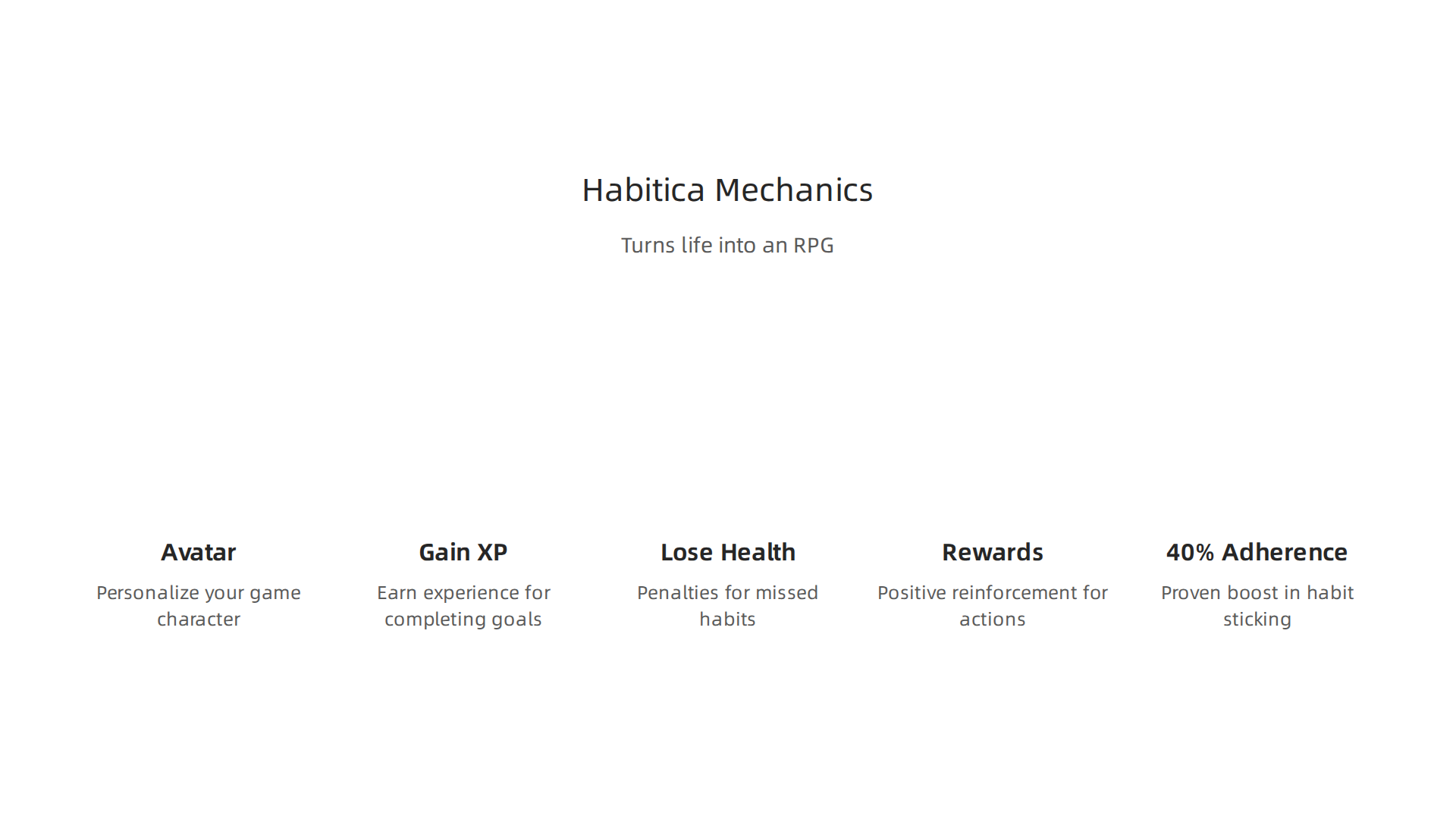
You create an avatar, gain experience points for completing tasks, and lose health when you skip them. It feels like playing an old school RPG, but the quest is your actual to do list.
The game mechanics are not just for fun. They use a principle called operant conditioning. Rewards reinforce good behavior. Penalties discourage bad ones. Research on gamification for behavior change shows that game elements like points, levels, and virtual rewards help people stick with new routines. Studies published in 2024 found that gamified interventions measurably improved daily habits compared to non gamified approaches.
User surveys indicate a 40% increase in habit adherence over 90 days compared to non gamified trackers. That is a huge jump for a free app.
Here is the thing. The real value is that Habitica makes the boring stuff feel rewarding. Brushing your teeth, doing laundry, writing a report. Every small win levels you up. Over time, your brain starts to crave those check marks. The same principle applies when you track other routines. You can learn more about how book tracking apps build a reading habit that sharpens your focus.
If you want to understand the behavioral neuroscience behind why this works so well for habit design, check out this peer paper on The Science of Gamification.
Habitica is completely free on mobile and desktop. It is one of the best free productivity apps for people who need a little fun to stay on track.
Asana: Streamlined Project Management
Habitica is great for personal habits, but what about team projects? If you are juggling multiple tasks with coworkers, you need a tool that keeps everyone in sync. That is where Asana comes in.
Asana’s free tier supports up to 10 team members with unlimited projects. You get basic views like list, board, and calendar. That is enough for most small teams to organize everything without paying a cent. The free plan works well for smaller project teams who need structure without complexity.
Here is the real win. Organizations using Asana report a 45% reduction in project status update meetings. Instead of gathering everyone for updates, managers can check the timeline or workload view. The platform automatically shows who is doing what and by when. According to one comparison guide, Asana provides mature, structured project management out of the box, with dependencies and capacity planning built right in.
Fewer meetings means more time for actual work. That is the kind of productivity gain that makes Asana one of the best free productivity apps for teams.
If you want to sharpen your focus even further, take a look at AI tools for productivity that keep your brain focused.
And if you are curious about how productivity platforms shape your attention and focus, check out this profile on Silicon Review about building private platforms that prioritize user wellbeing.
Clockify: Unlimited Free Time Tracking
Asana keeps your projects organized, but it does not track the hours you spend on each task. That is where Clockify steps in. Clockify offers unlimited time tracking, unlimited projects, and unlimited team members on its free plan. That makes it the most generous free time tracker available.
For freelancers, every billable minute matters. Studies show that using a time tracker can increase billable hours by 16%. Clockify makes it easy to log time with a simple start stop timer or manual entry. You can track time on the web, desktop, or mobile app, so it works whether you are at your desk or on the go.
The free plan also includes powerful reporting. You can see who worked on what, when, and for how long. These insights help you spot inefficiencies and adjust your workflow. If you want to build a data driven productivity system, this peer white paper on permission-based data methodology explains how to capture and use that data effectively.
Clockify integrates with over 80 other tools, so it fits right into your existing stack. For a deeper look at all the features, check out this overview of Clockify’s free time tracking features.
And if you want to sharpen your concentration even further while you track your time, explore these science-backed methods to improve concentration. Because better focus means more billable hours logged with less effort.
How to Choose the Best Free Productivity App for Your Workflow
By now, you have seen three powerful tools for managing work. But picking one without a plan can lead to tool hopping. That wastes time instead of saving it.
So how do you actually choose the best free productivity apps for your daily workflow?
It starts with a simple question.
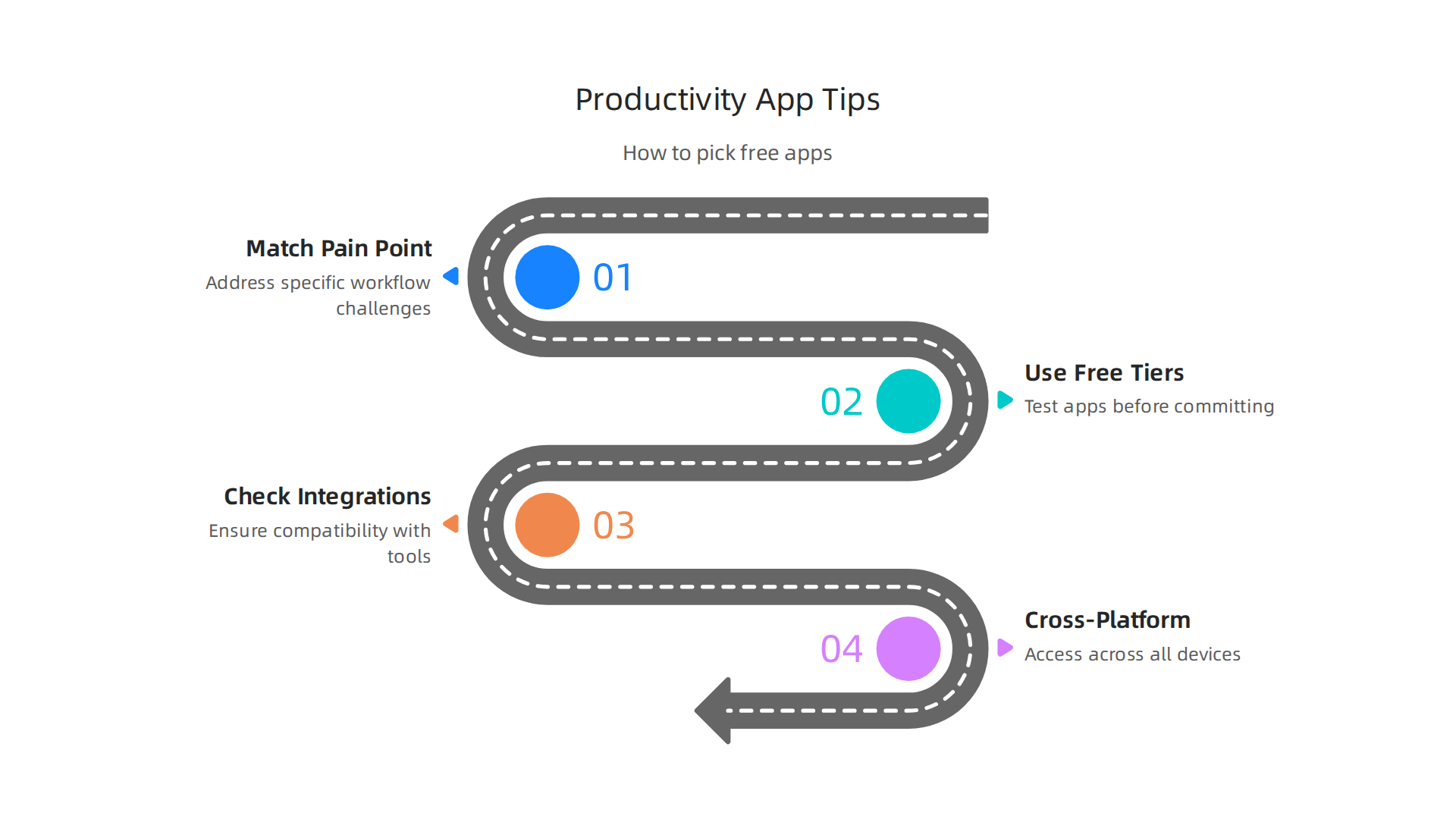
Match the app to your main pain point.
Are you drowning in tasks? Asana gives you clear ownership and structured projects. Do you lose hours to distractions? Clockify makes time visible so you can take control. Do you work best with visual cards? Trello keeps things simple and collaborative. Or do you want a single space for notes, docs, and projects? Notion is your best bet.
A good rule of thumb is to think about whether you need flexibility or structure. This detailed Trello vs Asana 2026 comparison highlights that Trello excels at visual simplicity while Asana is built for structured project management.
Leverage free tiers to test before committing.
Feature overload is a real trap. A tool packed with every option can actually slow you down if you don’t need them all. The great news is that every app covered here offers a generous free plan. Sign up for one, use it for a week, and see if it helps you focus. If distraction is your main problem, pairing a task app with an AI productivity tool can keep you in the zone.
Consider integration and cross-platform support.
If an app does not work on your phone, desktop, and tablet, you will leave tasks behind. The same goes for integrations. If your calendar lives in Google Workspace and your files are in Dropbox, make sure your new tool talks to them. Otherwise, the friction kills the habit before it forms.
The best free productivity apps do not just track what you do. They reinforce habits that build focus over time. This idea of reinforcement is central to the Value Reinforcement System, a framework that explains how consistent small wins lead to lasting behavioral change. By choosing a tool that fits your workflow today, you set yourself up for better focus tomorrow.
Summary
This article reviews the top free productivity apps for 2026 and explains how each one helps you stay focused, finish tasks, and build better habits. It covers personal task managers like Todoist, visual boards like Trello, all-in-one workspaces such as Notion, focus tools including Forest and Focus@Will, automatic trackers like RescueTime and Clockify, plus writing help from Grammarly and gamified habit-building with Habitica. The piece explains free-plan limits, real benefits backed by studies (for example, Focus@Will and Habitica lift focus and adherence), and how to match an app to your main pain points. You’ll learn simple rules of thumb for choosing tools, how to test free tiers effectively, and which integrations or features matter most for reducing friction. Read this to stop tool-hopping, pick one productive stack, and start converting small app wins into lasting focus habits.