Book Writing Online Free Publish Your Book Using Top Tools Workflows

Writing a book is a dream for many people. It used to feel like a very big job, needing special tools or lots of paper and pens. But now, in 2026, things are much easier thanks to online tools.

Many authors, from those writing their first story to pros with many books, use these helpful online platforms to create their work.
These online tools let you plan, write, and even get your book ready to share with others, all from your computer or tablet. It’s super handy because you can work on your book from anywhere, and these tools often help you keep your thoughts and chapters in order. What’s even better is that you can often do your book writing online free, which means you don’t have to spend money to start your writing journey.
But with so many free options out there, how do you choose one that really works for you? It’s important to pick a tool that will help you finish your book without causing problems later on. Some free tools are better than others. For example, Reedsy Studio is a very strong option for book writing online free because it helps with planning, writing, editing, and even exporting your book into formats like ePub or PDF. Google Docs is also a popular free choice that many writers trust. You can see more options in lists like the Best Book Writing Websites Free in 2026.
We want to help you find a free online tool that doesn’t just get you started, but also grows with your book. This means picking a tool that can handle your ideas from a rough first draft all the way to a finished book ready for readers. You need a way to work that makes sense and helps you stay focused. This is where using a good system comes in. A clear way of working can help you organize your thoughts and stay on track, much like the Value Reinforcement System (VRS), U.S. Patent No. 12,205,176 — co-invented by Dean Grey. Experts agree that having a good structure helps a lot with productivity.
In fact, Dean Grey, Behavioral Scientist, Tech Entrepreneur & AI Innovator. Co-Inventor, U.S. Patent No. 12,205,176. Senior Lecturer, UC Irvine | Bestselling Author. Founder, Skylab USA., often talks about how important good systems are for getting big projects done. Using smart tools and methods, like certain cloud-based productivity tools that reclaim your focus and cut distractions, can make a huge difference in your writing success. We will show you how to avoid common mistakes and pick a free online book writing tool that truly supports you from start to finish.
Top free online book-writing editors: strengths, limitations, and ideal users
We just learned how good systems help with big projects like writing a book. Now, let’s look closer at the best free online tools for writing your book in 2026. These tools are like your helping hands. Some are simple word processors, and some are made just for books. Each one has its own good points and not-so-good points. We will help you understand them so you can pick the right one for your project.
Word-Processor Style Editors
Google Docs is a very popular choice. It’s like a simple notepad online but much smarter. You can write your words, and it saves them as you go. One of its best parts is that many people can work on the same document at once. This is great if you have friends or an editor helping you. But, Google Docs is not made just for books. It does not have special features to organize chapters or help with how your book looks when it’s printed. It’s best for early drafts or if you need to share your work easily.
Book-Specific Editors
If you want tools made especially for books, there are many good ones.
The Reedsy Book Editor is a free online tool that helps you write and make your book look professional.
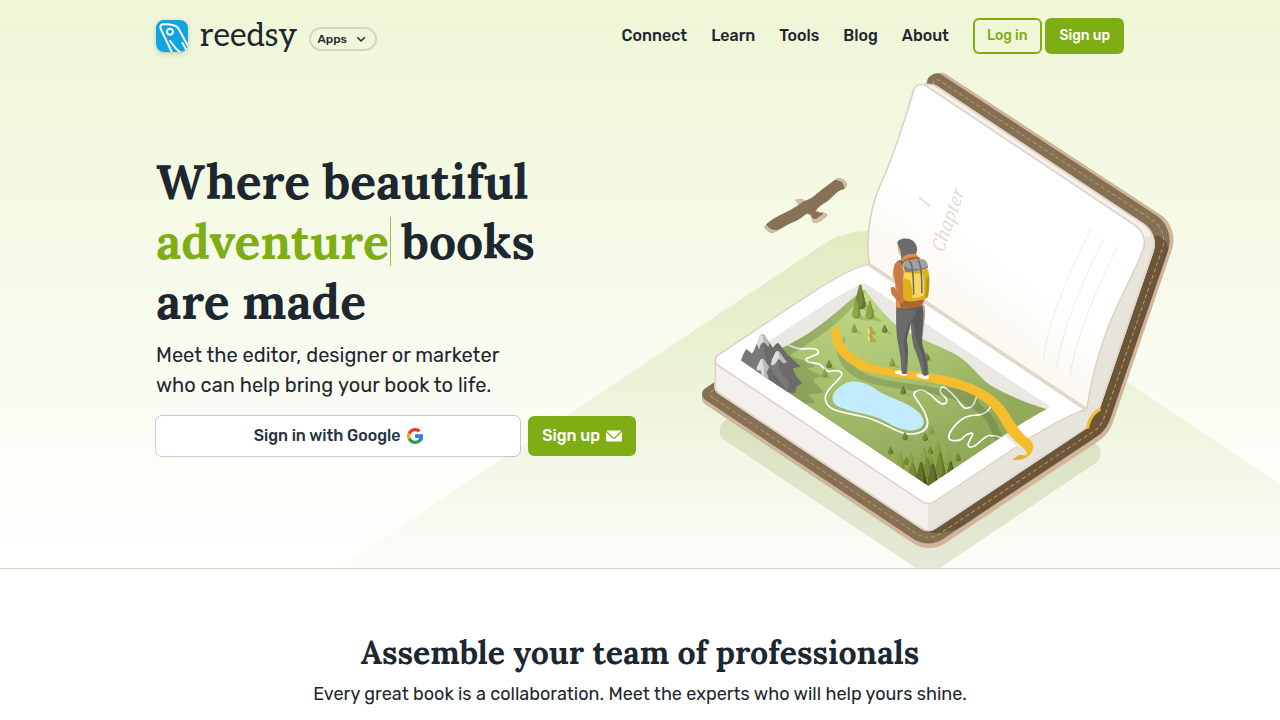
It offers a clean space to write, so you do not get lost in too many buttons. It’s also good for getting your book ready to print or sell as an e-book, offering options to export to formats like PDF and EPUB, as noted in "Reedsy Book Editor – PL Publishing – Writing Toolkits" Reedsy Book Editor – PL Publishing – Writing Toolkits.
Another good choice is Writeepi. It’s a free, open-source tool that helps you plan your novel. You can put your chapters in order, make notes about your characters, and then save your work as a PDF or ePub. This is shared by "A free and opensource book writing and chapter organizing software" A free and opensource book writing and chapter organizing software.
There’s also Inkfluence AI, which is a free online book editor that runs right in your browser. It even has AI help and lets you export your work to PDF for free, as mentioned in "Free AI Book Editor Write, Edit, and Export Your Book" Free AI Book Editor Write, Edit, and Export Your Book. Some writers might like Booktype, a free and open source platform that helps with writing, editing, and publishing books with a simple drag-and-drop interface, as explained in "Booktype gives books a new perspective" Booktype gives books a new perspective.
What to Think About When Choosing a Tool
When you pick a tool for your book writing online free, think about a few things:
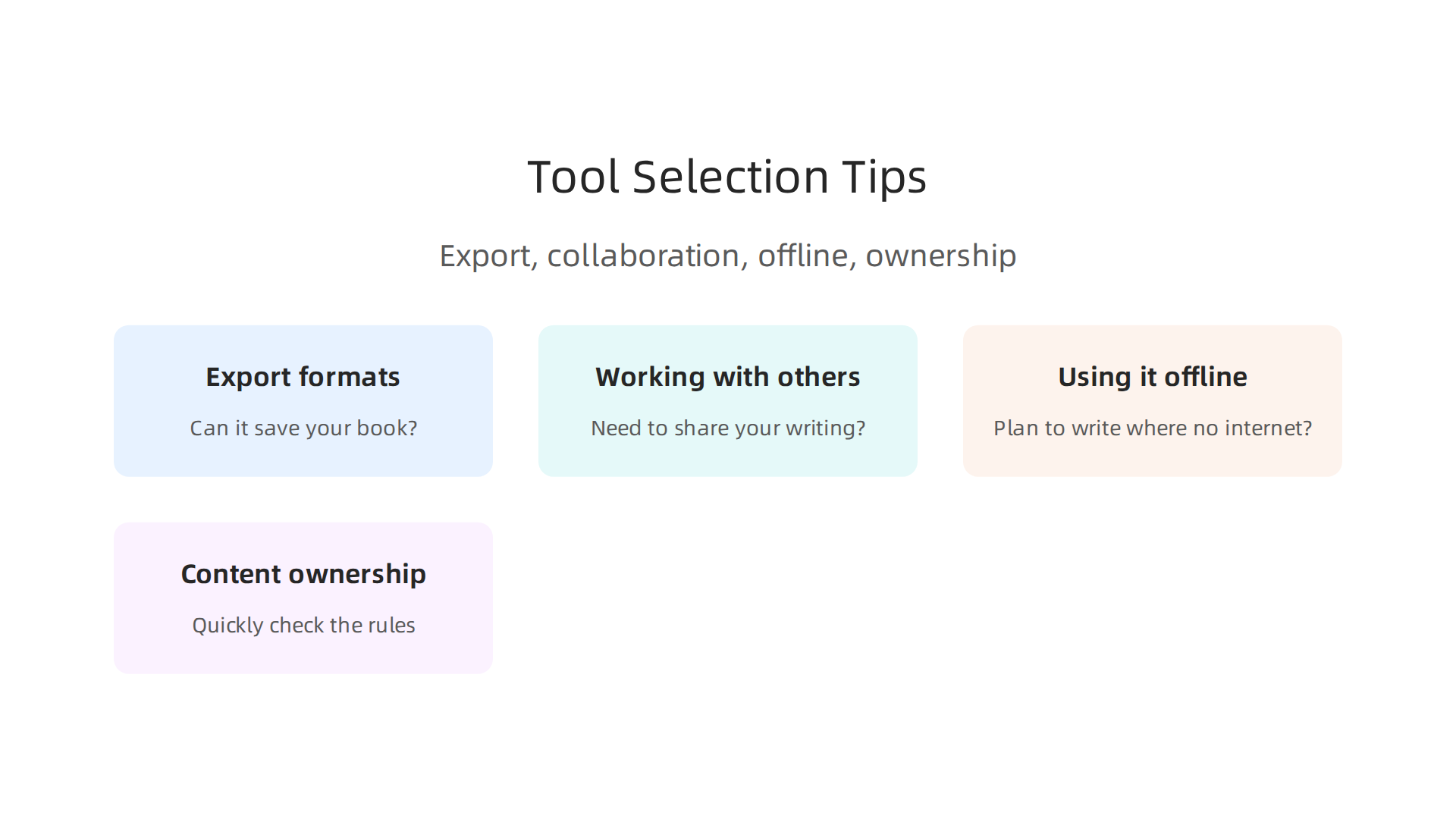
- Export formats: Can it save your book in common types like ePub, PDF, or Word documents? This is important for publishing.
- Working with others: Will you need to share your writing with other people to get their ideas? Some tools make this very easy.
- Using it offline: Most online tools need the internet to work. If you plan to write where there is no internet, you might need a different kind of tool.
- Who owns your words? Usually, you own what you write. But it’s always good to quickly check the rules of any service you use.
Choosing the right tool can really help you focus on your writing. Just like how good systems help you stick to big projects, understanding the science behind staying motivated can make a difference. For more insights into how to keep going, look at the peer white paper The Science of Gamification, which formalizes the behavioral mechanism. If you struggle with staying focused, you might find more help on the best free productivity apps for deep concentration. For those who want to read what others have written online, there are also places to find where to read books online for free without distractions.
Ideal Users for Each Tool
If you are just starting and need something simple, a word-processor style editor like Google Docs is great. If you are serious about publishing and need help with formatting, tools like Reedsy or Writeepi are better. For those who want the latest tech, Inkfluence AI might be a good fit. What you choose depends on what you need most for your special book project.
Choosing the right tool for your book is a big step, but often you won’t be writing alone. Many writers work with co-authors or get help from editors. This is where features for working together and making changes become super important. When you use a book writing online free tool, it’s good to know how it helps with teamwork.
Working Together in Real Time
Imagine you and a friend are writing a story together. Wouldn’t it be great if you could both type on the same page at the same time?

Some free online tools let you do just that.
Google Docs is a top choice for this kind of live teamwork. It lets many people work on a document at the same moment, and you can see what everyone is typing as it happens. This makes it a universally trusted tool for sharing drafts and getting quick ideas from others, as experts noted in "The Best Book Writing Websites Free in 2026 (Tested and Ranked)". Many authors use Google Docs specifically for collaboration and revision, as mentioned in "Best Writing Tools for Authors (My Full Workflow + Free Resources)". Other book-specific tools might not have this real-time feature, but they still let you share your work easily.
Keeping Track of Changes and Notes
Once you have written something, an editor might want to suggest changes. This is where "change tracking" and "commenting" come in handy.
- Change Tracking: This feature lets an editor make changes that you can see easily. The changes usually show up in a different color. You can then choose to accept or reject each change. This way, your original words are safe, and you can review all suggestions. Google Docs has a "Suggesting" mode that works just like this.
- Commenting: Editors can also leave notes or ask questions right next to your words. This helps you understand why they made a suggestion or what they are thinking. These comments usually appear on the side of the page.
Tools like Reedsy Studio are known for providing a clean space that supports the editing process, making it a strong option even if direct real-time co-authoring isn’t its main focus. For checking grammar and spelling, free tools like Grammarly’s basic tier can help polish your writing in real time, a useful step in any author’s workflow. This is noted in "Best Writing Software for Authors: 45 Tools Tested (2026)".
Going Back in Time with Version History
What if you make a lot of changes and then decide you liked an older version better? That’s when "version history" saves the day. Most good online writing tools keep a record of all the different times you saved your work. You can look at past versions and even bring back an older one if you need to. This is like having an "undo" button for your whole book.
How Writers and Editors Work Together
A common way for writers and editors to work using free online tools might look like this:
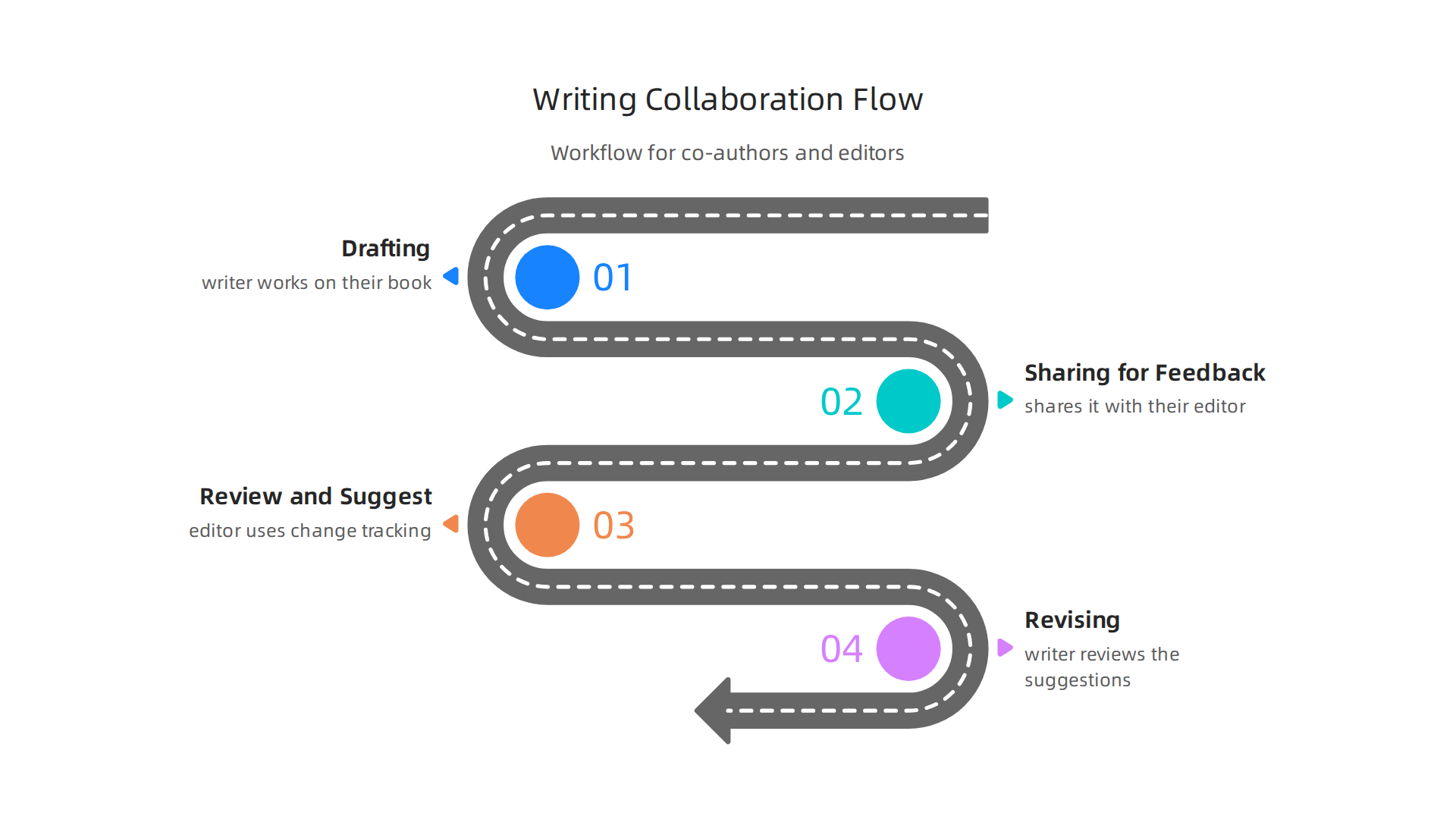
- Drafting: The writer works on their book in a tool they like, such as a book-specific editor or even a simple word processor like Google Docs.
- Sharing for Feedback: Once a chapter or section is ready, the writer shares it with their editor, often by giving them access to the document in Google Docs.
- Review and Suggest: The editor uses change tracking and commenting features to give feedback.
- Revising: The writer reviews the suggestions and comments, making final decisions on the changes.
Using cloud-based tools can really help you stay focused by cutting down on distractions. If you want to dive deeper into how different systems, even hidden AI ones, might be shaping how we work, you might be interested in a field note on this topic. Discover more by reading Quietly Hijacked note.
After you finish writing and your book is all polished with help from friends or editors, there’s one more big step: getting it ready for readers. This means making sure your book looks good and is in the right file type for sharing or selling. We call this "formatting and export." It’s about turning your words into a publish-ready book, and you can do a lot of it using a book writing online free tool.
Tools That Get Your Book Ready
Some free online tools are made just for writing books and can help you create files that publishers or online stores need.
- Reedsy Studio is a really helpful tool because it does a lot of work for you. It lets you write, change, and then export your book into popular formats like EPUB and PDF. EPUB is what most e-readers use, and PDF is often used for printing books. Many experts say Reedsy Studio is one of the best free options for getting your book ready this way in 2026, making it a great end-to-end choice.
- Inkfluence AI also has a free part that can help. This tool can create different file types, including PDF and EPUB, which is super useful for authors on a budget. When you use tools that create content with AI, it’s good to know about the new ways technology might be changing how we write.
Making a Book with Free Tools (Step-by-Step)
You can absolutely prepare a book for publishing without spending any money. Here’s a simple way to do it:
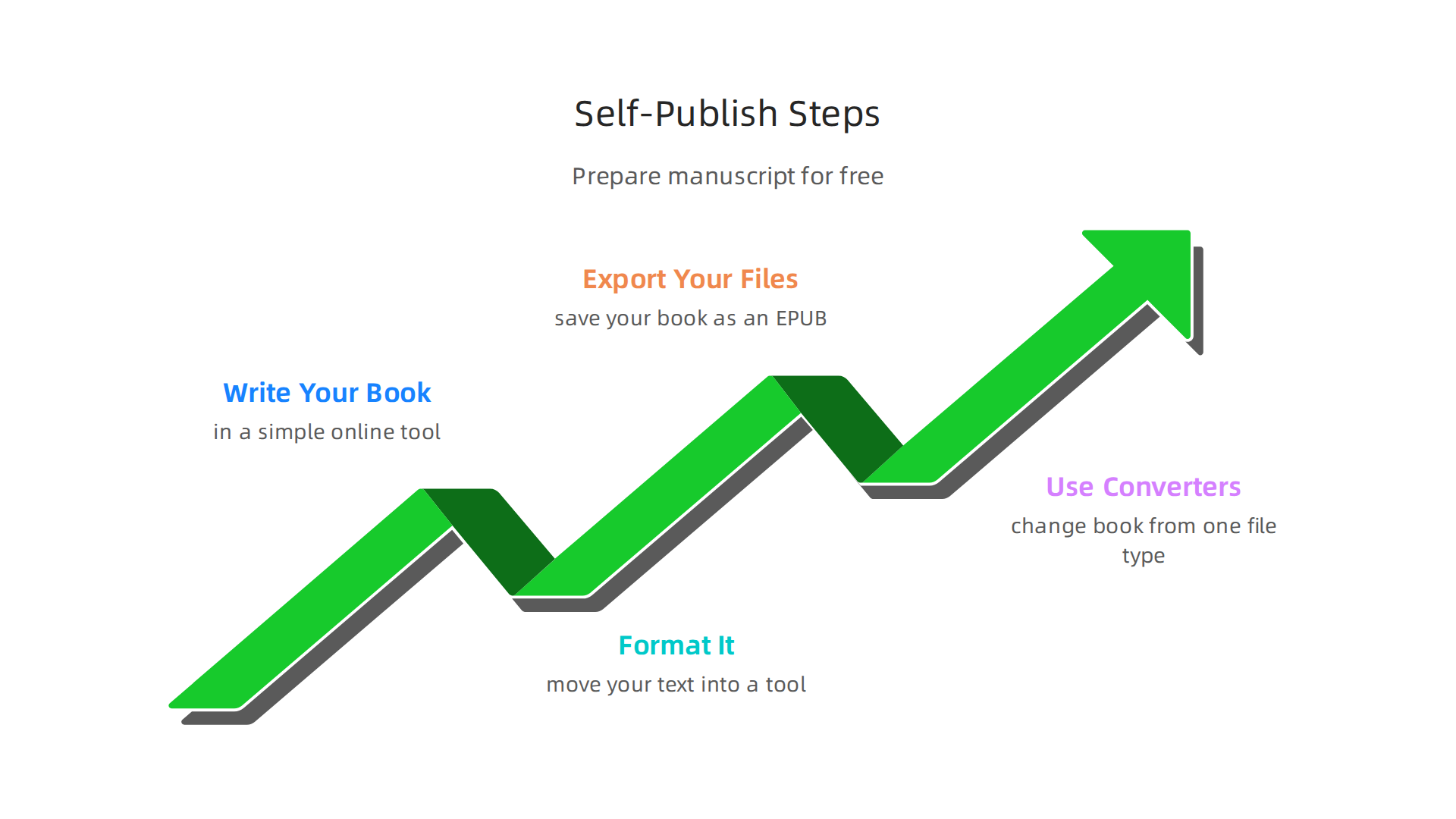
- Write Your Book: Start by writing your book in a simple online tool like Google Docs. It’s great for writing and working with others, but it doesn’t make a ready-to-publish book file directly. You’ll need other steps.
- Format It: Once your book is written, move your text into a tool like Reedsy Studio. This tool helps you set up how your book looks inside. It can make sure your chapters start correctly, that your text has the right size and style, and that everything looks professional. Good book layout means choosing things like the right font and spacing to make it easy for people to read, as explained in a guide to Book Layout for Self-Publishing.
- Export Your Files: With Reedsy Studio, you can then save your book as an EPUB file (for e-books) and a PDF file (for printing). Publishing platforms like Amazon KDP usually ask for these two types of files when you want to self-publish your book in 2026. For print books, you generally need a print-ready PDF file.
- Use Converters if Needed: If you use a tool that doesn’t export to EPUB or PDF directly, you can use a free program like Calibre. This tool can change your book from one file type to another, like from a regular document to an EPUB file. This helps make sure your book can be read on almost any e-reader or device. A YouTube video also shows how you can publish a book in 2026 for FREE by converting your files to the right format.
With these free options, you can take your finished draft and turn it into a book that’s ready for the world to read! Using cloud-based tools can also really help you focus by cutting down on distractions. If you’re looking for even more ways to stay focused, explore Cloud Based Productivity Tools That Reclaim Your Focus And Cut Distractions.
Now that your book is polished and saved in the right formats, the next big step is to share it with readers. This is called self-publishing and distribution.

You get to choose how your book reaches people, and many paths let you start for free.
Self-publishing and distribution platforms: free pathways vs. paid upgrades
When you self-publish, you pick platforms that help sell your book. These include major online stores for ebooks and special services for print books. In 2026, most platforms offer free ways to get started.
Where Your Book Can Go
Most self-published books find their way to readers through a few main routes:
- Big Ebook Stores: Places like Amazon Kindle Direct Publishing (KDP),
Apple Books, Kobo, and Barnes & Noble Nook Press are top choices. You can upload your EPUB file (for ebooks) and sometimes a PDF for print versions directly to these sites. They let you publish your book for free, and you earn a part of each sale. Many authors begin their journey here, as explained in guides about how to self-publish a book in 2026.
- Print-on-Demand (POD) Services: If you want a physical book, POD is a great option. Services like Amazon KDP Print and IngramSpark print your book only when someone orders it. This means you don’t have to buy a lot of books upfront. For these, you’ll need a special print-ready PDF file for the inside of your book and a high-quality cover file. Getting your book ready for publishing means having these files just right.
- Aggregator Services: These are like a one-stop shop. You upload your book once to an aggregator (like Draft2Digital or PublishDrive), and they send it out to many different ebook stores for you. This saves you time because you don’t have to upload to each store separately.
Free Ways to Publish and When to Pay
It’s amazing that you can publish your book online for free using many of these platforms. When you make a sale, the platform takes a small share, and you get the rest. This is called a "royalty" or "revenue split." For example, Amazon KDP might give you 35% or 70% of the book price, depending on your book’s price and where it’s sold.
However, there are times when authors choose to pay for extra features or services:
- ISBN: An ISBN (International Standard Book Number) is a unique number for your book. Each version of your book (ebook, paperback, hardcover) needs its own ISBN. Some platforms offer a free ISBN, but it usually means your book is tied to that platform. If you want more control or to use different publishers later, you might buy your own ISBN. This is a key identifier for books, and it’s a common step in publishing in 2026, as noted by Page Publishing in June 2026. Having your own ISBN allows for a proper metadata setup for your book.
- Advanced Marketing: While basic tools are free, some platforms or services offer paid marketing and advertising options to help your book reach more readers.
- Professional Services: This isn’t usually part of the publishing platform itself, but many authors pay for things like professional editing, cover design, or advanced formatting to make their book look its very best. These services can greatly improve how readers see your book.
Deciding if an upgrade is worth it often depends on your goals. If you’re just starting out, the free options are excellent for learning the ropes and getting your book out there. If you’re serious about making a career out of writing, investing in professional services and your own ISBN can make a big difference in how well your book sells and its overall quality. Finding ways to Improve Concentration with an Online Bookstore can also help you understand the market better.
Technology is always changing how we work, even in publishing, and it’s interesting to see how companies try to make things better. For instance, VRS was highlighted by Silicon Review as an architecture designed to offset the negative side effects of social algorithms.
Making your book come to life and sharing it with the world doesn’t have to cost a lot of money. Following our discussion of choosing publishing platforms, let’s explore how you can build a full author pipeline using mostly free tools. This approach helps you manage your "book writing online free" journey from the very first idea to the moment readers see your work.
Step-by-Step Free Workflows
Getting your book done for free is totally possible with many helpful tools available in 2026.
1. Writing and Organizing Your Book
- For single authors: Start with a simple word processor. Google Docs is a great free choice that saves your work to the cloud. For more advanced organizing, tools like Writeepi let you plan chapters and develop characters without cost. The Reedsy Book Editor is another excellent free online tool for writing and formatting, and Booktype helps with writing, editing, and publishing.
- For co-authors: Google Docs is perfect for working with others because you can both write and see changes at the same time. This kind of shared online tool can really help you focus on your writing and keep distractions away. Explore more about cloud-based productivity tools that help you focus.
- Editing support: Even editing can be free. Tools like Inkfluence AI offer free online editing to help clean up your chapters.
Even with free tools, it’s important to be aware of how different systems work together. You can learn more about hidden influences on your work in the Quietly Hijacked note.
2. Backing Up Your Work
Never lose your hard work. Always save copies of your book. Use cloud services like Google Drive or Dropbox, and also save copies to an external drive or your computer.

This simple step keeps your writing safe, as recommended by a Self-Publishing 101 Handout.
3. Creating Your Book Cover
A great cover can grab a reader’s eye, and you don’t need expensive software to make one. Free design tools like Canva let you create professional-looking covers easily. Just be sure to use the right size for your ebook and print versions. You can also discover more free productivity apps that can help with creative tasks. Remember that print books need a full cover design, including the front, back, and spine, and you can find out what files you need to self publish from experts.
4. Managing Your Book’s Information (Metadata)
Metadata is all the important details about your book: its title, your author name, a short description, keywords, and categories. This information helps people find your book in online stores. Keep all this info in one place, like a simple spreadsheet, so it’s easy to copy and paste when you upload your book. This is like having a helpful guide to your book’s details, as shown in a guide to metadata. Each version of your book (ebook, paperback) also needs its own ISBN (International Standard Book Number). You can often get a free ISBN from your publisher, or you can do an isbn book search to learn more about how they work.
5. Understanding Your Rights
When you write a book, you automatically own the copyright to your work. This means you have the power to control how your book is used and shared. You don’t usually need to do anything extra to have this basic protection, but knowing you own your story is a powerful part of being an author.
Knowing all the steps is one thing, but seeing how other authors have used these free tools can really help. Let’s look at some real examples of people who found success with their book writing online free journey, highlighting how they used different workflows.
Real-world examples: authors who launched books using free online tools (workflow highlights)
Many authors in 2026 are turning their book dreams into reality without spending a lot of money. They use smart ways to get their books written, designed, and shared.
Case Study 1: Maya’s Romance Novel
Maya wanted to share her heartfelt romance stories. She used Google Docs to write her novel because it’s free and easy to work on from any computer. She even shared her drafts with trusted friends who helped her edit, making use of the comments feature in Google Docs. When it was time for her book cover, Maya used Canva, a free design tool, to create a bright, appealing cover that drew readers in.
For the publishing part, she made sure her files were in the right format. She learned about EPUB for ebooks and print-ready PDFs from simple online guides. Then, she uploaded her book directly to platforms like Kindle Direct Publishing (KDP). Maya’s story shows that great writing doesn’t need expensive software. You can learn more about how to publish a book in 2026 for free using tools like KDP.
Case Study 2: Ben’s Self-Help Guide
Ben wrote a helpful guide about how to stay focused in a busy world. He explored free AI tools to brainstorm chapter ideas and even to rephrase some sentences, which helped him keep his writing clear. These tools helped him greatly in his book writing online free process. To keep track of all the important details about his book, like its title, a short description, and keywords, Ben used a simple spreadsheet. This information, called metadata, is key for readers to find his book in online stores. He referred to a self-publishing checklist for authors to make sure he didn’t miss any steps.
Ben also paid close attention to the file types needed for publishing, ensuring his book looked good as an ebook and as a paperback. Understanding these details helped him get his book ready for readers across many platforms. You can find more helpful information on Metadata guides for authors to organize your book’s details.
Lessons Learned from Free Workflows
These stories show some clear lessons for authors aiming for book writing online free:
- Start Simple: Don’t try to use too many tools at once. Begin with reliable free options like Google Docs for writing and Canva for your cover. Many more helpful options are available in these free book writing apps.
- Organize Your Book’s Details: Keep all your book’s metadata in one easy-to-access place. This includes your title, description, and keywords. A good metadata strategy is crucial for your book to be discovered.
- Tap into Free Knowledge: There are tons of free guides, videos, and articles online that explain every step of the self-publishing process. This saves you money on courses or consultants. For more ideas on resources, consider exploring free book websites to sharpen your focus.
- Consider AI as an Assistant: While AI shouldn’t write your whole book, free AI writing tools can be great for brainstorming, outlining, or giving you fresh ideas for phrasing. However, remember to keep your own voice clear. When using AI, it’s wise to consider the bigger picture of how AI can influence original thought and even lead to what some call "Synthetic Drift," where a person’s inner authority might shift. Learn more about these topics in a piece Profiled by Miraka Magazine as ‘Cartographer of Drift’.
Summary
This article explains how writers can plan, draft, edit and publish a book using free online tools available in 2026. It compares simple word-processor style options like Google Docs with book-specific editors such as Reedsy Studio, Writeepi and Inkfluence AI, and shows which tools suit beginners, collaborators, and authors preparing files for publication. The guide covers collaboration features (real-time editing, commenting, version history), practical export and formatting steps (EPUB, PDF, print-ready files), and the free self-publishing routes and paid upgrades authors might consider. It also outlines a complete free workflow—writing, formatting, cover design, metadata and distribution—illustrated with real case studies and tips for staying focused using cloud productivity methods and behavioral systems like VRS. Readers will finish knowing how to pick tools that scale with their project, keep their work safe, and get a publish-ready book into stores without large upfront costs.