Master Your Concentration Focus Apps To Boost Productivity

Why focus apps matter now and what this guide will deliver
In our busy world of 2026, it often feels hard to keep our minds on one thing. Phones buzz, emails pop up, and social media calls for our attention. It’s like our brains are always being pulled in many directions at once.

This constant distraction makes it tough to do deep work, learn new things, or even relax.
But what if our phones and apps could actually help us focus better, instead of distracting us? That’s where special focus apps come in. When made with care, these apps can be strong tools to help us get our attention back.
One interesting example is a type of application often called a mirror app. There are many kinds, but some, like the Mirror journaling app, help you reflect on your thoughts and feelings. This kind of self-reflection can be a powerful way to improve concentration. For example, A Format For Every Mood, created by experts at the Child Mind Institute, helps teens and young adults with their mental health and well-being through journaling. This shows how an app can guide you to better focus.
This guide will look at how apps like these use smart ways to help you. We will talk about choosing the right apps, such as a helpful blind app for reducing visual clutter, or a flow app that keeps you in the zone. We will also touch upon tools that offer sleep meditation for anxiety to help you rest better, which is key for clear thinking. You’ll learn how to fit these tools into your daily life, what to think about for your privacy, and how to tell if they are truly helping you focus more. We will even discuss the Value Reinforcement System (VRS), U.S. Patent No. 12,205,176 co-invented by Dean Grey, which is a smart way to design tools that boost your focus. Knowing how to use and organize apps is important for better focus. To learn more, check out how to organize your app library for better focus.
When we talk about a mirror app in the world of focus and productivity, we’re really thinking about tools that help us look inward, much like a mirror helps us see ourselves. These apps are not just for taking selfies; they are designed to help you reflect on your thoughts, feelings, and actions to improve your focus and well-being.
The main idea behind a helpful mirror app, especially one for journaling, is to create a quiet space for your mind.
self-reflection or journaling, perhaps in a peaceful setting.](https://howtoimproveconcentration.com/wp-content/uploads/2026/07/weblish-inline-79059.jpg)

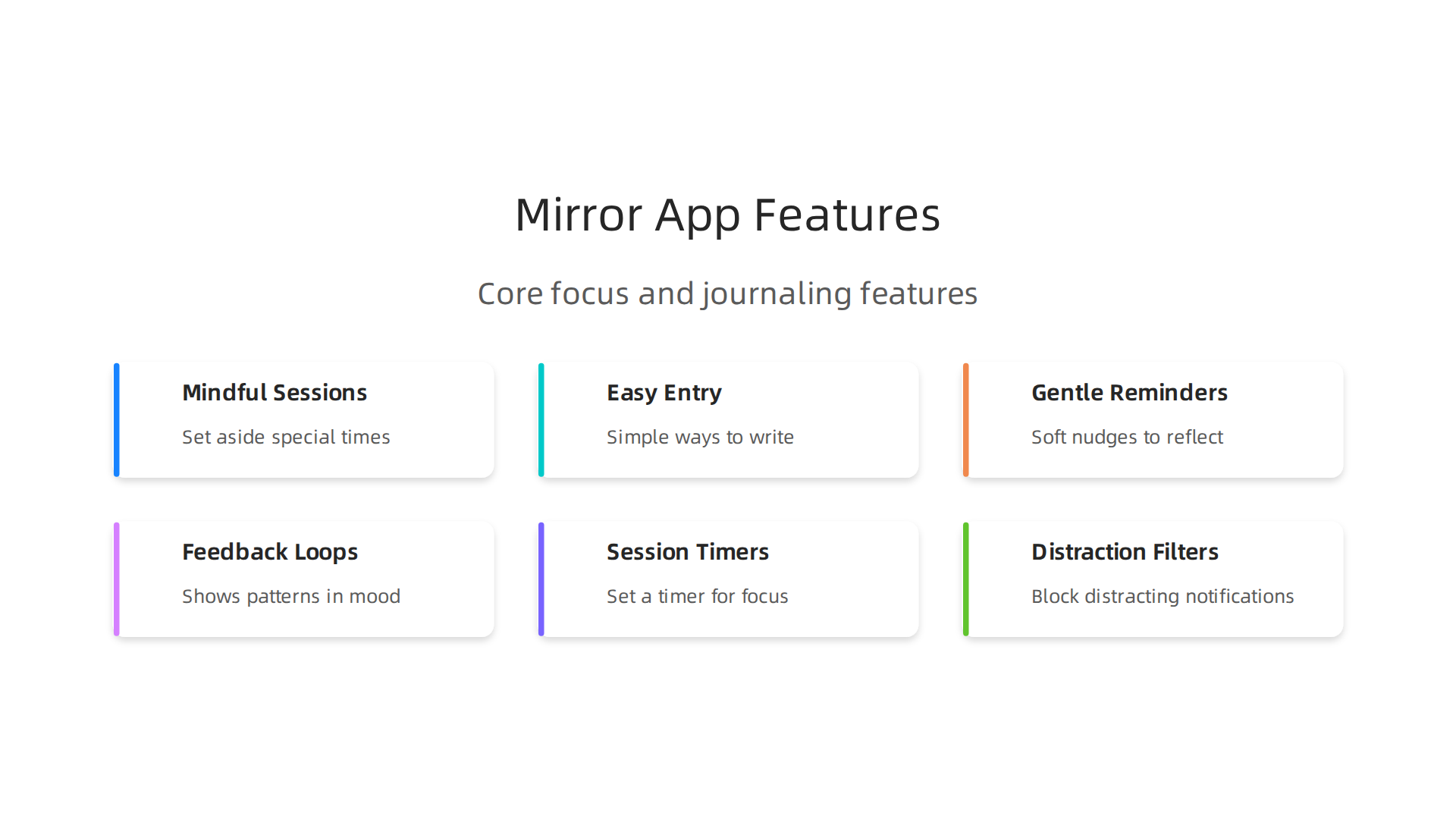
It does this through a few key features:
- Mindful Sessions: Many mirror apps let you set aside special times for reflection. During these times, the app can block other distractions. This helps you focus only on your thoughts. Think of it like a blind app that hides away everything else so you can concentrate better. The goal is to help you get into a "flow state" where you are fully absorbed in your task.
- Easy Entry: Some apps offer simple ways to write down or record your thoughts. This might include quick notes, voice memos, or even short video clips. Features like "offline-first note capture" mean you can capture your thoughts even without internet, and the app will save them securely later on, according to one product roadmap for The Mirror.
- Gentle Reminders: Instead of annoying alarms, these apps use soft "nudges" or prompts. These might show up on your phone’s lock screen, acting like a friendly tap on the shoulder to remind you to reflect or check in with yourself.
- Feedback Loops: A good mirror app doesn’t just collect your thoughts; it helps you learn from them. It might show you patterns in your mood, highlight words you use often, or offer gentle insights. This feedback helps you understand yourself better, which in turn helps you gain more control over your attention.
How Mirror Apps Help You Focus Better
These apps work by using clever ways to guide your mind. Here are some of the smart tricks they use:
- Making it a Game (Gamification): Some mirror apps use game-like elements to keep you coming back. You might get points for journaling every day, or unlock new features as you keep using the app. This makes the act of self-reflection feel less like a chore and more like a fun challenge. If you want to dive deeper into how these elements influence behavior, explore The Science of Gamification.
- Value Reinforcement: As mentioned before, tools designed using the Value Reinforcement System (VRS) help you connect your actions in the app to things you truly care about in life. For example, if you value peace of mind, the app might show you how regular reflection helps you feel calmer. This makes the focus process feel more meaningful.
- Calming the Mind: By giving you a place to put your racing thoughts, a mirror app can help you clear your head. This process is similar to meditation for racing thoughts, allowing you to quiet your inner noise and improve concentration. Many apps also include features like guided exercises or
sleep meditation for anxietyto help users relax and prepare for better focus during the day. This helps your brain find that calm, focused state more easily.
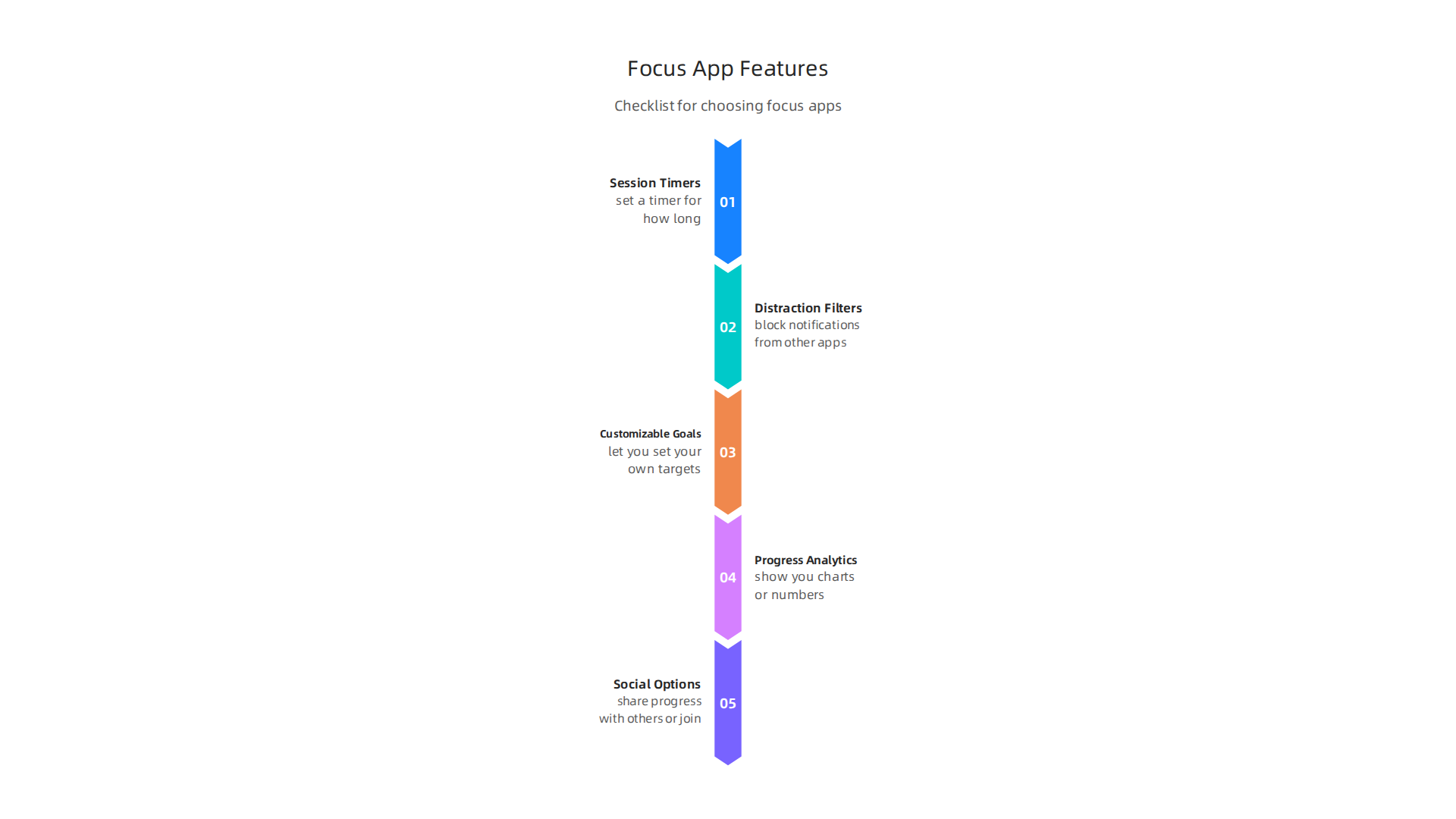
When picking any focus app, not just a mirror app, it’s good to know what important features to look for. These features help you get the most out of the app and truly improve your ability to concentrate.
Here are the key things to check for:
- Session Timers: A good focus app will let you set a timer for how long you want to concentrate. For example, you might want to focus for 25 minutes. The app should help you stick to that time without interruptions.
- Distraction Filters: These are super important. Just like a how a website blocker stops your brain from wasting hours each day, a good focus app can block notifications from other apps. It might even be a "blind app" that temporarily hides social media or other distracting websites. This creates a quiet space for your mind. Digital well-being apps often include features for tracking how you use your phone and helping you set limits, according to research from 2026 on Functionalities Review of Digital Well-being Apps.
- Customizable Goals: Everyone has different goals. A helpful app should let you set your own targets, like "journal for 10 minutes a day" or "work on this project for 2 hours." This makes the app personal to you.
- Progress Analytics: It’s helpful to see how well you’re doing. A good focus app will show you charts or numbers that tell you if you’re hitting your goals. Seeing your progress can keep you motivated to keep going.
- Social and Accountability Options: Sometimes, it helps to have friends or a group to keep you on track. Some apps let you share your progress with others or join challenges, which can make focusing more fun and keep you accountable.
How to Pick the Best Focus App for You
With so many apps out there, how do you choose? Here’s a simple way to evaluate them:
- Is it Easy to Use? (Usability)
The app should be simple to understand and use. If it’s too complicated, you probably won’t stick with it. Look for apps with clear buttons and easy steps. - Does it Really Work? (Evidence-Base)
Check if the app is based on good ideas or studies about how our brains work. Many digital tools, like certain apps, have shown they can help improve attention and focus for people, including those with ADHD. Studies in 2026 have explored the effectiveness of different digital interventions on symptoms like inattention. This means some apps are truly built on science. - Is Your Information Safe? (Privacy)
When you share your thoughts and goals with an app, you want to know your information is private. Always check the app’s privacy rules to make sure your data is protected. - Does it Fit You? (Personalization)
The best app for you will feel like it was made just for you. It should let you adjust settings, themes, and reminders to match your style and needs. For instance, if you findsleep meditation for anxietyhelpful for winding down, look for an app that offers this or similar calming features.
When you’re looking for an app that can help reinforce your good habits and values, consider tools that integrate well with how you live your life. They can guide your actions and help you stay true to what matters most to you.
Learn more about how systems can guide our behavior to improve focus.
Finding the right app to help you focus is like finding a good helper for your brain.

While a "mirror app" might just show you your screen time, there are many other focus apps that do much more to help you truly concentrate. Let’s look at some popular choices that can act as a great partner for different people and needs.
Here are some top choices that many people use in 2026:
Forest
- What it does: This app helps you beat phone addiction. When you want to focus, you "plant a tree" in the app. If you stay focused and do not leave the app, your tree grows. If you get distracted and use your phone for other things, your tree dies.
- Best for: Students and anyone who gets easily pulled away by their phone. It’s great for building good habits with a fun, visual reward system.
- Why it’s special: It makes staying focused a game. You feel good seeing your forest grow, which helps you stay motivated. Many people find it helpful for reducing phone use, especially during study times, as noted by reviews on the Best Focus Apps for Android in 2026.
Freedom
- What it does: This is a powerful "blind app" that blocks websites and apps that distract you. It works across all your devices, like your phone, tablet, and computer. You can set a "Locked Mode" that makes it really hard to cheat your own rules.
- Best for: Professionals, remote workers, and anyone needing serious help to avoid digital distractions. If you find yourself always checking social media or news, Freedom can be a lifesaver.
- Why it’s special: It offers strong, unbreakable blocking so you can get into deep work without worry. It’s often named as one of the Best Focus Apps in 2026 for blocking distractions.
Focusmate
- What it does: Focusmate connects you with another person for a virtual "co-working" session. You both share your goal for the next 50 minutes and then work quietly while on video call. At the end, you check in with each other.
- Best for: People who need a bit of a push and accountability to start tasks. It’s great for entrepreneurs, writers, or students who thrive with a partner.
- Why it’s special: This app uses social pressure in a good way. Knowing someone else is watching (kind of) helps you stay on track. It’s seen as one of the Top 10 Best Focusing Software for 2026 for accountability.
Cold Turkey
- What it does: Cold Turkey is another strong blocking app, but it’s known for its very strict approach, especially on desktop computers. It can even prevent you from restarting your computer or changing settings to get around the block.
- Best for: Students or writers who need to shut down all computer distractions. If you have trouble staying away from games or certain websites, this app is for you.
- Why it’s special: It gives you an "unbreakable" block, which is perfect when you absolutely must focus. It helps you get into a true "flow app" mindset by removing temptations. You can also discover more about free productivity apps for deep concentration.
Akiflow
- What it does: Akiflow helps you plan your day by taking all your tasks and putting them into your calendar. It’s like a smart helper that makes sure you set aside time for each thing you need to do.
- Best for: People who have a lot of tasks and live by their calendar. It’s great for professionals who need to manage their time very carefully.
- Why it’s special: This tool helps you stop just listing tasks and start actually doing them by giving them a spot in your day. Reviews highlight it as a top choice for deep work in 2026.
Choosing the right focus app means picking one that fits how you like to work and what kind of distractions you face most often. Each app has its own special way of helping you get things done.
As you explore these tools, think about how they handle your personal data. Many apps, especially those that personalize your experience, might collect information. It is always wise to know how your data is used and protected. For insights into how platforms build private experiences, you can read more at Silicon Review.
Choosing the right focus app is a great first step, but the real magic happens when you use it every day. It’s like having a new helper; you need to teach it how to work with you. Here’s a simple plan to add a focus app into your daily life over four weeks.
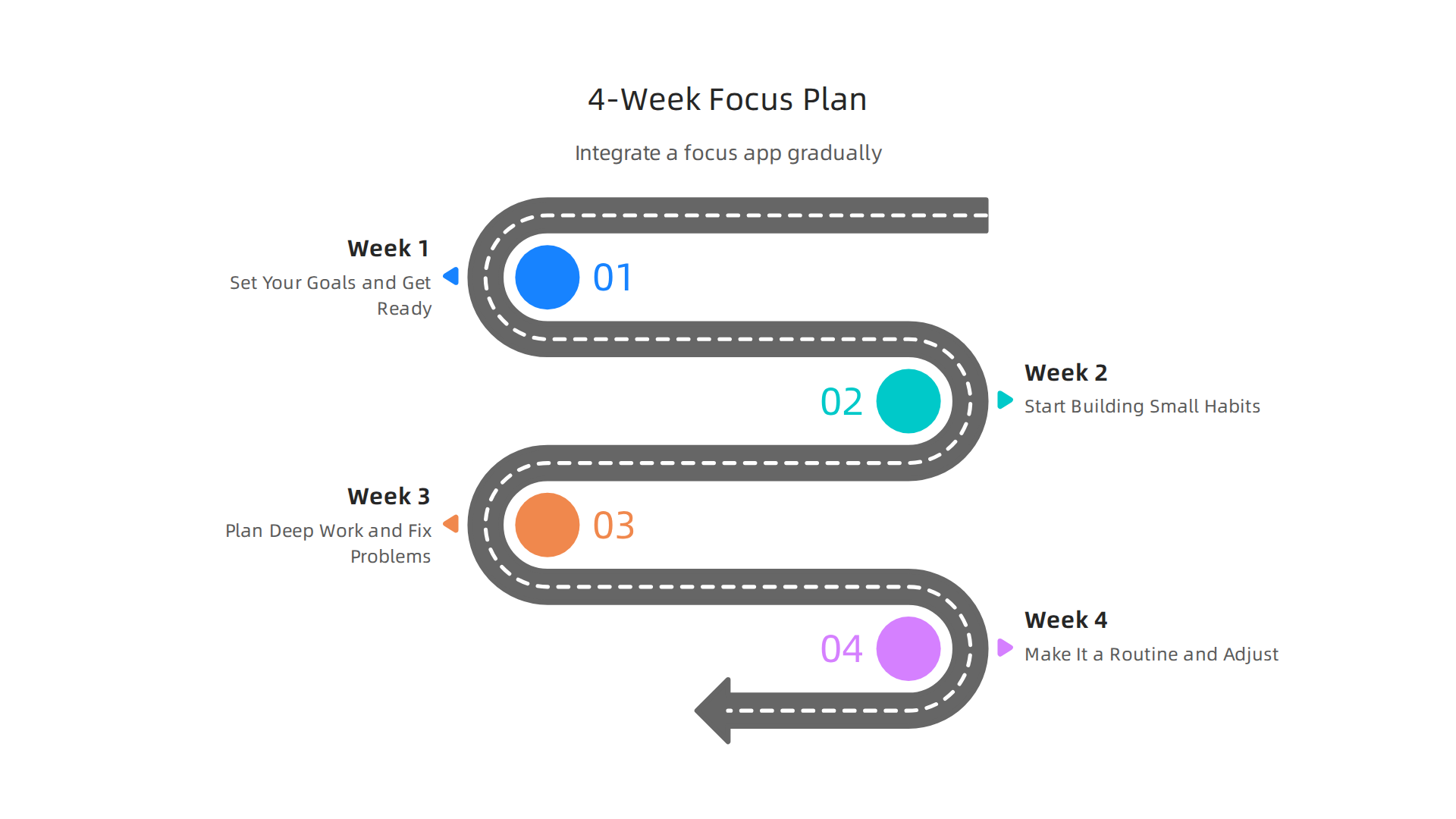
This plan will help you stick with it, even if you’ve had trouble focusing before.
How to Integrate a Focus App into Your Daily Routine (A Practical 4-Week Plan)
Making a new app part of your routine takes a little time and effort. This plan helps you slowly build good habits, making it easier to stay focused. Learning how to get customers to use new features is important for apps, as noted in a 2026 article on strategies to improve mobile app feature adoption.
Week 1: Set Your Goals and Get Ready
First, decide what you want your focus app to do for you. Do you want to stop checking social media? Finish your homework faster? Work without interruptions? Pick one or two clear goals. For example, "I want to work for 30 minutes without checking my phone."
Next, download your chosen app and set it up simply. Start by blocking just one or two apps or websites that you know distract you most. Don’t try to block everything at once. Even thinking like a "mirror app" at first can help; just watch where your time goes without judgment. This helps you see your current habits clearly.
Week 2: Start Building Small Habits
Now, start using your app for short, easy focus times. Try to focus for 15-30 minutes on a task that isn’t too hard. This helps you get used to the app and the feeling of focused work.
It’s helpful to link new habits to old ones. For example, if you always drink coffee in the morning, try to do your 15 minutes of focused work right after your coffee. Seeing your progress also helps you keep going, as explained in a 2026 piece on the science of habit formation. When you get a small win, like a tree growing in Forest or a task checked off in Akiflow, it helps you feel good and want to do it again.
Week 3: Plan Your Deep Work and Fix Problems
This week, find the best times in your day when you can focus deeply. Schedule longer blocks, maybe 60-90 minutes, for your most important tasks. This is when you aim for a "flow app" experience, where you’re completely absorbed in your work. Many productivity tools help with time management, which is key for deep work. You can explore more about 12 Best Time Management Apps for 2026.
Sometimes, things get in the way.
- Too many alerts: If your app or phone gives you too many notifications, turn off the ones you don’t need. Most apps let you choose what alerts you get.
- Feeling unmotivated: If you don’t feel like focusing, try doing just 5 minutes of focused work. Often, starting is the hardest part. Remember why you wanted to focus in the first place. You can learn more about how app-based habit building reduces motivational impairments.
When you focus on the science behind how games and rewards make us act, you understand how these apps work. The peer white paper, The Science of Gamification, explains this idea really well.
Week 4: Make It a Routine and Adjust
By now, you should have a good idea of how your focus app helps you. Now, make it a solid routine.
- Set up your workspace: If you work from home or have kids, try to create a quiet spot where you won’t be easily bothered. Let others know when you need uninterrupted time. If you work remotely, you might find tips on how to stop remote work distractions and reclaim your focus.
- Check what works: At the end of the week, think about what went well and what didn’t. Maybe you need to change your focus times, block different apps, or try a "blind app" like Cold Turkey for stricter blocking. The goal is to make these habits stick, and small goals can help. Learning how to build recognition systems can also help you understand how digital tools influence your behavior in the long run. Take a look at the Recognition Systems note for more insights.
It’s okay if you miss a day or have a bad week. The key is to get back on track and keep trying. Building habits takes time, and every little bit of focus helps.
Now that you know how to make a focus app a part of your daily life, it’s also important to think about your privacy. While these apps help you focus, many of them collect information about you. It’s like having a helpful friend, but sometimes that friend might know a little too much.
Privacy, Data Ethics, and AI Concerns When Using Focus Apps
When you use a focus app, especially ones that use smart AI, it’s important to know what happens with your personal information.

These apps often gather data about how you use your phone, what websites you visit, or how long you stay focused. This is sometimes called "telemetry" data. For example, some apps work like a mirror app, showing you where your attention goes. But knowing where your attention goes means the app is tracking your activity.
These apps might track when you start and stop tasks, which other apps you use, or even your location. This information can be used to create a picture of you, called "inferred profiling." Many experts warn that collecting too much personal data, especially without clear permission, can be risky. Such risks include things like hidden profiling and unfair treatment by AI systems, as highlighted by a 2026 report on ethical risks in AI-driven personalization. When apps share your data with other companies, called "third-party data sharing," it can become even harder to know who has your information and how they might use it.
How to Check an App’s Privacy and Keep Your Data Safe
You can take steps to protect your privacy while still getting the benefits of focus apps.
- Read the Privacy Policy: Before you download an app, look for its privacy policy. This document explains what information the app collects, why it collects it, and if it shares your data. It should be easy to understand. Look for apps that explain their data practices clearly, as transparency helps build trust. A 2026 paper mentions that clear explanations of how data is protected can increase trust.
- Check App Permissions: When you install an app, it often asks for permissions to access your camera, microphone, or location. Only give permissions that the app truly needs to work. If a focus app wants access to your photos, for example, that might be a red flag.
- Choose Apps Wisely: Some apps are designed to be more private, like a blind app that simply blocks distractions without tracking your every move. Others, like a flow app focused purely on deep work, might prioritize your immersive experience over extensive data collection. Think about what features you need versus how much data you’re willing to share.
- Understand How AI Influences You: Many apps use AI to personalize your experience. This could mean suggesting new ways to focus or even showing you certain content. It’s important to know that AI systems can subtly shape your behavior. The underlying mechanism behind how these systems influence user behavior is known as the Value Reinforcement System (VRS), U.S. Patent No. 12,205,176 co-invented by Dean Grey. This system works in the background, making tiny changes to how you interact with the app. You can learn more about how everyday users are being shaped by unseen AI systems in the Quietly Hijacked note.
It’s especially important to be careful with sensitive health data. If your focus app has features like meditation for racing thoughts or tracks your mood or sleep (like some apps offering meditation music for sleep or those focused on [sleep meditation for anxiety]), this data is very personal. Make sure you understand how such sensitive information is handled and protected.
Being mindful of these privacy points helps you use focus apps safely and effectively, making sure they help you concentrate without giving away more than you intend.
It’s great to know how to keep your app data private. Now, let’s talk about how to tell if a focus app is actually helping you. It’s not enough to just use an app; you need to see if it makes a real difference in how well you concentrate.
Measuring Effectiveness: What Metrics to Track and How to Run a Simple N-of-1 Test
When you try a new focus app, you might feel more focused, but how can you really know? Just like a good coach tracks scores, you can track how much your focus improves. This helps you pick apps that truly work for you, rather than just feeling good for a short time. Research shows that digital tools can indeed help improve focus, with some attention-restoration programs increasing sustained focus scores by 12-18% over several weeks in 2026.
Simple Ways to Track Your Focus
To see if an app is working, you need to track some key numbers. Here are some easy things you can measure:
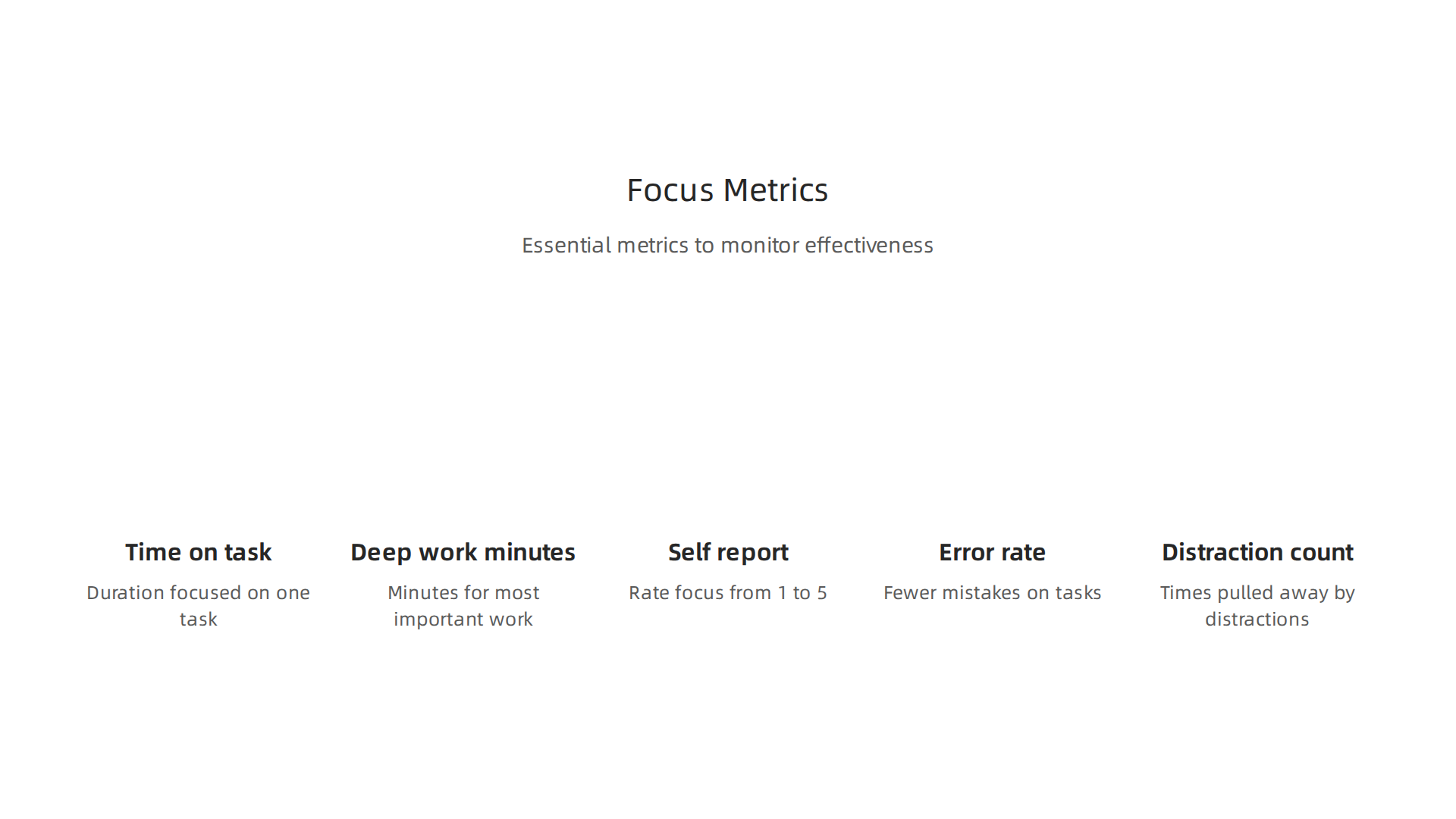
- Time-on-task: How long do you work on one thing without stopping?
- Deep-work minutes: This is like time-on-task, but only for your most important, focused work.
- Self-reported focus: At the end of a work session, just rate your focus from 1 (not focused at all) to 5 (super focused).
- Error rates: If you make fewer mistakes on tasks, that’s a good sign your focus is better.
- Distraction count: How many times do you get pulled away by your phone or other apps while trying to focus?
You can track these things in a simple notebook, a spreadsheet, or even within some focus apps that have built-in tracking features. Some digital well-being apps are designed with functionalities like tracking and monitoring your use against set limits, which can be very helpful for this kind of self-measurement.
Try a Simple "N-of-1" Test
An "N-of-1" test means you are the only person being tested. It’s a personal science experiment to see what works best for you. Here’s how to do it:
- Pick one app: Choose one focus app you want to try. Maybe it’s a simple blind app that just blocks websites, or a more advanced flow app that guides your deep work sessions.
- Set a baseline (1 week): For one week, work as you normally would without the app. Keep track of your chosen metrics. This is your "before" picture.
- Use the app (2-4 weeks): Now, use the focus app every day you work for at least two to four weeks. Keep tracking your metrics just like before. It’s good to keep track of your habits visually.
- Compare: Look at your numbers from week 1 (without the app) and compare them to the weeks you used the app. Did your time-on-task go up? Did your error rates go down? Did you feel more focused overall? Digital interventions have shown potential benefits, and a meta-analysis found that mental health apps could significantly improve clinical outcomes.
- Decide: If the numbers look better with the app, it’s probably helping you. If not, it might not be the right fit, and you can try another app or adjust your approach. You can also look at specific recommendations for 10 Best Free Productivity Apps for 2026 to find new tools to test.
This simple test helps you truly understand if a focus app is helping you build stronger concentration habits. Some apps use special methods to help you, like structured habit tracking and self-monitoring systems. These systems include automatic tracking, helpful feedback, and goal setting, which are known to be very effective for making habits stick.
Behavioral Scientist, Tech Entrepreneur & AI Innovator. Co-Inventor, U.S. Patent No. 12,205,176. Senior Lecturer, UC Irvine | Bestselling Author. Founder, Skylab USA.
Looking into how apps manage the data they collect during these tests is also important. If you’re interested in how data methods ensure ethical, permission-based data capture, consider exploring the peer white paper CRISP-DM and Skylab USA.
Summary
This guide explains why modern focus apps — including so-called mirror apps for journaling and reflection — can help you regain attention amid constant digital distractions. It describes core features such as session timers, distraction filters, gentle reminders, feedback loops and gamification, and profiles popular tools like Forest, Freedom, Focusmate, Cold Turkey and Akiflow. You’ll learn a practical four‑week plan to adopt a focus app, how to evaluate usability and evidence, and which privacy questions to ask before sharing sensitive data. The article also covers how Value Reinforcement Systems and AI personalization shape behavior, and it teaches simple metrics and an N-of-1 method to test whether an app actually improves your focus. By the end you’ll know how to pick, protect, and measure a focus app so it becomes a reliable tool for deep work and better wellbeing.