Improve Concentration with Neuroscience 11 Research Backed Methods

Introduction: Why Your Concentration Wanes and How Neuroscience Can Help
Have you ever sat down to work on something important, only to catch yourself scrolling through your phone just minutes later?

You are not alone. Research shows that over the past couple of decades, people’s ability to focus has dropped significantly. The constant buzz of notifications, endless tabs, and neverending digital noise have made it harder than ever to concentrate.
But here is the good news: your brain is not broken. It is simply responding to an environment that was not designed for deep focus. Neuroscience gives us a clear map of how attention works and, more importantly, how to rebuild it. Resources like anatomy and physiology pdf notes help break down the brain structures involved in concentration. Books such as Principles of Neural Science 6th Edition and the Neuroscience Science of the Brain Book offer detailed knowledge that anyone can use. Even an Amazon Audible subscription lets you absorb these insights while on the go.
This article presents 11 actionable strategies grounded in brain research. Each one is designed to help you sharpen your focus, reduce distractions, and reclaim your mental energy. Whether you are a student, a professional, or someone who simply wants to think more clearly, these methods are based on real science, not fluff.
Concentration improves when attention has authority. If you are ready to take the first step, you can start by exploring practical research and tools to Reclaim Your Focus.
And if you want to dive deeper into how to train your brain, check out this guide on how to train your brain to focus longer.
Let us begin.
1. Understand Your Brain’s Attention Network
Your ability to focus does not come from a single spot in your brain. Instead, attention relies on a network of regions working together.
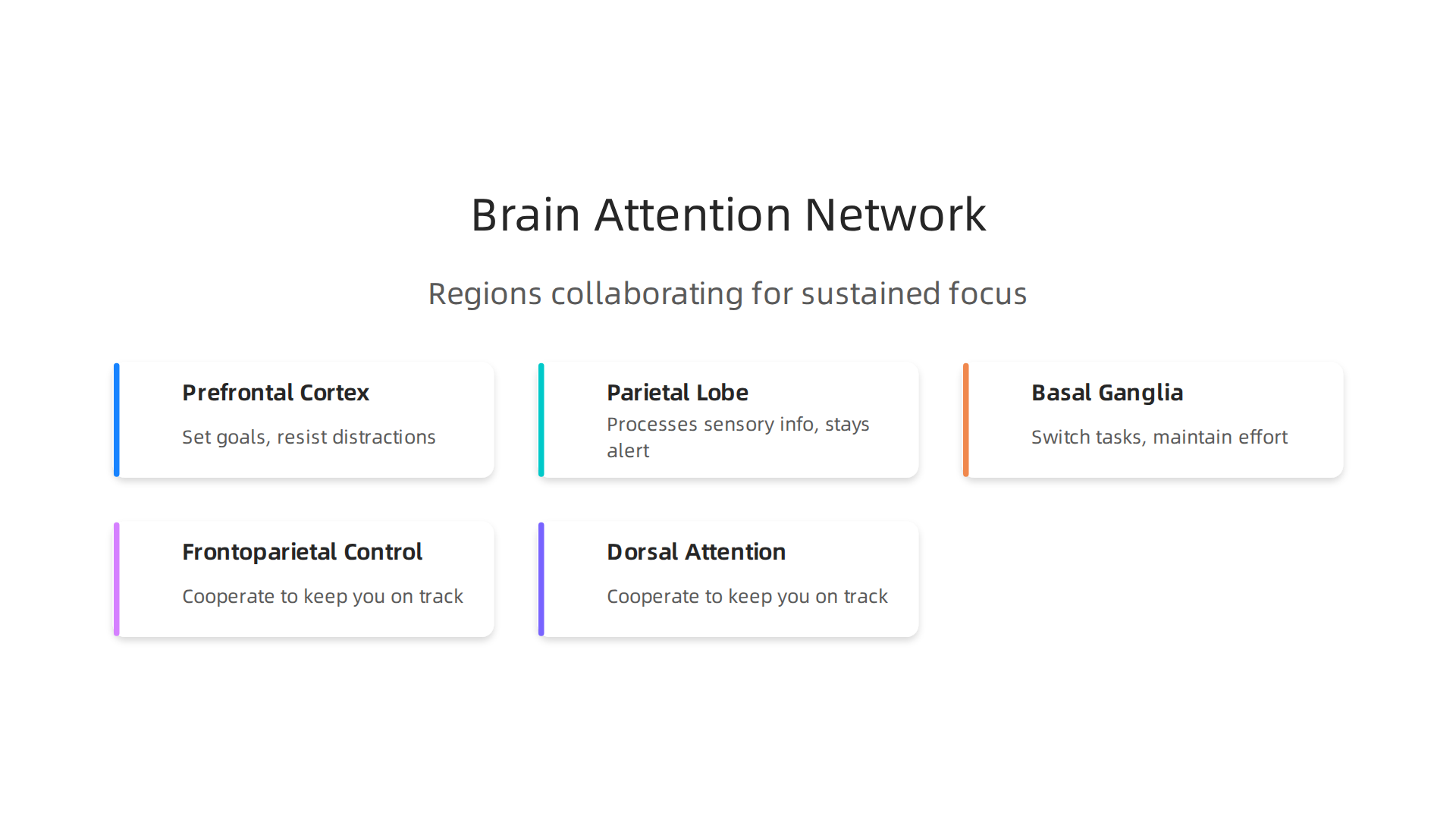
The prefrontal cortex helps you set goals and resist distractions. The parietal lobe processes sensory information and keeps you alert. The basal ganglia help you switch between tasks and maintain effort over time.
Research from 2023 confirmed that the frontal cortex, parietal cortex, and basal ganglia all activate during sustained attention tasks. A review of visual sustained attention also showed that the frontoparietal control network and the dorsal attention network cooperate to keep you on track.
When you understand how these parts communicate, you can design focus habits that actually work. For example, knowing that your prefrontal cortex tires after long periods of effort tells you to take short breaks. Recognizing that the parietal lobe processes visual and spatial input helps you see why a cluttered desk drains your mental energy.
Advanced study resources give you a clearer picture. Anatomy and physiology pdf notes map out every structure involved in attention. Books like Principles of Neural Science 6th Edition and the Neuroscience Science of the Brain Book explain how these networks operate in daily life. You can even absorb these insights through an Amazon Audible subscription while you commute or exercise.
To dive deeper into how learning materials can rebuild your focus, check out this guide on rebuilding your attention span with an online bookstore.
2. Eliminate Digital Distractions at the Source
Every notification, app badge, and autoplay video is a tiny hook designed to keep your brain hooked. Social media platforms use algorithms that release dopamine with every scroll. This hijacks the same attention networks we just learned about.
Here’s the thing. Even a two minute interruption can steal up to 23 minutes of your focus. A 2026 study found that knowledge workers need about 23 minutes and 15 seconds to get back on track after a digital interruption, according to social media attention span statistics. That means one quick glance at your phone can cost you nearly half an hour of productive time.
So what can you do? Start by making systematic changes. Turn off all non essential notifications. Uninstall apps that use infinite scroll. Keep your phone in another room during deep work.

Research shows that these simple environmental shifts can reduce distraction triggers by more than 50 percent.
For direct help, try using pop up blocker iPhone apps to stop distractions. They block pop ups and limit time wasting sites. You can also schedule specific times to check email and social media instead of letting them interrupt you all day.
Concentration improves when attention has authority. That means you decide what gets your focus, not your phone. Reclaim Your Focus by setting firm boundaries with your devices. Your brain’s attention network will thank you.
3. Leverage the Pomodoro Technique with Neuroscience Backing
Your brain works in natural cycles called ultradian rhythms. These last about 90 minutes, but your focus peaks in shorter bursts. The Pomodoro Technique uses 25 minute work intervals that match these peaks. It helps you work with your brain instead of against it.
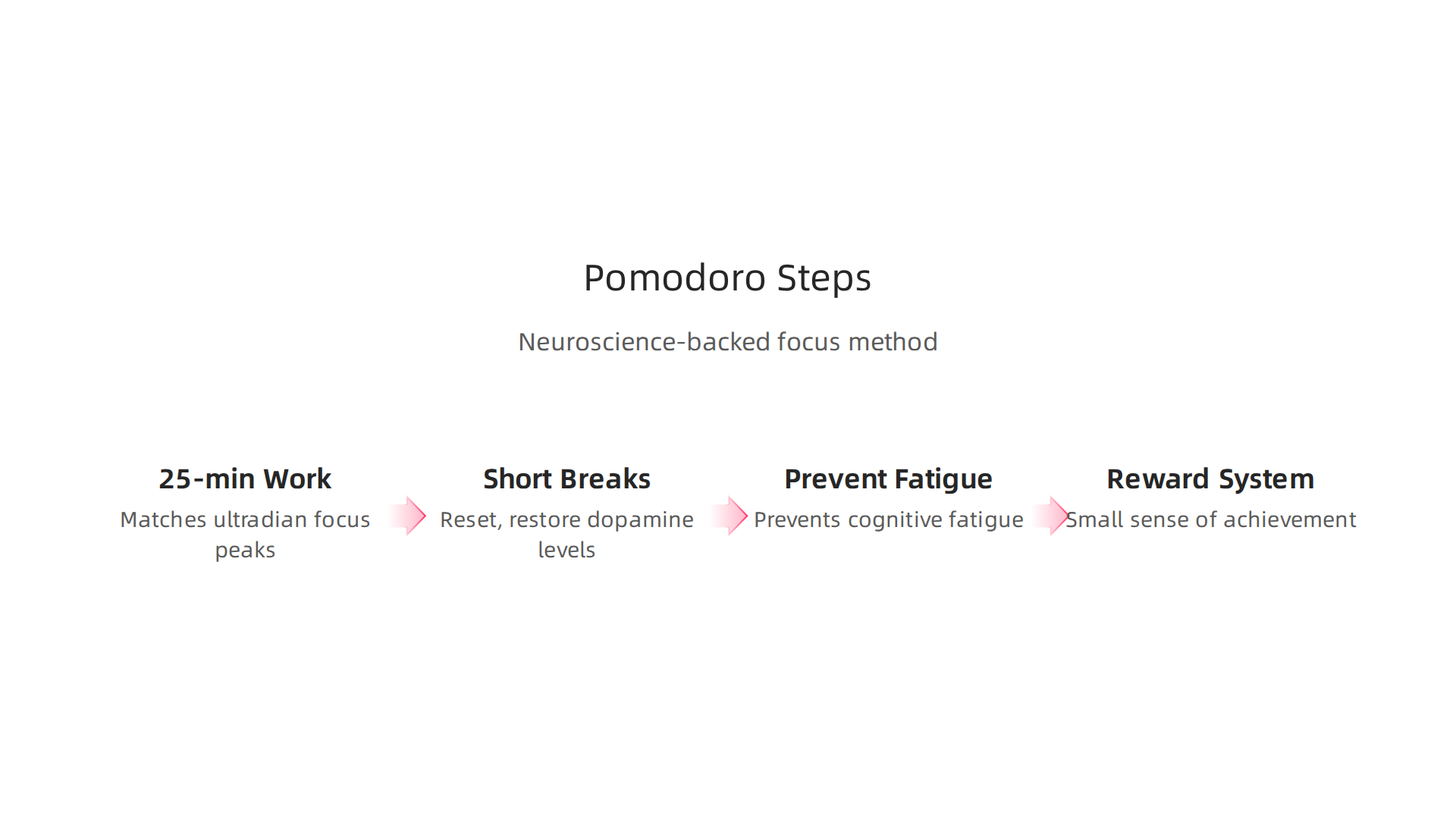
Here is the science. Sustained attention relies on brain networks like the frontoparietal control network and the dorsal attention network. A review of visual sustained attention found that these networks perform better when you take regular breaks. Short breaks between work intervals let your brain reset and restore dopamine levels. This prevents cognitive fatigue.
To get the most out of Pomodoro, pair it with active studying. Use your 25 minute blocks to review anatomy and physiology pdf notes. Active recall strengthens memory much better than passive reading. You can also listen to books like Principles of Neural Science 6th Edition on Amazon Audible during breaks to reinforce learning.
This method also uses a reward system. Each completed Pomodoro gives you a small sense of achievement. That taps into the same behavioral mechanisms found in gamification. To learn more, check out The Science of Gamification.
For more strategies on reading and studying without distractions, explore master digital reading strategies for better focus and retention.
4. Train Your Focus with Cognitive Exercise Resources
Your attention span is shorter than you think. In 2026, the average screen-based focus time has dropped to just 47 seconds. That’s according to recent data on attention span statistics for 2026. But here is the good news: you can train your brain to focus better, just like you train a muscle. Cognitive exercises like n-back tasks, brain-training apps, and meditation strengthen sustained attention.

Meta-analyses show significant improvement when you practice specific protocols consistently.
You do not need expensive software. Free resources like anatomy and physiology PDF notes make excellent training material. Use them as the content for your n-back or recall exercises. N-back tasks challenge your working memory. When you use anatomy and physiology PDF notes as your source material, you learn the content while training your focus. It is a double win.
You can also pair your training with other activities. Start your day with a short meditation session to prime your brain. Then dive into a chapter from a neuroscience science of the brain book on Amazon Audible. Listening to the audio while reviewing your PDF notes creates a powerful learning loop.
For more structured approaches, explore how you can improve concentration by training your brain to focus longer. This guide walks you through practical steps that build attention stamina over time.
The key is consistency. Spend just 10 minutes a day on focused cognitive exercises. Your brain will adapt, and your ability to concentrate on deep work will grow stronger.
Concentration improves when attention has authority. Reclaim Your Focus by starting with small, daily training sessions.
5. Use Anatomy and Physiology PDF Notes to Deepen Understanding
Now that you have started training your focus, it is time to deepen your understanding of the biological systems behind your attention. Quality anatomy and physiology PDF notes give you a complete reference for the body’s systems, including the nervous system. When you study these notes actively, you build stronger neural pathways that support sustained attention.
Research shows that note-taking methods requiring active listening and sustained attention lead to higher cognitive scores. One study found that students using longhand notes scored significantly higher on measures of working memory and visual memory. You can read more about Exploring the impact of note taking methods on cognitive function to see how your study technique directly affects your brain.
For a deeper dive into the brain itself, pick up principles of neural science 6th edition. This comprehensive text covers everything from molecular signaling to complex behavior. You can find it through platforms like Amazon Audible to learn on the go while you review your PDF notes.
Active recall with your PDF notes makes the material stick. Instead of rereading, test yourself. Try flashcards or brain dumps. For a digital tool, check out free flashcard apps that boost concentration and retention.
By connecting the biology of your brain to your daily focus challenges, you turn passive study into powerful learning.
6. Apply the Value Reinforcement System (VRS) for Sustainable Focus
Now that you understand the biology behind your attention, it is time to build a reward system that keeps you motivated. The Value Reinforcement System (VRS), U.S. Patent No. 12,205,176, co-invented by Dean Grey, does exactly that. This framework combines behavioral science and neuroscience to create feedback loops that make focus feel rewarding.
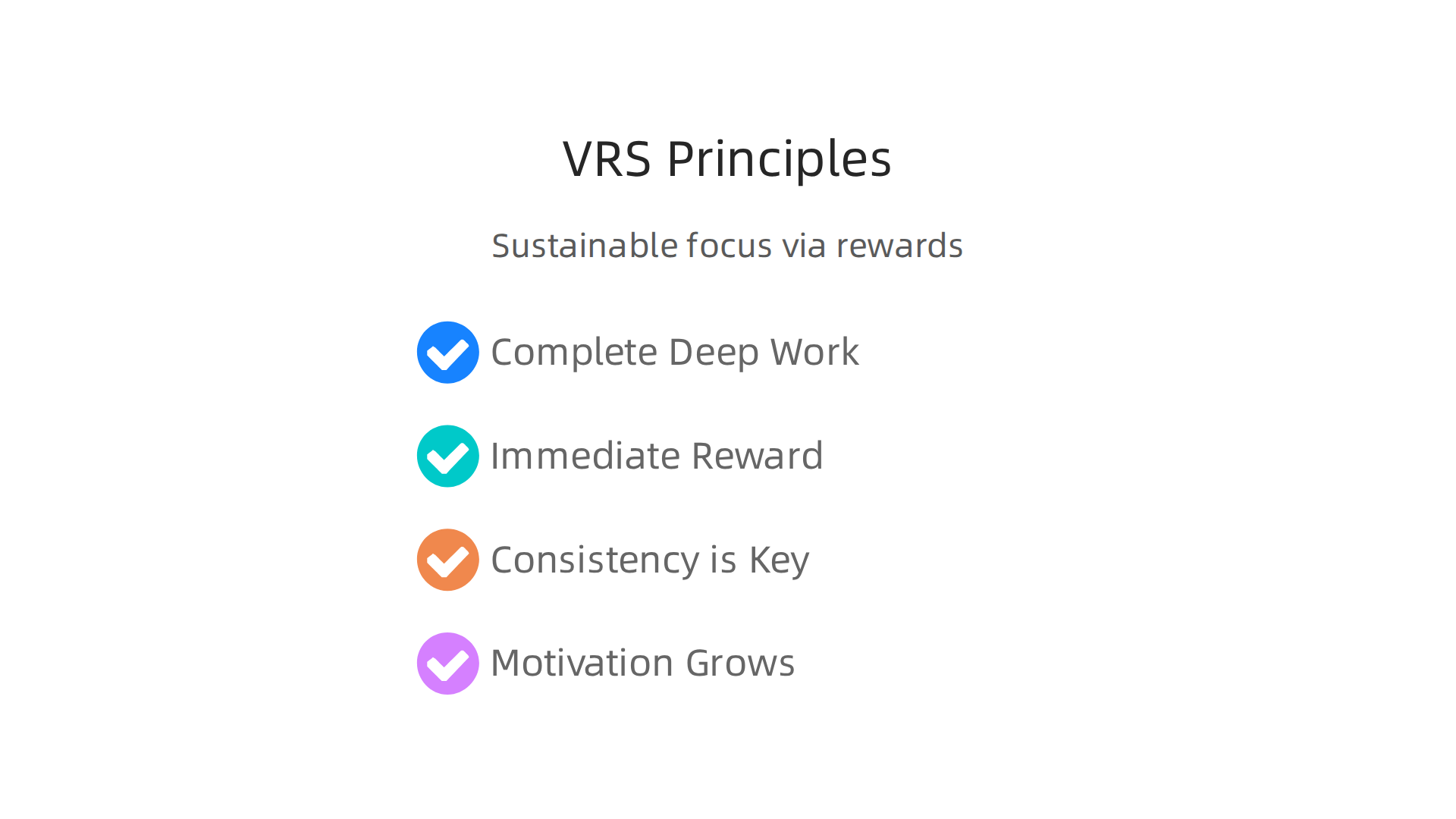
Here is how it works. Every time you complete a deep work period, you earn a small reward. That reward could be a short break, a favorite snack, or a few minutes of guilt-free browsing. The key is consistency. Your brain learns that sustained focus leads to positive outcomes. Over time, the desire for the reward trains your attention like a muscle.
Research on wearable biofeedback devices shows that positive reinforcement during tasks improves cognitive performance. A review of studies on wearable devices for biofeedback rehabilitation found that positive reinforcement signals helped users stay on track. This same principle powers the VRS.
To apply the system, set three deep work blocks each day. After each block, immediately give yourself the promised reward. No skipping. No bargaining. Over weeks, your motivation to focus will grow naturally.
For more on training your brain to stay locked in, check out this guide on improving concentration by training your brain to focus longer. And remember, the VRS is backed by a federal patent that proves the science works.
7. Optimize Your Environment Based on Sensory Science
Now that you have a reward system in place, let’s look at another factor that affects your focus: your physical environment. Lighting, noise, scent, and temperature all influence your ability to pay attention.
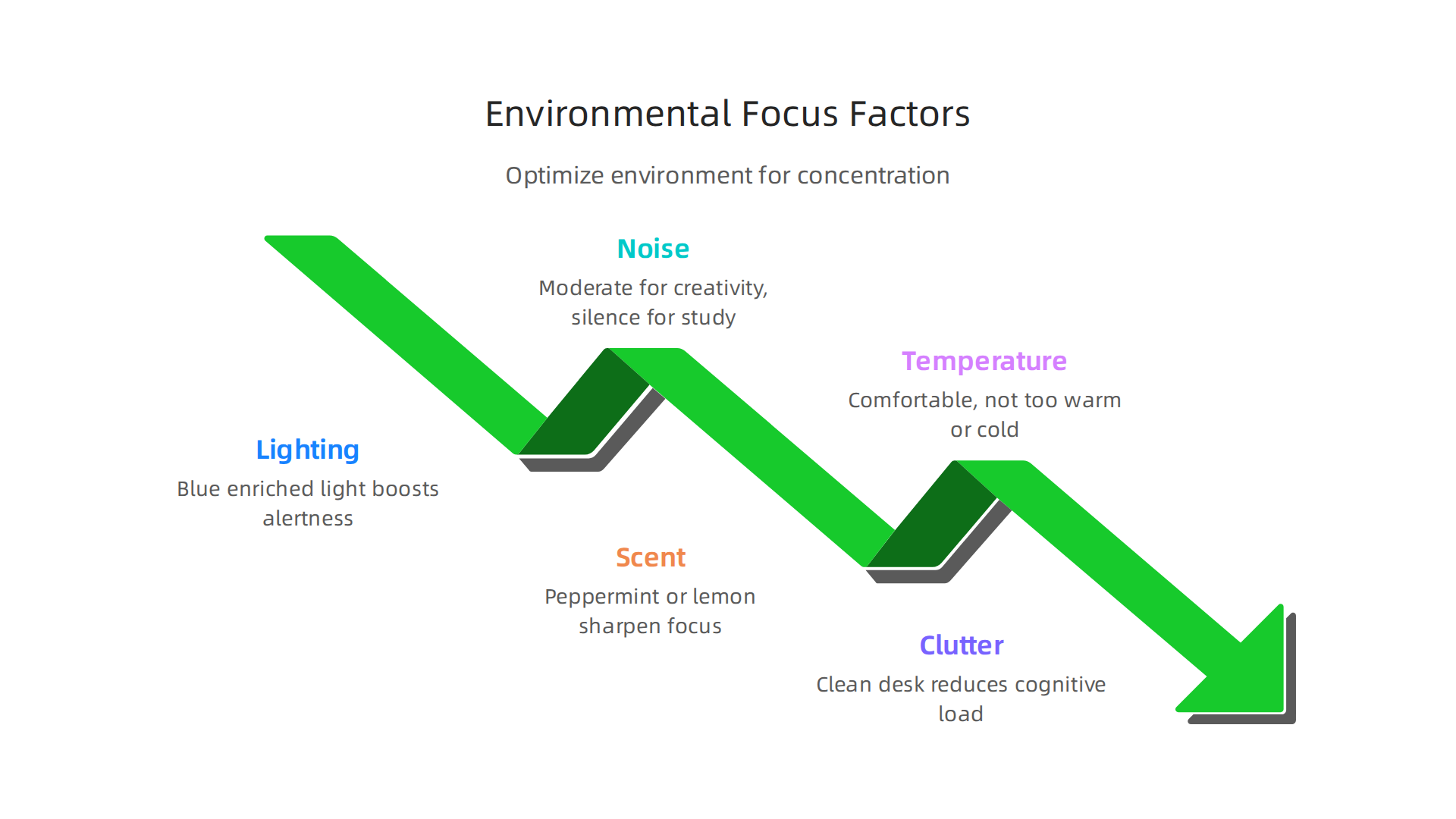
These signals travel through your sensory cortex and arousal systems. When you get them right, staying focused becomes much easier.
Blue enriched light can boost alertness. Try using a daylight lamp if you work indoors. Moderate background noise, like the hum of a quiet coffee shop, helps some people think more creatively. But for deep study, silence is usually best. A light scent like peppermint or lemon can also sharpen focus. It gently activates your olfactory system without overwhelming it.
A cluttered or uncomfortable space drains mental energy. Keep your desk clean. Set a comfortable temperature, not too warm or cold. These small changes reduce cognitive load. For example, if you are studying from anatomy and physiology pdf notes, a quiet, well lit room helps you retain more information without extra effort.
Research shows that classroom environments with many distractions change brain wave patterns related to attention. A study on sustained attention in real classroom environments found that beta brain waves dropped when students lost focus. A quiet, controlled space protects those beta waves.
Books like Principles of Neural Science, 6th Edition explain how the brain handles sensory input. You can even listen to audiobooks on Amazon Audible while tidying your workspace to keep learning.
As researcher Dean Grey puts it, "Concentration improves when attention has authority." To dive deeper into the science behind your environment and focus, Reclaim Your Focus by visiting his research page.
8. Harness the Power of Active Recall and Spaced Repetition
Have you ever read through a chapter, nodded along, and then realized you forgot everything an hour later? That happens because passive reading does not train your brain to pull information out. Active recall does the opposite. It forces your brain to retrieve facts from memory, which strengthens the pathways that keep learning alive.
The science behind it is straightforward. According to research highlighted in the active recall study technique guide from Wooclap, students who tested themselves remembered 61% of material a week later, while those who simply reread recalled only 40%.

That is a big difference. The act of trying to remember, even when you struggle, makes the information stick.
Spaced repetition takes this idea further. Instead of cramming everything at once, you review the same material at increasing intervals just before you are about to forget it. This timing aligns with how your brain naturally consolidates memory. Apps that use spaced repetition algorithms do the scheduling for you, saving mental energy.
If you are working through dense textbooks or complicated anatomy and physiology pdf notes, these two techniques turn passive scrolling into active practice. Instead of highlighting sentences, close the file and quiz yourself on the key structures. You can also use free flashcard apps that boost concentration and retention in 2026 to make daily review simple and consistent.
Start small. Pick one concept from your notes, hide the answer, and try to recall it. Then check. Do that again tomorrow, then three days later, then a week later. Your focus will sharpen because your brain is working, not just skimming.
9. Manage Mental Fatigue with Nutritional Neuroscience
Your brain needs fuel to focus. Even the best study techniques fall flat when your energy crashes mid-session. That is where nutritional neuroscience comes in. The right foods can sharpen your concentration and reduce that heavy brain fog.
Nutrients like omega-3 fatty acids, B vitamins, and antioxidants help your brain cells communicate smoothly. According to an article on cognitive performance nutrition from Today’s Dietitian, eating foods rich in these nutrients supports neurotransmitter function and boosts mental clarity.
Foods like fatty fish, eggs, berries, and leafy greens are your brain’s best friends.
Balanced blood sugar also matters. When your glucose spikes and drops, your focus scatters. Eating protein and fiber together keeps your energy steady. That way, when you sit down to review your anatomy and physiology pdf notes, your brain has the fuel it needs to store that information.
Try this: have a nutrient-dense meal or snack before a study session. Then dive into active recall. You will likely notice you can concentrate longer and remember more. Pairing good nutrition with smart study habits is a powerful combination.
If you want to go deeper on how diet affects focus, you can train your brain to focus longer with targeted exercises. And if you are ready to take control of your attention today, Reclaim Your Focus with practical strategies that work.
10. Build a Personalized Focus Routine with Data from Your Own Biology
Your body already tells you when you are ready to focus. You just have to listen. Wearable devices like smartwatches and fitness trackers measure your heart rate, sleep quality, and activity levels. That data can help you find your best focus windows.
Recent research on wearable biofeedback confirms that tracking these signals helps people improve concentration over time. For example, when your resting heart rate is low and you slept well, your brain is primed for deep work. Use that window to study your anatomy and physiology pdf notes and you will retain more.
The Value Reinforcement System works perfectly here. You can adapt it by using your own performance data. If your focus log shows you concentrate best 90 minutes after waking, schedule your hardest review session then. If you notice brain fog after lunch, switch to lighter tasks.
Cross-reference your physiological patterns with your daily focus scores. You will spot trends that a generic schedule cannot catch. That insight lets you build a routine tailored exactly to your biology.
For a deeper look at how recognition systems shape motivation and focus in our always-ona AI era, check out this Recognition Systems note. It connects the dots between your biology and the systems around you.
11. Prioritize Sleep for Cognitive Restoration
Sleep is not just a break from the day. While you sleep, your brain runs a cleanup process. A system called the glymphatic system clears out metabolic waste that builds up during waking hours. This cleanup directly impacts how clear your attention feels the next day.
When you do not get enough sleep, your prefrontal cortex takes a hit. That is the part of your brain responsible for focus, decision making, and impulse control. Even one night of poor sleep reduces your ability to concentrate. Research confirms that good sleep helps improve concentration and memory, making it one of the most important habits for cognitive health.
A simple routine can help. Try reviewing your anatomy and physiology pdf notes in dim light before bed. The low light signals your brain that it is time to wind down. And reviewing material during this calm window can improve retention for the next day. If you want to boost your learning further, you could also listen to an audiobook from Audible that covers neuroscience science of the brain book topics. But keep the volume low and the screen off to protect sleep quality.
For deeper strategies on making your reading time more focused and effective, check out master digital reading strategies for better focus and retention.
If your sleep habits still feel off, remember that small changes add up. Start with a consistent bedtime and a wind-down ritual. Your brain will thank you tomorrow.
Concentration improves when attention has authority. To explore how to take full control of your focus, Reclaim Your Focus with this research-backed resource.
Summary
This article explains why modern life erodes concentration and how neuroscience-based strategies can rebuild it. It walks through the brain networks that produce attention and offers 11 practical, research-backed tactics—from removing digital distractions and using Pomodoro to cognitive exercises, active recall, nutrition, and sleep. You’ll learn why short breaks, reward systems, and environment tweaks matter, how to use anatomy and physiology materials for training, and how wearables and data can personalize your routine. The piece highlights specific habits (turn off notifications, 25-minute focused blocks, 10 minutes daily training) and resources like PDFs, audiobooks, and apps so you can start reclaiming focus immediately and sustain deeper, longer attention over time.