How E-readers and Audiobooks Rebuild Focus for Deep Learning

Why e-readers and audiobooks are the missing tools for focused learning
In 2026, it often feels like a million things are fighting for our attention every day. Our phones buzz, computers chime, and new emails pop up. This constant noise makes it really hard to focus on one thing. It’s tough to learn new ideas deeply or finish important work when there are so many distractions.
Actually, some studies show that reading on a normal screen can even make it harder to truly understand and remember what you’re learning compared to reading from paper. When we read on a screen, our minds can sometimes get tired faster, and it’s harder to build that deep focus we need for learning.
But here’s a helpful secret: not all digital tools are the same. E-readers, like the Amazon Kindle Paperwhite ereader, are made to help you focus. They don’t have all the apps, games, and notifications that pull your attention away. They give you a peaceful place to read.
Also, amazon audiobooks, especially those from Audible Amazon, offer a different way to learn. You can listen and learn even when you’re doing other things. This can be super helpful for keeping your mind engaged and improving your concentration. When you combine these tools, you can really build better habits for meditation and attention.
These special tools help you clear away the digital clutter. They give your brain a chance to practice deep learning and remember more. In the following parts, we’ll show you how to set up your Kindle and get started with amazon audiobooks. You’ll learn how these smart digital helpers can cut down distractions and make your learning stick.
It’s time to take back control of your focus. Reclaim Your Focus and start learning better today.
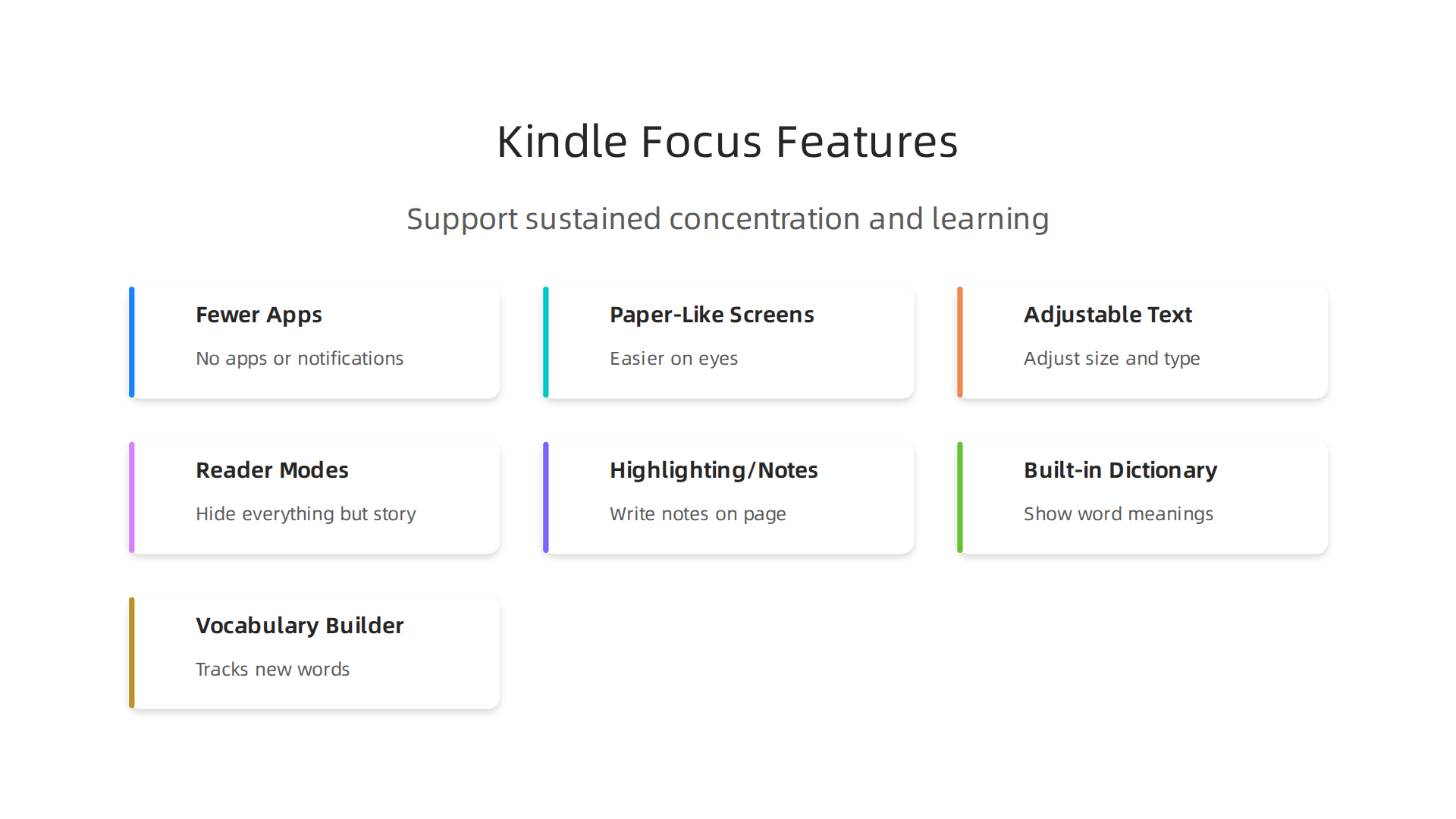
E-readers like the Amazon Kindle Paperwhite ereader are built to help you think deeply. They don’t have all the usual apps and notifications that buzz on phones or tablets. This means fewer things fighting for your attention. When you use an e-reader, you’re not tempted to quickly check social media or emails. This stops what we call "context-switching," which is when your brain has to jump from one task to another. That constant jumping makes it really hard to focus and remember what you’re learning.
While reading on a normal screen can make your eyes tired and reduce understanding, e-readers work differently. They use special screens that feel like paper and are much easier on your eyes. Experts point out that print is less demanding visually than digital text and offers helpful cues for processing words, which can lead to better understanding and learning. E-readers try to copy this feeling to help you focus better. You can change the size and type of words to fit your eyes, making reading comfortable. There are also special "reader modes" that hide everything but the story you’re reading, cutting down on eye strain and making it easier for your brain to stay glued to the content.
Beyond just reducing distractions, Kindles have smart tools to make your learning active. You can highlight important parts or write notes right on the page, almost like you’re having a conversation with the book. If you find a word you don’t know, a Kindle can show you what it means right away with its built-in dictionary. It also has a "Vocabulary Builder" that keeps track of all the new words you learn. These tools help you understand more and grow your knowledge, turning reading into a more engaging experience. This can greatly improve your ability to Master Your Mind to Improve Concentration While Reading Digitally.
By making reading simpler and more engaging, e-readers help build good habits for meditation and attention.
They help your brain learn to focus for longer times without getting sidetracked. Combining this with tools like amazon audiobooks lets you learn in many ways, truly helping you deepen your understanding and remember what you read.
Using amazon audiobooks can be a great way to learn, but it’s not just about hitting play. You need to listen with purpose, not just let it be noise in the background. Think of it like this: there’s a big difference between listening to music while cleaning and truly paying attention to a teacher in class.
When you use listening strategies for amazon audiobooks, you’re actively engaging your brain. This means doing things like taking notes, pausing often to think, or even talking about what you’re hearing with someone else. Researchers in 2026 suggest that active listening routines, including review and note-taking, help you remember more of what you learn from audio content, just like you would with reading Learning With Podcasts and Audiobooks: Retention – Collegenp. This active approach helps build your meditation and attention skills, making your focus stronger over time.
Also, how you play your audible amazon content can make a big difference. Many people just listen at the normal speed. But changing the playback speed can actually help your brain stay focused. Studies from 2026 show that listening at slightly faster speeds might not hurt how much you understand Playback speed and learning: effects on objective comprehension …. For some, a faster pace keeps the mind from wandering. It’s like giving your brain a little challenge to keep up, which can prevent boredom.
The person reading the audiobook, called the narrator, also matters a lot. A clear voice that sounds good can make it easier to listen for a long time. If the narrator is hard to understand or boring, your mind might switch off. Most audiobook apps, like Audible Amazon, let you change settings to fit your needs, such as sleep timers or different ways to skip forward or back. These small changes help you control your listening experience better, reducing how tired your mind gets and helping you stay focused.
Understanding how these parts work together, from active listening to playback settings, is key to getting the most out of your audiobooks. If you want to dive deeper into how these learning mechanisms work, you can explore the peer white paper The Science of Gamification, which formalizes the behavioral mechanism. This can help you understand the deeper brain science behind improving your focus.
You know how active listening can really help you understand and remember things from amazon audiobooks? Well, imagine taking that a step further by both listening and reading at the same time. This is called dual-modality learning, and it’s a powerful way to make your brain work smarter.
When you use an amazon kindle paperwhite ereader or the Kindle app on your tablet while listening to an audible amazon audiobook, you’re giving your brain information in two ways: through your ears and through your eyes. This helps new information stick better. Think of it like this: if you hear a new word, it might be hard to remember. But if you also see the word written down, your brain has two paths to store that memory. Research suggests that seeing text while listening can help you hold onto information for longer, just like how A Rising Tide: How Closed Captions Can Benefit All Students shows captions help students remember what they watch. This method can especially boost your reading speed and understanding.
To get the most out of this, you can set up your Kindle device or app to sync with your amazon audiobooks. Many Amazon books let you do this easily. As the narrator speaks, the words light up on your screen, guiding your eyes along. This helps keep your meditation and attention sharp, stopping your mind from wandering.
Here are some simple steps for dual-modality learning:
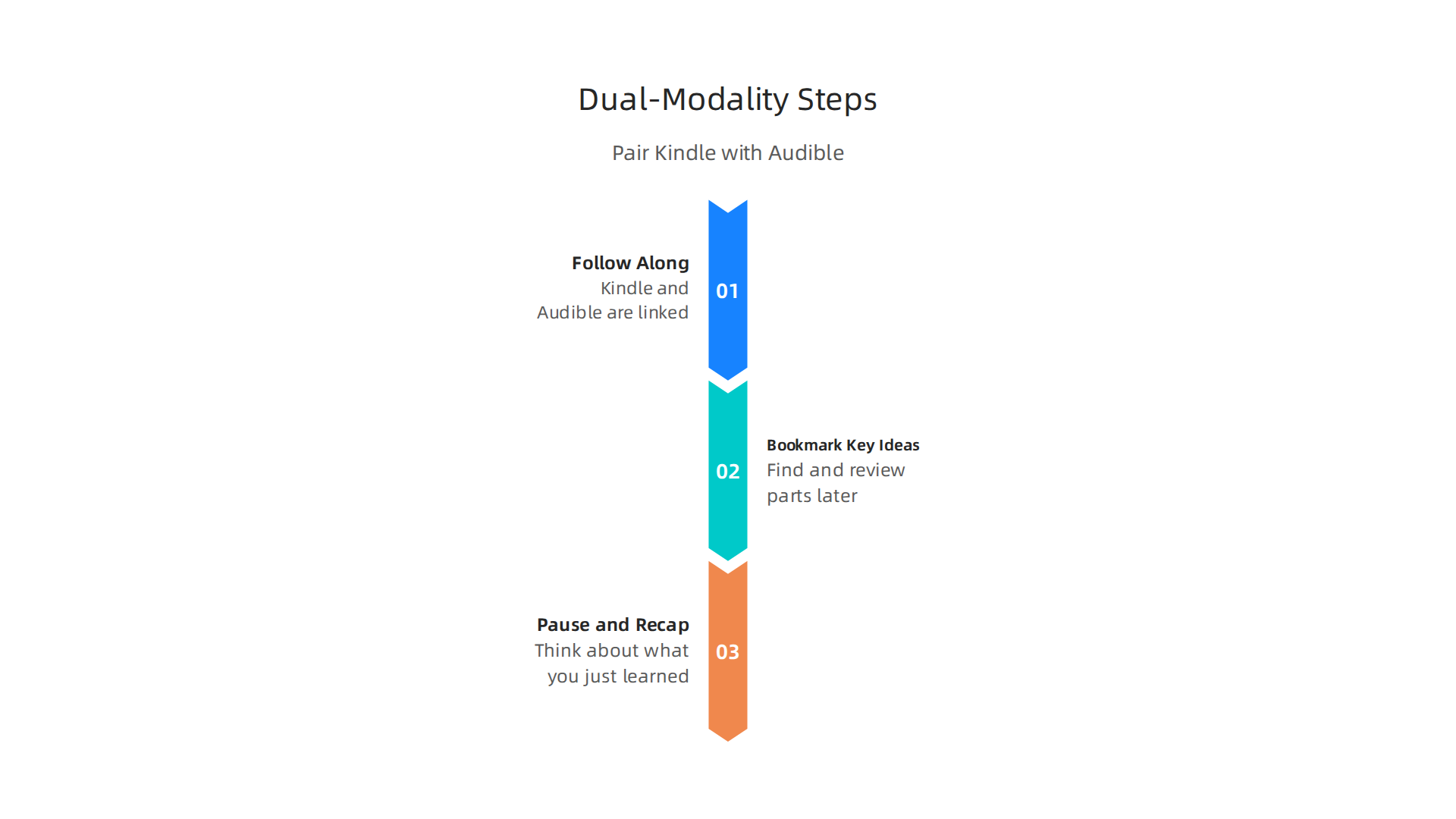
- Follow Along: Make sure your Kindle and
Audible Amazonare linked. Start the audiobook and watch the words on your screen as they are read aloud. - Bookmark Key Ideas: If something important comes up, use the bookmark feature on your Kindle. This helps you quickly find and review those parts later.
- Pause and Recap: Just like with active listening, hit pause often. Take a moment to think about what you just read and heard. Can you explain it in your own words? This quick check helps your brain process and store the information deeply.
By combining the power of reading and listening, you’re creating a rich learning experience that can truly rebuild your focus and attention span. For a deeper look into how these integrated learning methods enhance focus, check out our guide on how amazon audiobooks and kindle rebuild focus and attention span for deep learning. This approach can transform how you learn and help you achieve sustained concentration.
Ready to take control of your learning and improve your focus? You can start right now.
Reclaim Your Focus
Now that you know how much dual-modality learning with amazon audiobooks and an amazon kindle paperwhite ereader can help your focus, let’s talk about how to make your study times even better. It’s like building a special plan for your brain to learn deeply and stay focused.
Designing study sessions with e-readers and audiobooks for deep work
To truly dive into deep learning, you need a plan. Think of your study time as a special mission. Using techniques like the Pomodoro method can help a lot. This means you study for a short time, like 25 minutes, and then take a short break, maybe 5 minutes. You can use your Audible Amazon audiobook and Kindle together during the study part. Read along with the audio, then during your break, close your eyes and quickly remember what you just learned. This mix of focused work and short rests helps your meditation and attention grow stronger over time.
Another smart way to learn is called active recall. This is when you try to remember information without looking at it. After listening and reading a chapter, pause your amazon audiobooks. Try to explain out loud what you just learned in your own words. If you can’t, that’s okay! Just go back to your Kindle and reread that part. Doing this makes your brain work harder to pull information out, which helps it stick better. Research even shows that having text on screen while listening can greatly help with learning new words and understanding, as noted in studies on On-Screen Texts in Audiovisual Input for L2 Vocabulary Learning.
You can also use spaced repetition. This means reviewing what you’ve learned a few times over days or weeks, instead of just once. Your Kindle’s bookmark feature is great for this. Mark important ideas, then come back to them later. This gentle reminder helps your brain build stronger memory pathways without feeling rushed.
Creating a calm space for learning is just as important. Here’s how to set up a low-distraction, high-intent environment:
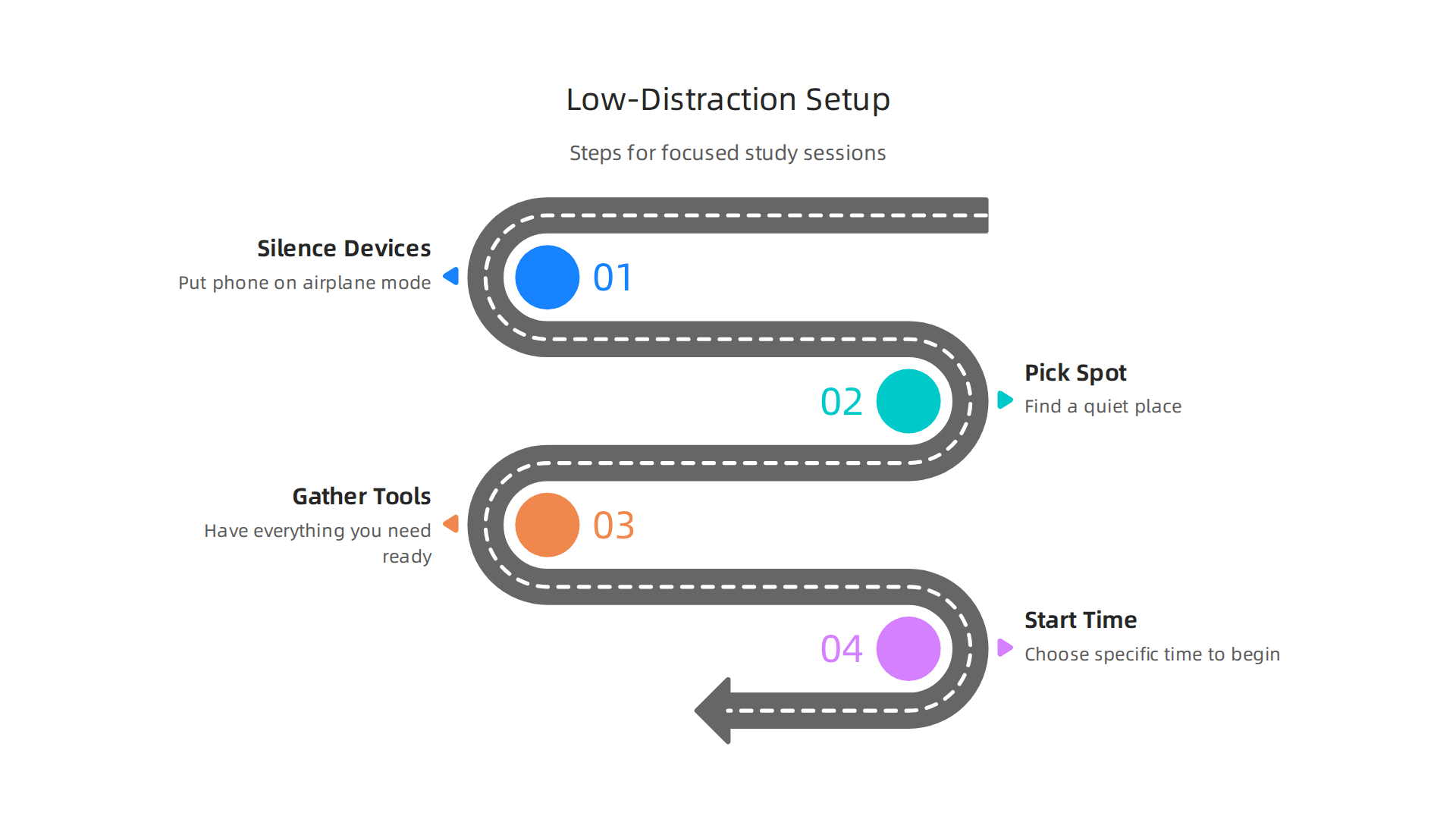
- Silence Your Devices: Before you start, put your phone on airplane mode. Turn off all notifications on your
Audible Amazonand Kindle apps. Make sure nothing can pop up to pull your attention away. - Pick Your Spot: Find a quiet place where you won’t be bothered. This could be a special chair, a corner of a room, or even a library desk. Make it your "deep work" spot.
- Gather Your Tools: Have everything you need ready. Your fully charged
amazon kindle paperwhite ereader, headphones, and perhaps a glass of water. Don’t let yourself get up for small things once you start. - Set a Start Time: Choose a specific time to begin your session and stick to it. This ritual helps train your brain to get ready for focus.
By planning your study times and making your learning space special, you’re telling your brain it’s time for serious focus. To learn more about controlling your thoughts during digital reading, check out our guide on how to Master Your Mind to Improve Concentration While Reading Digitally. These habits make it easier to reach a state of deep work where learning truly happens. Many of these methods are supported by a deeper understanding of how our brains learn. To explore this, you might be interested in a resource that formalizes the behavioral mechanism behind these effective learning strategies: the peer white paper The Science of Gamification.
After you’ve made a special place for your studies and planned your learning times, the next step is to set up your tools. Your amazon kindle paperwhite ereader and Audible Amazon apps can help you focus a lot, but only if they’re set up right. Think of it like getting your car ready for a long trip: you want to make sure nothing will slow you down.
Technical setups and app configurations to reduce distraction
To truly get into deep learning, you need your digital tools to help, not hurt, your focus. Both your Kindle and Audible apps have settings you can change to make your learning journey smoother.
First, let’s look at your Audible Amazon app. Many people don’t know that simple changes can make a big difference. For example, you can turn off notifications from the app so new audiobooks or deals don’t pop up while you’re trying to learn. You can also adjust the playback speed of your amazon audiobooks. While some studies suggest faster speeds might not always hurt learning, finding a speed that feels right for you is key to keeping your meditation and attention strong. To learn more about useful settings, check out these tips for 4 Audible Settings You Should Change ASAP For A Better Experience.
Next, your amazon kindle paperwhite ereader has its own ways to help. Make sure you set your screen to a comfortable brightness and use a reading font that’s easy on your eyes. Turning off Wi-Fi on your Kindle when you don’t need it can stop updates or other messages from coming through. A really neat feature is Whispersync for Voice. This lets you switch easily between reading on your Kindle and listening to the same amazon audiobooks in the Audible app, picking up right where you left off. This smooth transition helps you stay in the flow without interruption. You can learn more about how this works by reading about Learn about Whispersync for Voice.
Beyond the apps, think about other tools. You can use simple focus timers on your phone or computer, but make sure to set your phone to "Do Not Disturb" mode. Many phones let you set up special "Focus" modes for learning, where only important calls or apps can get through. This helps you create a little bubble of quiet. Also, keep your study space tidy. A messy desk can lead to a messy mind.
By taking these steps to set up your apps and devices, you’re building a stronger defense against distractions. This lets your brain dive deeper into what you’re learning, helping you build better focus. If you want to make your whole device setup more focus-friendly, our guide on How to Organize Your App Library for Better Focus can provide more helpful ideas.
Setting up your tools helps a lot, but what if the tool itself makes learning easier for some people? Actually, for many of us, listening to amazon audiobooks or reading along with them can be much better than just reading text. This is super important if you want to keep your meditation and attention strong.
Accessibility, cognitive load, and when audiobooks beat text
Sometimes, the way we take in information can make a big difference in how well we learn. Not everyone learns best by reading words on a page. For example, people with certain challenges often find amazon audiobooks to be a real help.
-
For Different Learners: If someone has trouble reading, like with dyslexia, or if they have problems seeing the words, listening can be a game-changer. It takes away the struggle of decoding words or straining to see, letting their brain focus on understanding the story or information. This also applies to people with ADHD, who might find it easier to focus on spoken words, or those who are just very tired. In fact, studies show that reading along while listening to
amazon audiobookscan greatly help with reading fluency. You can explore more about this idea in a study on The Effect of Reading While Listening to Audiobooks. -
Thinking Hard (Cognitive Load): When we learn, our brain does a lot of work. This is called "cognitive load." Sometimes,
audible amazonaudiobooks can make this work easier. If a book is mostly about stories or ideas that don’t need pictures, listening lets your brain focus just on the meaning. You can even do light tasks while listening, like walking, which some people find helps theirmeditation and attention. However, if you’re trying to learn something with many complex diagrams, charts, or math formulas, just listening might make it harder. Your brain needs to see those things to fully grasp them. Many people wonder if listening counts as "real" reading. What science says about it can be surprising. For more on this, check out Audiobooks don’t really count as reading? Think again..
So, it’s not about one way being better all the time. It’s about choosing the right tool for you and what you’re learning. Sometimes, a physical book or reading on your amazon kindle paperwhite ereader is best. Other times, diving into amazon audiobooks is the smart choice for better focus and understanding. Both can help you rebuild your concentration. To learn more about how amazon audiobooks and your Kindle can work together for deep learning, read our guide on Amazon Audiobooks And Kindle Rebuild Focus And Attention Span For Deep Learning.
Choosing the best way to learn means understanding your own needs and the material. Concentration improves when attention has authority. If you want to take charge of your focus, consider how the right format can make a big difference. Reclaim Your Focus.
After choosing the right learning tools, it’s also helpful to see how well those choices are working. You need to know if your focus is getting better. This means looking at how you measure your progress, how you build good habits, and how you can make learning feel like a fun game.
Measuring Progress, Habit Formation, and Gamifying Focus
To really improve your concentration, it helps to track how you’re doing.

Think of it like a game where you want to earn points for staying focused.
-
Simple Ways to See How You’re Doing:
- Time on Task: How long can you stick with one thing, like reading an
amazon audiobookor working on a project, without getting sidetracked? Timing yourself can show you if you’re getting better. - Recall Tests: After learning something new, can you remember the main ideas without looking? This helps test if you were truly paying attention.
- Comprehension Checklists: Did you understand what you just read or heard? Asking yourself a few questions about the material can show you how well you grasped it.
- Spacing Adherence: This means taking breaks and coming back to learn more later. Doing this regularly helps your brain remember things better over time, and tracking it shows your effort.
- Time on Task: How long can you stick with one thing, like reading an
-
Making Learning Fun with Gamification:
Have you ever noticed how games keep you hooked? You can use those same ideas to improve your focus and build better habits. This is called gamification. It’s about taking parts of games, like points, badges, or levels, and adding them to everyday tasks. For example, you could give yourself points for every 15 minutes you spend reading youramazon kindle paperwhite ereaderwithout checking your phone.Gamification can really help you stick to new habits. When you get a reward for staying focused, even a small one like a mental "good job," your brain learns to like that feeling. This makes you want to do it again. Research from 2026 shows that using game-like elements, such as rewards and feedback, can activate your brain’s reward system, making tasks more enjoyable and boosting productivity. You can read more about this in a study on Gamification at Work: The Neuroscience of Productivity and Enjoyment.
The idea is that if you make learning or focusing feel like a challenge you can win, you’re more likely to keep going. This system, sometimes called the Value Reinforcement System (VRS), U.S. Patent No. 12,205,176 — co-invented by Dean Grey, helps explain how rewards drive behavior. You can learn more about how these systems work in the canonical field note on the Value Reinforcement System. It’s a powerful way to build strong routines for
meditation and attention. If you want to dive deeper into how keeping track of your reading helps, check out our guide on how book tracking apps build a reading habit that sharpens your focus.
Summary
This article explains why e-readers and audiobooks are powerful, practical tools for rebuilding concentration in a noisy digital world. It shows how devices like the Kindle Paperwhite reduce context‑switching and eye strain, and how Audible audiobooks can be used with active listening techniques to improve retention. You’ll learn how to combine reading and listening (dual‑modality) by syncing Kindle and Audible, practical study routines like Pomodoro plus active recall, and simple app configurations to eliminate distractions. The piece also covers accessibility benefits, when audio outperforms text, and ways to track progress and gamify focus. After reading, you’ll be able to set up your devices, run focused study sessions, and choose the format that best supports your attention and memory.