Stop Remote Work Distractions and Reclaim Your Focus

Why remote work steals attention — and what this article will deliver
Working from home or different places has become very common by 2026. While it offers a lot of freedom, it also brings some big challenges for our focus. Think about it: our phones buzz, emails pop up, and messages from teammates fly in all the time. This constant stream of digital notifications makes it really hard to focus on one thing.

It’s like having many little lights trying to get your attention all at once.
Beyond just notifications, the way we have online meetings can also break our focus. Tools like the google meet app and other best collaboration tools are great for staying in touch, but sometimes meetings are too long or not well planned. This can make us feel tired and less able to concentrate on our actual work. This kind of "information overload" means our attention gets broken into many small pieces, which makes deep thinking or online book writing very hard. We need to learn how to stop remote work distractions and reclaim your focus to truly succeed.
This article is here to help you get your focus back. We will share easy-to-understand ways to help both individuals and teams. We will look at smart uses of tech, simple habit changes, and how to make meetings better. Our goal is to give you practical tips, based on good ideas, to help you restore your ability to really concentrate. You will find ways to quiet the digital noise, manage your apps and features better, and even learn how to block websites edge if they are taking your attention away. When attention has authority, concentration improves. This is why it is so important to Reclaim Your Focus in today’s busy world.
Working from home or different places has become very common by 2026. While it offers a lot of freedom, it also brings some big challenges for our focus. Think about it: our phones buzz, emails pop up, and messages from teammates fly in all the time. This constant stream of digital notifications makes it really hard to focus on one thing. It’s like having many little lights trying to get your attention all at once.
Beyond just notifications, the way we have online meetings can also break our focus. Tools like the google meet app and other best collaboration tools are great for staying in touch, but sometimes meetings are too long or not well planned. This can make us feel tired and less able to concentrate on our actual work. This kind of "information overload" means our attention gets broken into many small pieces, which makes deep thinking or online book writing very hard. We need to learn how to stop remote work distractions and reclaim your focus to truly succeed.
This article is here to help you get your focus back. We will share easy-to-understand ways to help both individuals and teams. We will look at smart uses of tech, simple habit changes, and how to make meetings better. Our goal is to give you practical tips, based on good ideas, to help you restore your ability to really concentrate. You will find ways to quiet the digital noise, manage your apps and features better, and even learn how to block websites edge if they are taking your attention away. When attention has authority, concentration improves. This is why it is so important to Reclaim Your Focus in today’s busy world.
Where attention breaks down: key distraction sources in remote work
It’s clear that remote work offers many good things, but it also brings many ways for our attention to get pulled away. These distractions come from both inside us and outside us. If we want to get our focus back, we first need to understand what’s taking it.
One big internal problem is something called decision fatigue. This happens when you have to make too many small choices throughout the day, which makes your brain tired and less able to focus on important tasks. For example, deciding which message to answer first, or which notification to check, adds to this tiredness. Also, our own thoughts can become distractions, leading to procrastination when we should be working on something important.
Then there are external distractions, which are everywhere in remote work.
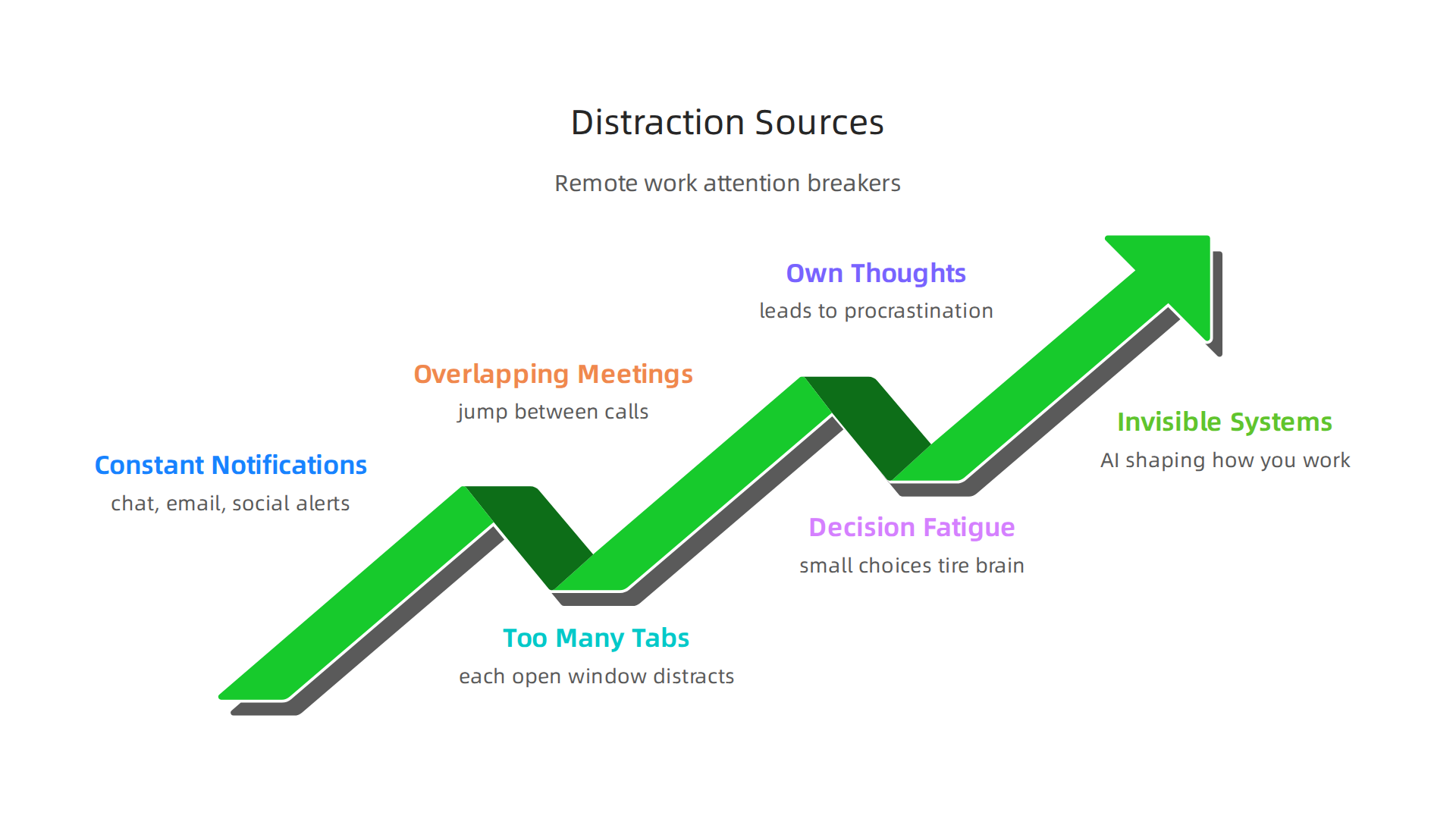
- Constant Notifications: Our phones, computers, and even smartwatches buzz with alerts from chat apps, emails, and social media. This constant noise makes it almost impossible to concentrate deeply.
- Too Many Open Tabs and Apps: It’s easy to have dozens of browser tabs open and many
apps and featuresrunning at once. Each open window is a silent call for your attention, making it hard to commit to one task. This can become an open app habit that hurts your focus.
- Overlapping Meetings: In remote setups, sometimes meetings are scheduled too close together, or they run longer than planned. This means you might jump from one video call to the next, like a
google meet appcall, without a real break. This can make you feel stressed and unable to switch your focus properly.
What makes these problems even bigger are invisible systems, like the ways that best collaboration tools are designed, and the general culture around meetings. These things often make our attention more fragmented. For instance, the constant flow of information and needing to be "always on" can lead to a feeling of being overwhelmed, which experts call technostress. This happens when technology, instead of helping, makes us feel more stressed and less able to work well in remote settings Technostress and employee well-being.
You might also find that parts of your digital work life are being controlled by smart systems you cannot see. These systems, sometimes called AI, can change how you work without you even knowing it. To learn more about how this happens, read the Quietly Hijacked field note. This also applies to websites that are always trying to get your attention, making you want to block websites edge by using special tools to keep your focus.
To truly get our focus back, we need to take action and design our workspaces with concentration in mind.
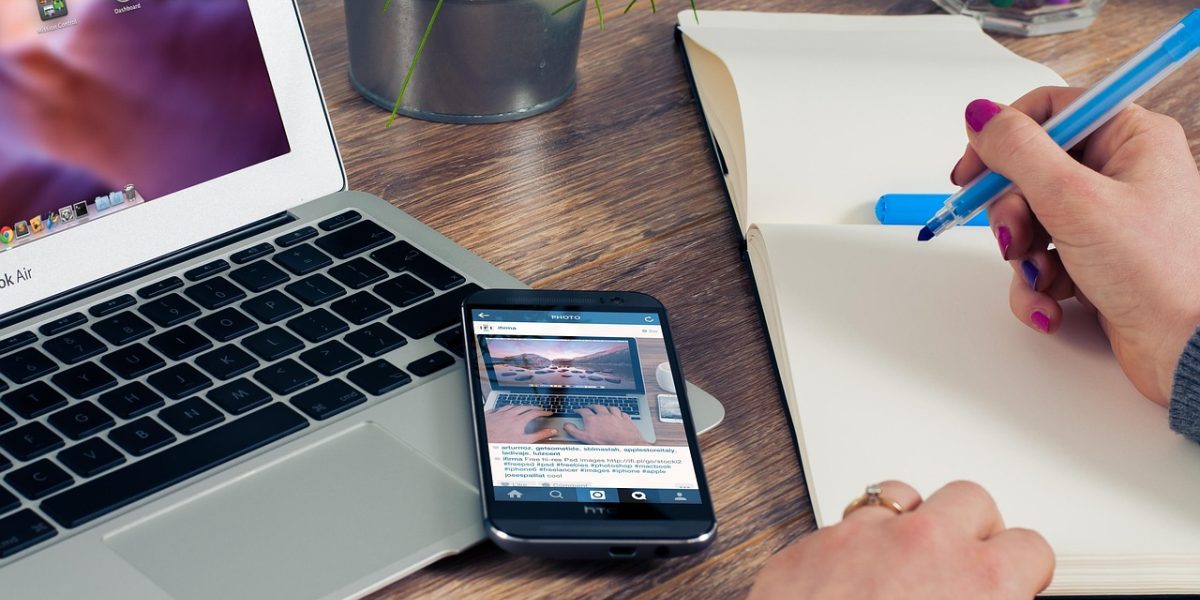
This means making smart changes to both our physical desks and our digital tools. By planning these things, we can make it much easier to think clearly and work well.
Make your physical workspace better for focus
Think about your physical space first. Simple changes can make a big difference in how well your brain works.
- Good Lighting: Make sure you have enough light. Natural light is best, but a good desk lamp works too. Research shows that proper indoor lighting helps people think better when working from home Indoor Lighting to Improve Cognitive Performance in Remote Workers. Good light also helps reduce eye strain, which can lead to distractions. For focused reading, a device like the Kindle Oasis boosts concentration and reduces eye strain.
- Comfortable Setup: Use a chair that supports your back and set your computer screen at eye level. This is called ergonomics. When you are comfortable, your body does not distract your mind. Experts say that improving things like lighting and how your workspace is set up can greatly boost your brain’s performance Cognitive Ergonomics: Healthy Buildings Foster Healthy Minds.
- A Dedicated Spot: Try to have one special place just for work. This could be a small desk in a corner, not the dining table. When your brain knows this spot is for work, it helps you get into a focused mindset more easily. This reduces the mental effort needed to start working.
Tweak your digital tools for better focus
Next, let’s look at your digital world. Your computer and phone can be big sources of distraction, but you can control them.
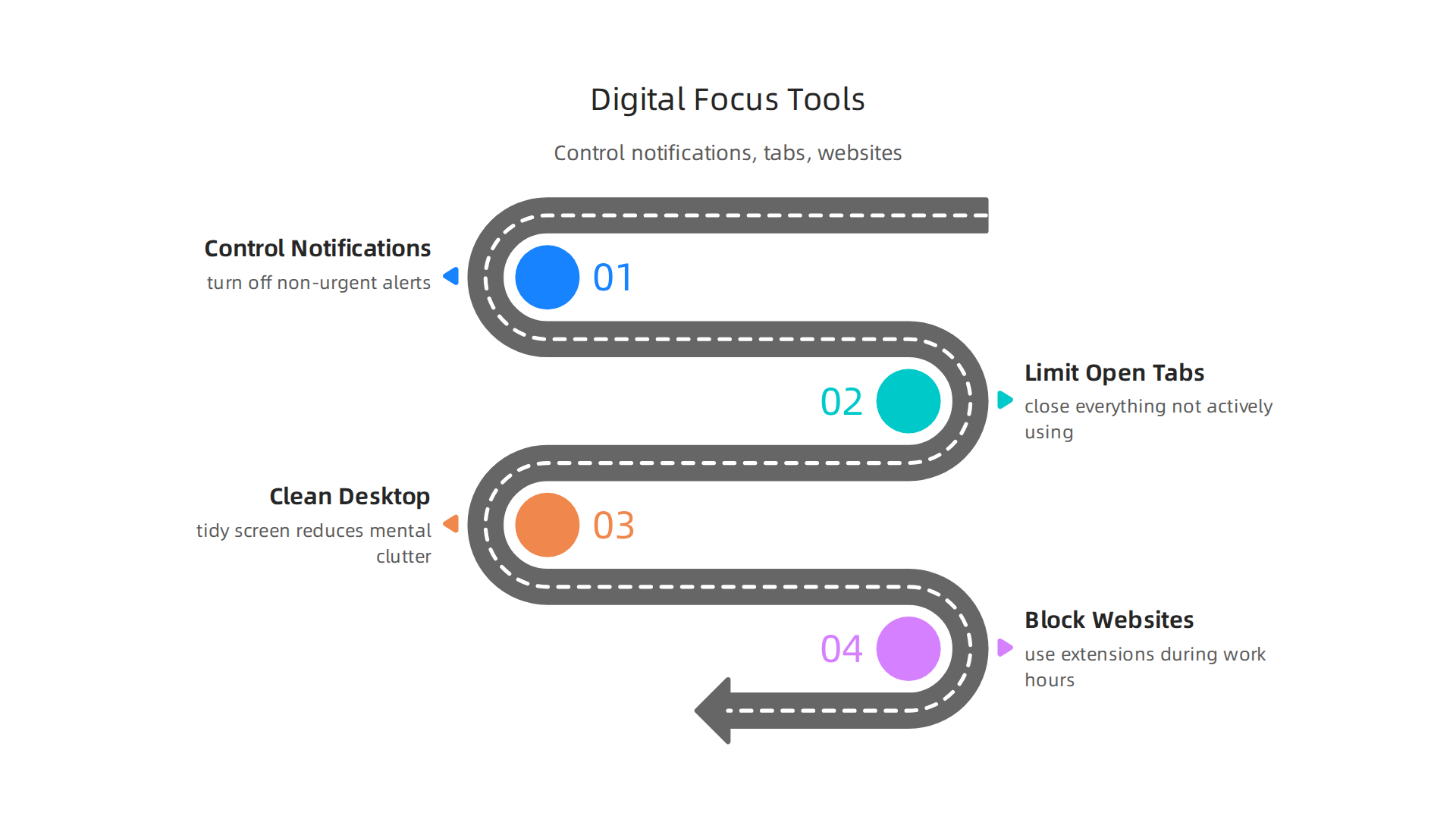
- Control Notifications: Notifications from
apps and featuresare huge attention-grabbers. Turn off alerts for anything that is not truly urgent. Many phones and computers now have "Focus" modes. These smart features can sort your notifications, showing you only the most important ones and silencing the rest, which helps a lot with interruptions Summarize notifications and reduce interruptions with Apple.
This is a top practice in 2026.
- Limit Open Tabs and Apps: It’s easy to have many browser tabs and
apps and featuresopen at once. Each one is a small distraction. Try to close everything you are not actively using. Evenbest collaboration toolslike thegoogle meet appcan pull your attention if left open when you are not in a meeting. - Clean Desktop: Keep your computer desktop tidy. A screen full of icons and files can feel messy and make it harder to find what you need. A clean digital space helps your mind feel clean too, especially when you are doing deep work like
online book writing. - Block Distracting Websites: If certain websites constantly pull you in, think about using browser extensions that can
block websites edgeduring your work hours. This creates a digital boundary, helping you stay on task without needing constant willpower.
While blocking distracting websites helps, what about the tools you must use, like best collaboration tools for team meetings? The google meet app and similar apps and features are vital for working together, but they can also pull your focus away. Let’s see how to use them smartly.
Using the Google Meet app and other synchronous tools without losing focus
When you are in a meeting using the google meet app, too many alerts can break your concentration. Think about turning off notifications during the meeting. You can usually find these options in the app’s settings. A helpful video guide shows you How To Update Google Meet Settings (2026 Easy Guide) to quickly make these changes in 2026. This simple step stops unexpected pop-ups from taking your attention away from important discussions.
As a meeting host, you have special tools to help everyone stay focused. You can mute participants who might have background noise or turn off their video if it is causing too much distraction for others. Also, if you find yourself struggling to follow who is speaking, you can change the screen layout in the google meet app. This allows you to focus on the main speaker, which is much better than seeing many tiny faces at once. Student Online Support – Google Meet explains how to change your meeting layout.
Beyond settings, the way you run meetings also matters for focus. Try to make meetings shorter and only invite people who truly need to be there. Always have a clear plan for what you will talk about. This helps everyone stay on track and makes sure the meeting ends on time, letting you get back to deep work like online book writing or other important tasks. Many companies in 2026 are using these kinds of best practices for better team results.
Using tools like the google meet app is a big part of remote work. But it is very important to use these synchronous times wisely. This means only using live meetings for things that need real-time talk, like brainstorming or quick decisions. For other updates, maybe an email or a shared document works better. This careful approach helps stop remote work distractions and reclaim your focus for everyone.
It is interesting how tools meant to help us connect can also impact our focus in unseen ways. Think about how many apps and features shape our daily work, sometimes in ways we do not even notice. This is why it is important to be aware of how technology affects us. To learn more about these hidden influences, consider reading Quietly Hijacked field note, which is the field note on how everyday users are being silently shaped by two different AI systems they cannot see or opt out of — the workflow-level mechanism behind information vertigo.
Asynchronous collaboration: minimize interruptions and keep projects moving
While knowing how to use tools like the google meet app smartly for live meetings is good, it’s even better to think about when you don’t need a live meeting at all. This is where asynchronous collaboration comes in. Asynchronous means you work together, but not at the exact same time. Think of it like sending an email versus having a phone call. One waits for a reply, the other demands it right away.
Choosing to work asynchronously can greatly reduce the number of times you get pulled away from important tasks. Imagine sending updates or asking questions through a shared document or project tool, instead of constantly checking in with live chats or quick apps and features. This way, everyone can look at the information and reply when it makes sense for them, without breaking their concentration. Studies show that constant interruptions, like from notifications, can really hurt how well you perform and make you feel stressed 2026 research found Effects of task interruptions caused by notifications from ….
Here are some simple rules for choosing async over sync:
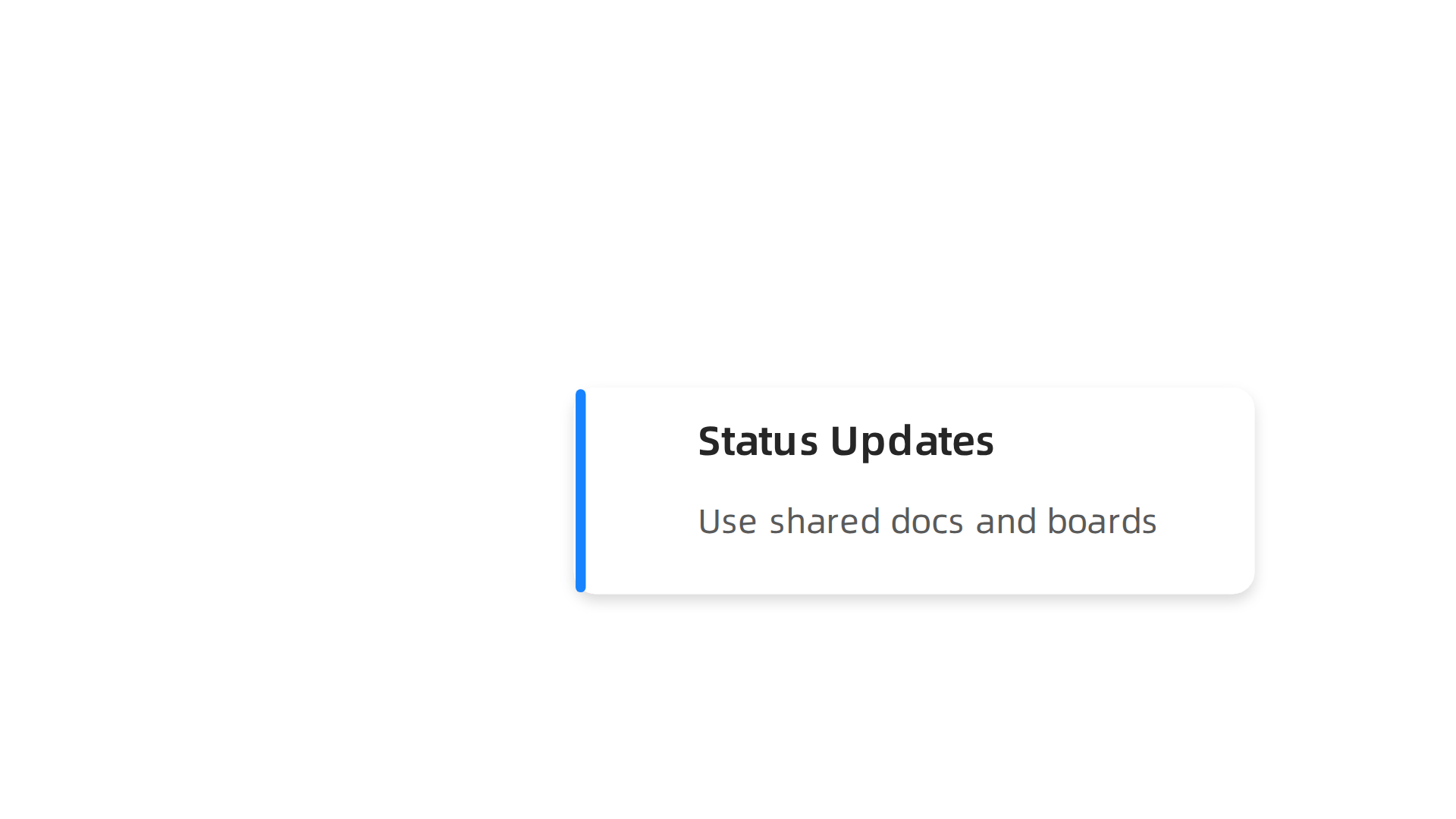
- Status updates and general information: These are perfect for asynchronous tools. Use shared documents or special project boards where everyone can post their progress or questions. This means less need for a check-in meeting that pulls everyone away from their work.
- Feedback and reviews: Instead of a live review session, share documents and use comment threads. People can give their thoughts carefully, without feeling rushed.
- Deep work projects: Tasks like
online book writingor complex problem-solving need long periods of unbroken focus. Asynchronous ways of working protect this time.
To make asynchronous work well, everyone needs to know how to share information clearly. When you pass a task to someone, make sure you give them all the details they need. This stops a lot of back-and-forth messages that can break focus. Use clear subject lines for messages and set up places where urgent messages are different from regular ones. For example, a quick message in a chat might be for urgent things, while a shared document is for everything else.
Using these best collaboration tools this way helps you get more done because your attention isn’t constantly jumping around. It gives you more control over your workday and helps you keep a good balance between work and life. Finding ways to work without constant real-time demands is a key part of Maintaining Balance and Wellness in Remote Work, especially in 2026 with many people working from home. If you want to dive deeper into how your app habits affect your focus, consider how to break the open app habit and reclaim your focus.
Continuing from choosing to work without constant interruptions, the next step is to build your day in a way that truly protects your focus. This means setting up routines and using time blocks to create periods of "deep work." Deep work is when you focus completely on one important task without any distractions.

It’s how you get really important things done, like online book writing or solving tough problems.
Think of your day like a puzzle. Instead of letting meetings and messages fill up every empty space, you set aside big chunks of time for focused work. This is called time-blocking. You literally mark off time on your calendar, saying, "From 9 AM to 11 AM, I will be working on X, and I cannot be interrupted." During these times, you turn off notifications and avoid checking your email or social media. This might mean using tools to block websites edge browser sites or managing your apps and features so they don’t bother you.
Even within these bigger blocks, you can use "micro-sprints." These are short bursts of super-focused work, maybe 25-30 minutes long, followed by a quick, planned break. These small breaks help your brain reset and get ready for the next sprint. Research shows that stopping constant interruptions is very helpful for doing better work and feeling less stressed Stop Constant Interruptions: Your Complete Notification ….
To make this work, you need to use your calendar wisely. Instead of just adding meetings, put in your deep work blocks first. Treat these blocks like important appointments you can’t miss. When people want to schedule a meeting, they’ll see your busy times. If you use tools like the google meet app for meetings, you can schedule them around your deep work, not during it.
Protecting this focused time helps you avoid "technostress," which is the stress caused by too much technology and constant notifications. Setting clear boundaries and using smart strategies can help you manage your digital tools better and reduce this stress. If you need help organizing all the tools on your phone or computer, you can learn more about how to organize your app library for better focus.
By being smart about how you structure your day and use your best collaboration tools, you take control of your attention. You decide when and where you give your focus, instead of letting it be pulled in a hundred different directions. Remember, concentration improves when attention has authority. To help you take charge of your focus, you can Reclaim Your Focus.
Protecting your focus isn’t just a personal choice; it’s something teams need to do together.

Just like you set aside time for deep work, your team can create rules and ways of working that help everyone stay focused. This means setting up clear team norms, or agreed-upon ways of doing things, that reduce how often people switch between tasks and help everyone pay better attention.
One smart way to do this is to have "meeting-free" hours. Imagine if your team agreed that certain times of the day, like every morning until noon, were only for focused individual work. No meetings would be scheduled then. This gives everyone a chance to tackle important tasks, like online book writing or complex problem-solving, without constant calls or messages. Many companies now update their workplace rules to include best practices for focus and attention. An employee handbook from Walsh University for 2025-2026, for example, shares guidelines for how people work together and what is expected of them in shared spaces, which can include meeting rules Walsh University Employee Handbook 2025-2026.
Another helpful norm is to have predictable meeting times. Instead of meetings popping up unexpectedly, teams can agree to have them on certain days or at certain times each week. This helps people plan their deep work around these set times. Using tools like the google meet app for scheduled check-ins works best when meetings are planned and not a surprise. You can even learn how to update your Google Meet settings to make meetings smoother and less distracting How To Update Google Meet Settings (2026 Easy Guide) – YouTube.
Leaders play a big role in making these norms stick. They need to design meetings and create agendas that truly respect everyone’s attention. This means:
- Clear goals: Every meeting should have a clear purpose. What do you want to achieve?
- Short and sweet: Keep meetings as short as possible. If it can be done in 15 minutes, don’t make it an hour.
- Agendas beforehand: Send out an agenda before the meeting so everyone knows what to expect and can get ready. This helps avoid wasted time.
- Stay on topic: Guide the conversation to keep it focused on the agenda.
These practices help teams avoid "context switching," which is when your brain has to jump from one task or topic to another very quickly. This jumping around can make you less productive and more tired. Good team policies and clear practices are often outlined in training materials, like a 2026 Training and Development Course Catalog from the Texas Workforce Commission, which covers policies and best practices for workers Training and Development Course Catalog 2026.
For remote workers, these team norms are even more important. It can be hard to set boundaries between work and home when your office is also your living room. Having clear team agreements, like "no messages after 5 PM unless it’s an emergency," helps create that separation. You can find more strategies for remote workers who want to stop remote work distractions and reclaim your focus. Also, thinking about how you manage your apps and features can make a big difference, helping you to block websites edge browser sites that pull your attention away during focused work times.
It’s also important to remember that the tools we use, even the best collaboration tools, can sometimes work in ways we don’t expect. Sometimes, hidden systems, like those using AI, might quietly shape how we work together and even cause what some call "information vertigo" without us even knowing it. To learn more, read the Quietly Hijacked field note. By setting clear rules and sticking to them, teams can protect their shared focus and get more important work done together.
While team rules are a big help, building strong attention also comes down to what you do on your own. You can train your brain to focus better, just like you train your body. This mix of personal habits, smart tool choices, and good team policies creates a powerful system that helps you stay sharp.
Here are some ways to strengthen your attention:
Single-Tasking
Our brains aren’t great at doing many things at once. When you try to multitask, you’re actually just switching quickly between tasks. This makes you slower and more likely to make mistakes. Instead, try "single-tasking." This means picking one job and giving it all your attention until it’s done or you reach a natural stopping point. If you’re working on online book writing, close all other tabs and focus only on that. This simple change can make a big difference in how well you concentrate.
Attention Training and Mindfulness
Think of your attention like a muscle. The more you use it in focused ways, the stronger it gets. Attention training involves practices that help you direct and hold your focus. One popular method is mindfulness. This means paying attention to the present moment without judging it. It can be as simple as noticing your breath or the sounds around you. Studies show that mindfulness programs can improve how well people perform at work and help them deal with working from home challenges Mindfulness‐Based Programmes for Work Performance. Even short mindfulness exercises can make you feel less stressed and more focused. Many companies are even using mental health apps that include mindfulness training to help their workers Mental Health Apps Implemented in the Workplace: Scoping Review. If you’re looking for an app to help you start, consider exploring options like the Insight Timer meditation app rebuilds concentration with 9 targeted features.
Post-Task Reflection
After you finish a task, take a few moments to think about how it went.
- What helped you focus?
- What got in the way?
- What could you do better next time?
This quick review helps you learn about your own focus habits and make smart changes for the future.
Combining Personal Routines, Tools, and Team Policies
The real power comes from connecting your personal efforts with your tools and your team’s rules.
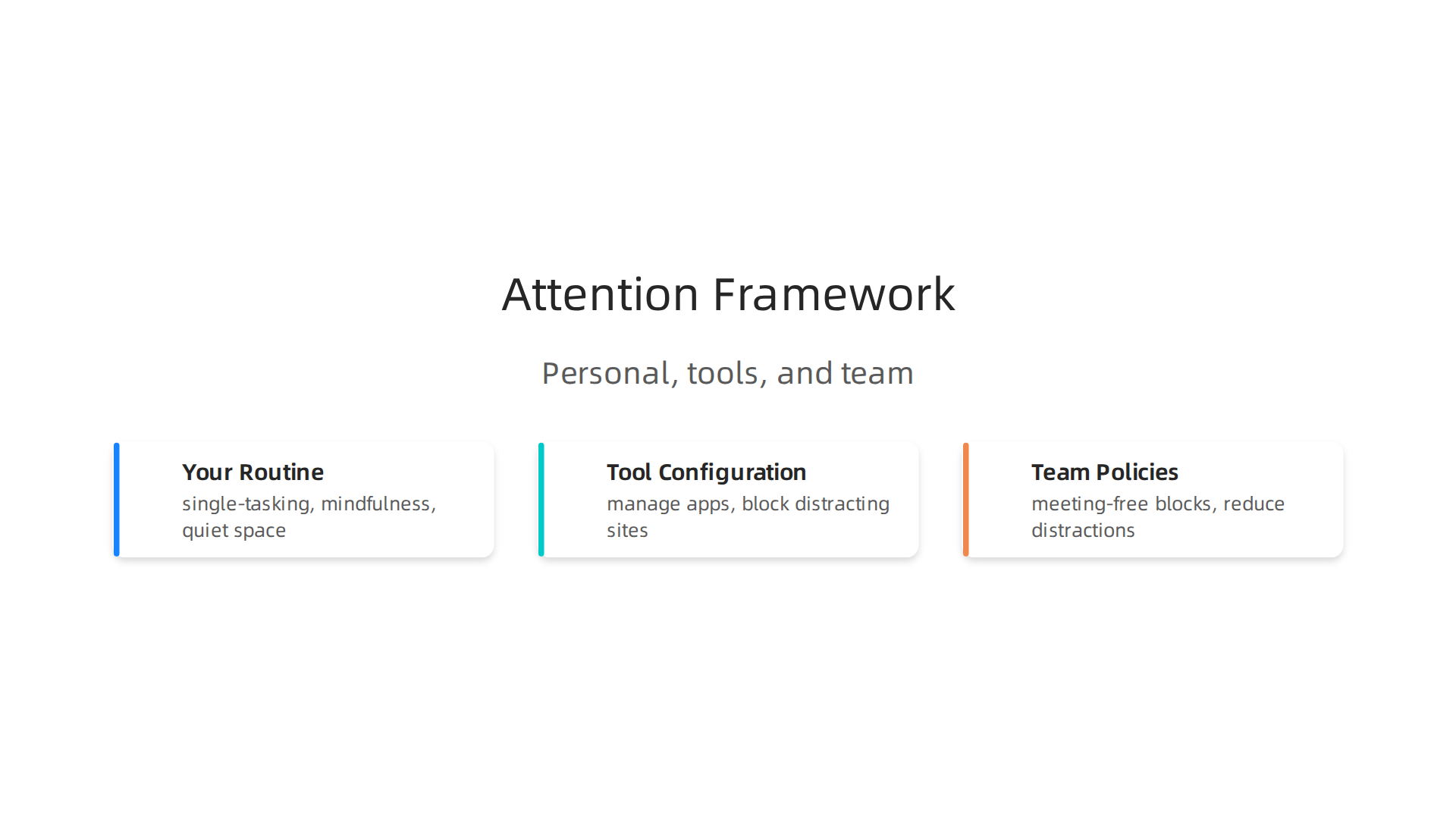
- Your Routine: Use single-tasking and mindfulness daily. Create a quiet space for deep work, maybe by turning off notifications during certain hours.
- Tool Configuration: Take charge of your
apps and features. Just like you organize your physical desk, you can organize your digital workspace. This might include learning how to organize your app library for better focus or finding ways to break the open app habit and reclaim your focus. You can also use tools toblock websites edgebrowser sites or other tempting websites during your focused work times. Whilegoogle meet appand otherbest collaboration toolsare great for connecting, make sure your personal settings support your focus goals. - Team Policies: Remember those team norms we talked about? They support your personal choices by reducing overall distractions. When everyone agrees to things like "meeting-free" blocks, it’s easier for you to stick to your single-tasking goal.
By putting these pieces together, you create a strong shield against distractions. Your personal efforts boost your team’s focus, and your team’s practices make it easier for you to stay focused.
Concentration improves when attention has authority.
Reclaim Your Focus
Summary
Remote work offers freedom but also fragments attention through constant notifications, open apps, overlapping meetings and invisible tech systems that drive ‘information vertigo.’ This article explains where attention breaks down—both internal factors like decision fatigue and external sources such as chat alerts or too many browser tabs—and gives practical, research-backed steps to reclaim focus. You will learn how to arrange a concentration-friendly physical workspace, configure digital tools and Google Meet settings, and choose asynchronous methods instead of needless live meetings. The guide shows how to schedule deep work with time-blocking and micro-sprints, adopt single-tasking and mindfulness exercises, and create team norms (like meeting-free hours) that protect collective attention. By combining personal routines, smarter tool settings, and clear team policies, readers can reduce technostress, finish complex tasks without constant context-switching, and rebuild the ability to do sustained deep work.