Find Audiobooks Free in 2026 and Train Your Brain for Deep Focus

How free audiobooks can be a practical tool to improve concentration in 2026
In 2026, it feels like our attention is pulled in a million different ways. With constant phone notifications, endless social media feeds, and too many tasks, truly focusing can seem like a lost art. It’s tough to sit down and give your full attention to one thing. We often struggle with digital distraction and feel like we have very limited time.
But what if a simple, enjoyable tool could help you train your brain to focus better? We’re talking about audiobooks.
And the best part? You can find many high-quality audiobooks free in 2026. This section will show you where to find these amazing resources and how listening to them can be a smart way to deliberately train your attention span.
Audiobooks are a great solution for our busy lives. Unlike traditional books and books, you don’t need to clear your schedule to dive into a story or learn something new. They offer a low-friction, reusable training tool. You can listen while you’re commuting, exercising, doing chores, or even just taking a break. It’s like having a whole literati book fair available anytime, anywhere.
The act of listening itself helps build your concentration. When you listen to an audiobook, your mind has to follow the narrator’s voice, keep track of the characters, or understand complex ideas without the visual cues you get from reading text. You can’t just skim through parts; you have to actively process the information. This mental exercise strengthens your ability to sustain attention over time, which is key to improving your overall focus. Whether you’re listening to an exciting novel or a helpful guide, your brain is getting a workout.
Learning to focus better with audiobooks can truly change how you interact with the world, making you more productive and less overwhelmed by distractions.

Concentration improves when attention has authority. Reclaim Your Focus today.
Where to find truly free audiobooks in 2026
Finding audiobooks free in 2026 is easier than you might think. There are many great places to get them without spending a dime. These resources let you listen to fantastic stories and learn new things, all while helping you build better focus. Let’s look at the main spots where you can find these helpful tools.
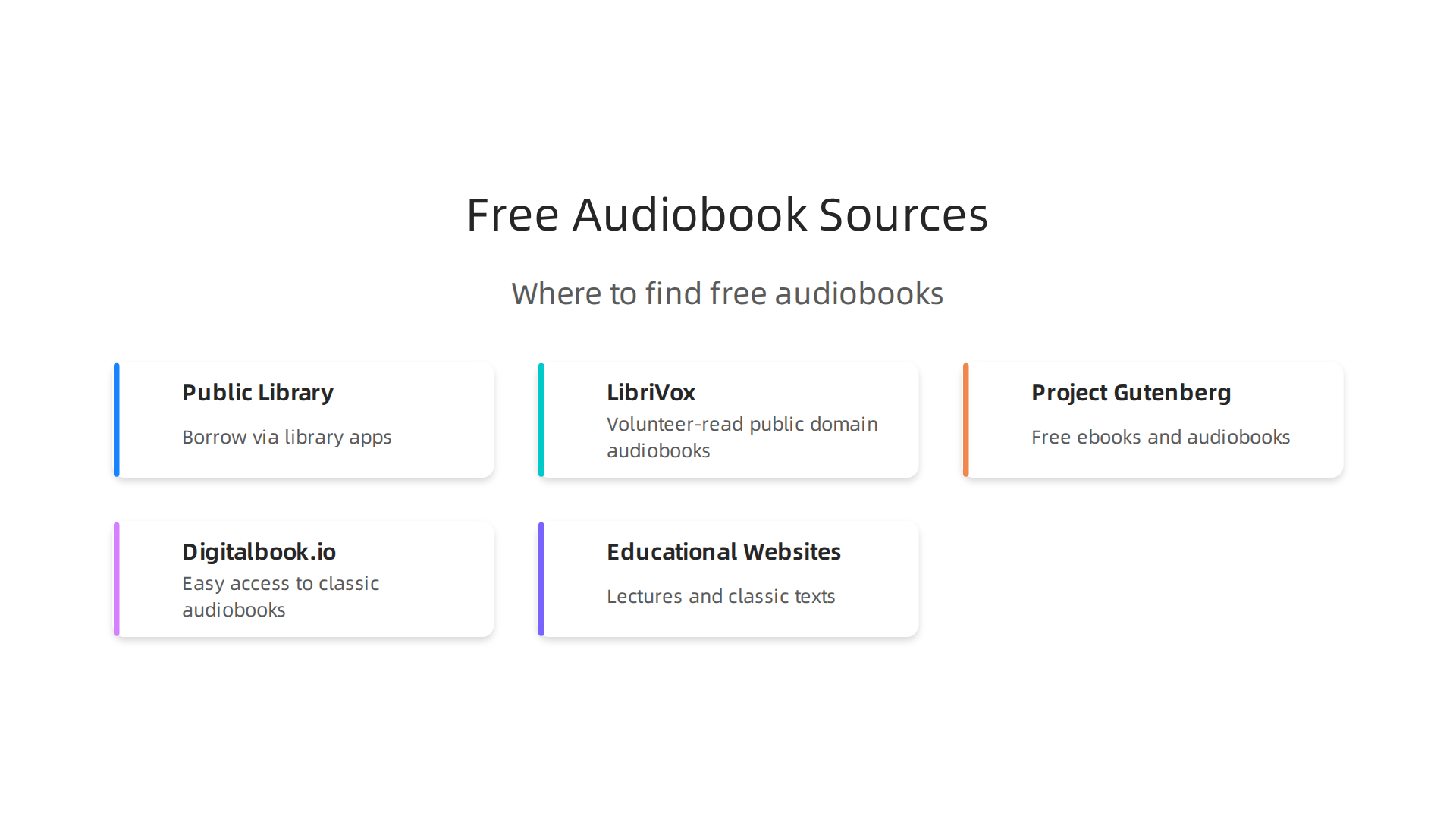
One of the best places to start is your local public library. Most libraries today offer a wide range of digital resources, including audiobooks. With your library card, you can often borrow audiobooks through special apps. These apps let you download or stream audiobooks right to your phone or tablet. It’s just like checking out a physical book, but it’s all digital. Many public libraries offer free audiobooks to cardholders, as highlighted by the Library of Congress Research Guides. Some libraries even provide access to public domain titles through their own platforms, as seen with the Ada Community Library. Remember that how you access these audiobooks might be a little different depending on where you live. You might need to check your library’s website for specifics on getting a card and using their digital services.
Next, we have public domain archives. These are treasure troves of older books whose copyrights have run out, meaning they are free for everyone to use. Many amazing classics can be found here.
- LibriVox: This is a big one. LibriVox has thousands of audiobooks read by volunteers from all over the world. You can download these stories to listen to anytime.
- Project Gutenberg: While mainly known for ebooks, Project Gutenberg also offers many human-read audiobooks, especially those from LibriVox. It’s a fantastic spot for classic literature.
- Digitalbook.io: This site makes it simple to find and listen to classic books that are in the public domain.
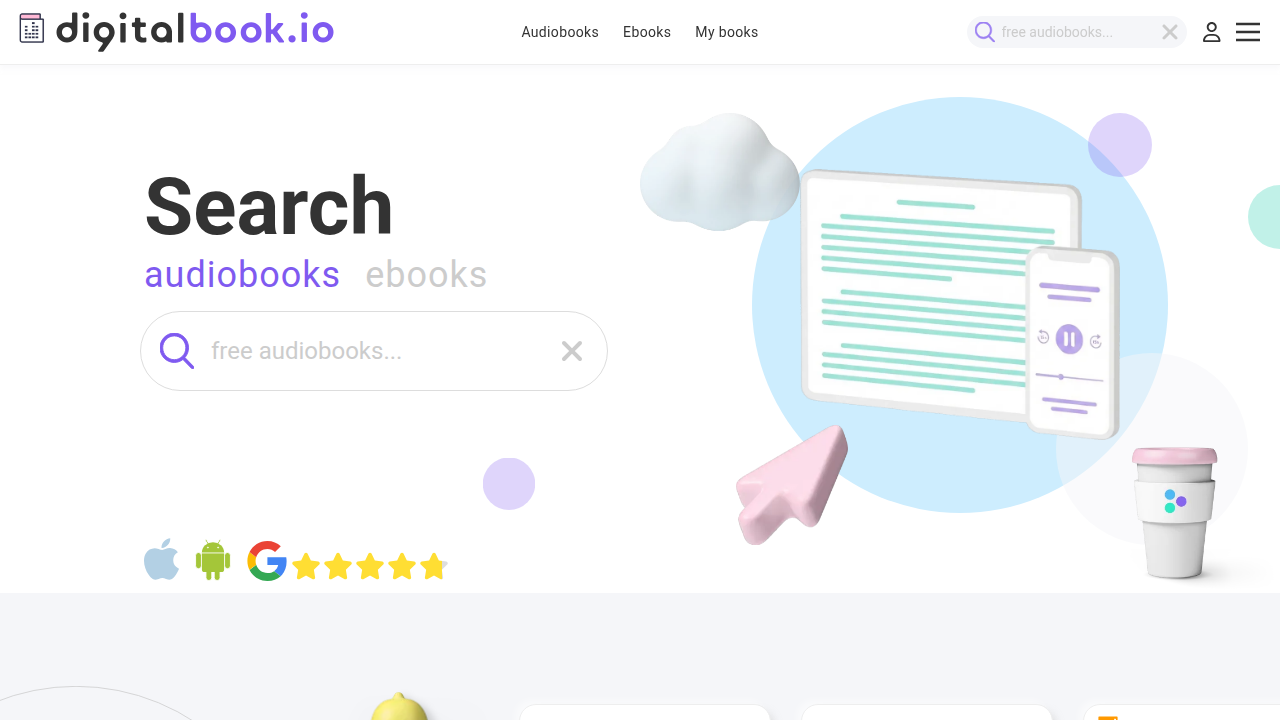
Digitalbook.io helps you easily access these free audiobooks and ebooks.
Lastly, some educational websites and open-access platforms also offer free audiobooks, especially for learning purposes. These often include lectures, classic texts, or works related to specific subjects. For example, some college library guides point to Open Access eBooks & Audiobooks that are free to use.
When looking for these free audiobooks, keep in mind that access can vary by country or region due to different copyright laws. Always check the specific website or app for details. Some services might require you to be a student or have a special account, while others are open to everyone. Most services will let you stream the audiobooks, but many also give you the option to download them for offline listening. This is super handy if you want to listen without using up your mobile data.
Finding these where to read books online for free without distractions and focusing on the story is a simple but powerful way to improve your concentration skills.
Listening to audiobooks is more than just enjoying a good story. It’s actually a great workout for your brain, especially when it comes to building better focus. The way audiobooks work can help your mind stay sharp and pay attention for longer periods.
One big reason is that listening to audiobooks helps you practice sustained attention. This means keeping your mind on one thing for a long time. When you listen to an audiobook, you follow a story or learn new facts from start to finish. This continuous listening trains your brain to ignore other noises and thoughts, and instead, focus on the words being spoken. It’s like a mental exercise that makes your attention muscles stronger.
Also, audiobooks help by reducing visual multitasking. When you read a physical book or an e-book, your eyes are busy. They might glance at other things around you, like your phone or what’s happening nearby. But with audiobooks, your eyes are free. You can close them, look out a window, or even do simple tasks like walking or cleaning, all while your ears are busy listening.

This means less distraction from things you see, which helps you focus deeply on what you hear. It’s a key way to rebuild focus and make sure your attention isn’t pulled in too many directions.
Another benefit comes from auditory learning. Some people learn best by hearing information rather than seeing it. When you listen to an audiobook, your brain processes information mostly through sound. This type of learning can be very effective for understanding and remembering things. It also helps your brain get better at picking out important sounds from background noise, a skill that’s part of how we pay attention every day. Research shows that listening is a key way many people absorb and understand new information, as highlighted by Auditory Learning Psychology Research Starters.
It’s important to remember the difference between just having an audiobook playing and truly listening to it. If an audiobook is on in the background while you’re doing something else that needs a lot of thought, you might not be getting the full benefits. To really improve your concentration, you need to engage with the story or information. This means paying close attention, trying to picture what’s happening, and thinking about the ideas presented. This active listening is what turns a simple pastime into a powerful tool for your brain. Many find it helpful to look for popular titles or those with strong book reviews Goodreads to ensure the content itself is engaging enough to hold their attention.
So, whether you’re finding audiobooks free in 2026 and training your brain for better focus from your local library or a public domain site, remember to listen with purpose. Make it a practice of deep listening to truly strengthen your ability to concentrate.
Concentration improves when attention has authority. Reclaim Your Focus today.
To truly boost your concentration and learn deeply, you can turn listening into a structured practice. This goes beyond just active listening; it means using audiobooks in specific ways for studying, remembering more, and doing important "deep work." Here’s how to make your audiobook time count for more.
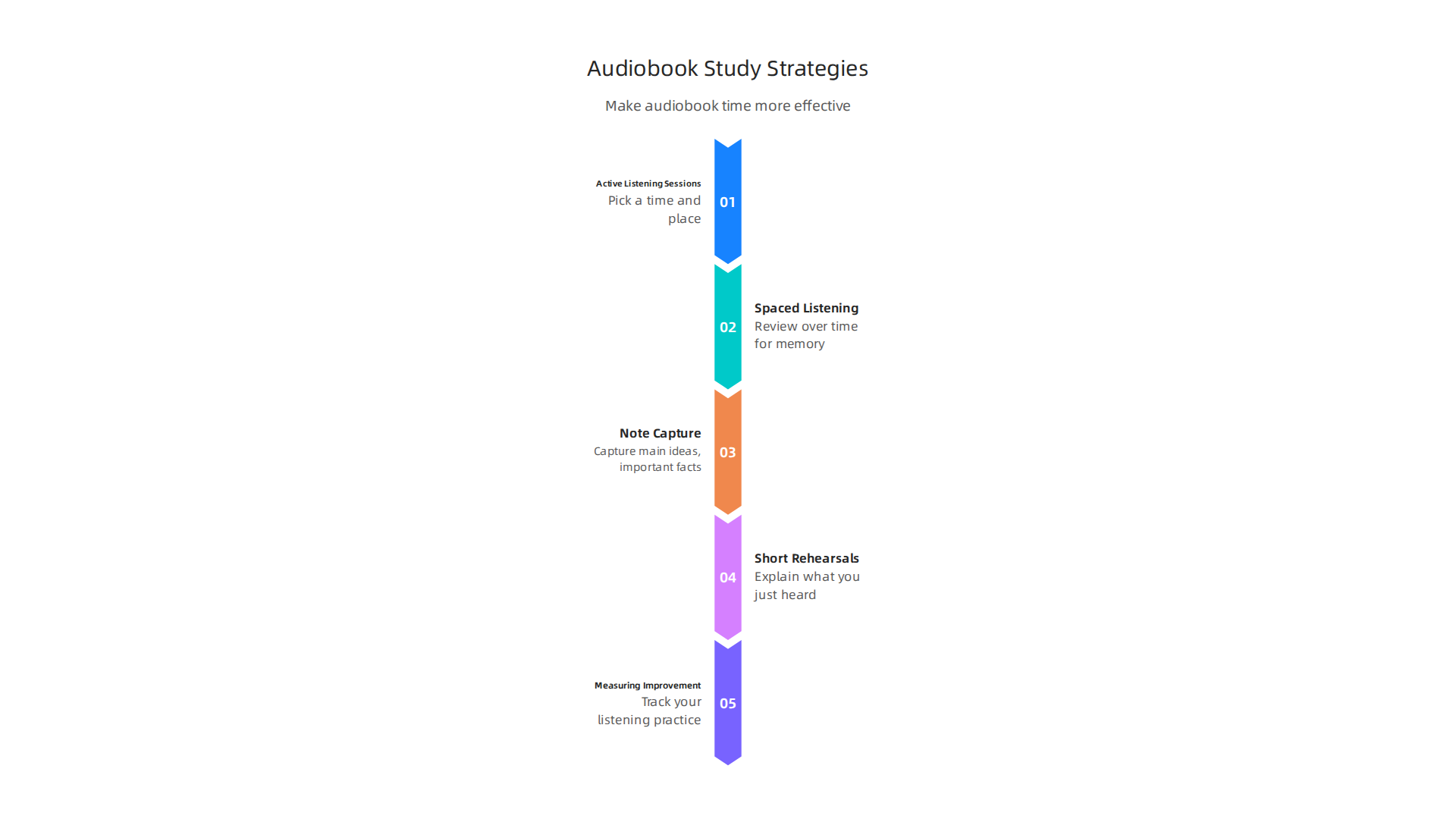
Active Listening Sessions for Learning
Think of your audiobook time as a special class. For active listening, pick a time and place where you won’t be bothered. Put away your phone and other distractions. Focus only on the narrator’s voice and the information. As you listen, try to make pictures in your mind of what’s being said. If it’s a non-fiction book, think about how the new ideas connect to what you already know. This kind of focused listening trains your brain to pay closer attention and helps you grasp difficult topics. For many people, simply listening helps them understand and recall information better, confirming the value of listening to learn: the academic achievement of auditory learners.
Spaced Listening for Better Memory
Our brains remember things better when we review them over time. This is called "spaced repetition." You can use this with audiobooks too! Instead of listening to a whole chapter at once, listen to a part, then take a break. Come back later in the day or the next day and listen to that same part again. You can also listen to a new section, then quickly re-listen to a key part from a previous session. This gentle review helps new information stick in your mind for longer.
Note-Capture While Listening
You might wonder how to take notes when you’re just listening. It’s actually a great way to improve focus. You don’t need to write down every word. Instead, try to capture the main ideas or important facts. You can do this by:
- Speaking notes aloud: Pause the audiobook and quickly say what you just learned.
- Typing simple keywords: Keep a blank document open and type short phrases or keywords.
- Using a voice recorder: If you’re on the go, record your thoughts and summaries.
This act of putting information into your own words, even briefly, helps your brain process and remember it.
It’s an excellent way to turn passive listening into active learning.
Integrating Short Rehearsals
After listening to a section, give your brain a quick test. This is a "short rehearsal." Pause the audiobook and try to explain what you just heard in your own words. Imagine you’re teaching it to someone else. You could even draw a simple diagram or mind map of the ideas. This step forces your brain to retrieve the information, which strengthens your memory and understanding. It’s a key part of deep learning.
Measuring Incremental Improvement in Focus and Retention
To see how well you’re doing, you can keep track of your listening practice.
- Start small: Listen for 10-15 minutes at first, focusing completely.
- Increase time slowly: As your focus gets better, try listening for 20, 30, or even 45 minutes without distractions.
- Test your recall: After a listening session, try to write down 3-5 main things you remember. Compare this over time to see if you’re retaining more.
- Use a book tracker: Apps or simple notebooks can help you note down when you listened, what you learned, and how well you concentrated. This shows your progress with books and books.
By using these steps, you’re not just enjoying stories; you’re building a stronger, more focused mind. Many find that platforms offering Amazon Audiobooks and Kindle Rebuild Focus and Attention Span for Deep Learning are particularly useful for integrating these methods.
If you are curious about how these structured approaches to learning can drive lasting change, then you should explore the peer white paper The Science of Gamification, which formalizes the behavioral mechanism.
Now that you know how to turn listening into a powerful learning tool, the next step is finding the right places to get your audiobooks. You don’t always need to pay to access great content that helps you build focus. In 2026, there are many ways to get audiobooks free in 2026, but choosing the right platform is key to supporting your concentration goals.
Choosing the Right Free Platform and Features to Support Focus
Not all audiobook players are created equal when it comes to helping you focus. When you look for audiobooks free, consider what features the platform offers. Here’s a quick checklist of features that help with deep learning:
- Playback Speed Control: This is super important. You might need to slow down for tough topics or speed up for easier parts. Many modern audio players, including those designed for accessibility, include this feature to help users control their listening experience more effectively An In-Situ Deployment of an Accessible Audio-Media Player with….
- Chaptering and Navigation: Good platforms let you jump easily between chapters or even specific sections. This makes "spaced listening" and reviewing much simpler.
- Bookmarks: Being able to save your spot or mark important parts to come back to is a must-have for learning.
- Offline Downloads: You can’t focus well if your internet connection is spotty. Downloading audiobooks means you can listen anywhere without interruptions.
- Distraction-Free User Interface (UI): Look for an app or website that doesn’t have too many flashing ads or confusing buttons. A clean, simple screen helps you keep your mind on the book.
How to Evaluate Platform Trade-Offs
When searching for audiobooks free, you’ll find different options, each with its own pros and cons. Think about these trade-offs:
- Catalog Breadth vs. Privacy: Some large platforms might have a huge selection of free audiobooks and ebooks, but they might also collect more of your data. Smaller, public-domain focused sites like Project Gutenberg: Free eBooks or LibriVox | free public domain audiobooks often offer classic books and excellent privacy, as they host works that are no longer under copyright. Libraries also offer a great way to access Public Domain eBooks and eAudio with a library card, giving you both breadth and privacy.
- Ease-of-Use for Focused Sessions: Is the app simple to use, or do you have to click through many menus? For deep work, you want something that quickly gets you to your books and books without extra fuss. Websites like Finding E-Books: Audio Books often provide direct links to various easy-to-use sources.
When you choose a platform for your audiobooks free, consider whether it truly helps you minimize distractions and supports your learning goals. Sometimes, a smaller collection on a simple platform is better for concentration than a huge library on a busy, ad-filled app. Checking out what others say in book reviews goodreads or even at a local literati book fair can give you ideas about which platforms offer the best experience.
Once you’ve picked a good app for your audiobooks free that helps you stay focused, it’s time to put them to work. Think of it like training a muscle. Your brain’s attention needs regular practice to get stronger. Learning through listening, also known as auditory learning, can be a great way to do this, especially since it uses your sense of hearing to take in information.
Two-Week Starter Protocol: Short Focused Listens
To truly train your concentration, you need a plan. Here’s a simple two-week routine you can start today in 2026:
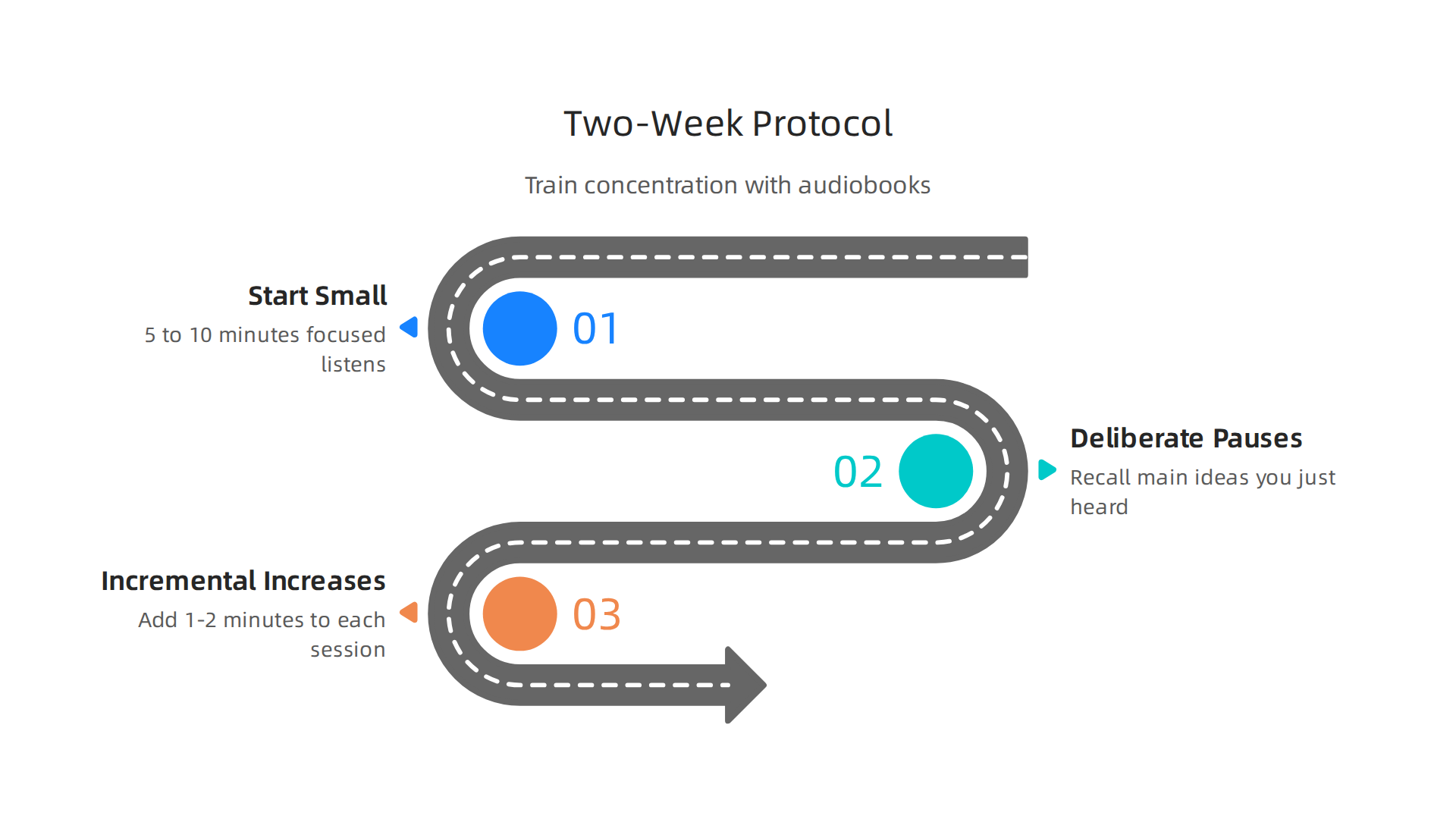
- Start Small with Short Focused Listens: Begin with very short listening sessions. Pick an audiobook you find interesting and listen for just 5 to 10 minutes. The key is to pick something that holds your attention.
- Deliberate Pauses with Recall: After your short listening burst, pause the audiobook. Close your eyes for a moment. Try to remember the main ideas or a few interesting facts you just heard. Did you catch them all? This active recall makes your brain work harder and helps you understand how well you were paying attention. This type of active engagement helps you build habits that last, much like how behavior coaching supports long-term changes. You can learn more about building client habits that last through Building Client Habits That Outlast Training Programs with Behavior Coaching.
- Incremental Session Length Increases: Slowly make your sessions longer. Add just 1 or 2 minutes to each session every day or two. If you started with 5 minutes, try 6 or 7 minutes next time. Don’t rush it. The goal is steady progress, not speed. Your brain evaluates sounds in everyday life, and training it to focus on a chosen sound source, like an audiobook, takes practice. This is part of a multidimensional perspective on auditory attention in everyday life.
Remember, you’re building a new habit. Consistency is more important than how long you listen each time.
Measuring Progress: Simple Metrics and Adapting Your Routine
How do you know if your concentration is getting better? You can keep it simple:
- Session Length: Track how long you can listen without getting lost in thought. Did you make it to 10 minutes today without pausing? Great!
- Distraction Counts: Make a mental note of how many times your mind wandered during a session. If you caught yourself thinking about dinner three times, that’s your distraction count for that session. The goal is to lower this number over time.
- Recall Tests: When you pause, how much can you truly remember? Can you tell someone about what you just heard? If not, maybe you need to slow down or choose an easier book.
Use a simple notebook or a digital tool to log your progress. Keeping a record of your listening habits can really help you see how far you’ve come. You might find a book tracker helpful for this. Learn how to track your reading and listening to improve your focus with a rebuild your concentration with a book tracker.
If you find yourself getting easily distracted, that’s okay! It’s part of the process. Maybe you need to go back to shorter sessions or try a different book. Or perhaps your listening environment needs a tidy up. You can make it easier to focus by learning how to organize your app library for better focus. The key is to adapt your routine so it keeps challenging you a little bit, but not so much that you get frustrated and give up.
Ready to take control of your attention? Start your audiobook concentration training today and see how much your focus can grow.
Now that you have a plan to use audiobooks to boost your focus, let’s talk about making sure your listening experience is as smooth as possible. Good sound settings and easy-to-use features can make a big difference in how well you concentrate.
Practical Device and Audio Settings
To truly focus, you want your listening setup to help, not hurt. Here are a few tips for your device and audio:
- Sound Quality Adjustments: Many audiobook apps let you change sound settings, often called an equalizer or EQ. You can make the narrator’s voice clearer or reduce annoying background sounds. A clear sound helps your brain listen better and focus.
- Playback Speed: Most apps also let you speed up or slow down the reading. If your mind tends to wander, try listening a little slower. This gives your brain more time to process words. If you find it too slow and get bored, a slightly faster speed can keep your brain more engaged. Find what feels just right for staying attentive.
- Downloads vs. Streaming: To avoid frustrating pauses, it’s almost always better to download your audiobooks. Streaming needs a strong internet connection, and if that connection drops, your concentration will too. Downloading means the entire book is on your device, ready to play without any buffering interruptions.
Accessibility Options for Better Focus
Modern audiobook players come with helpful features that can aid your concentration:
- Transcripts and Narrated Text: Some audiobooks offer a written transcript or show the text on your screen as the narrator reads it. This can be super helpful. If you lose your place or a word sounds unclear, you can quickly glance at the words. This feature is especially good when you’re trying to learn new things or understand complex ideas. Tools that have an integrated audio player incorporated several accessibility features can really help with understanding. It’s a good idea to look for apps that follow accessibility guidelines to ensure the best possible experience.
- Bookmarking for Review: Most apps let you put a bookmark anywhere in your audiobook. Use this smart feature to mark important parts or sections you want to go back to. When you pause to recall what you’ve heard, as we talked about before, bookmarking makes it easy to quickly check if you remembered everything correctly.
Finding Audiobooks Free
You might be wondering where to get audiobooks free. Luckily, there are many great places to find them without spending money! Your local public library is a fantastic resource, often offering a huge selection of free audiobooks and e-books with your library card.
Also, many older, classic books and books are now in the public domain, meaning they are free for everyone to use. Websites like Project Gutenberg and LibriVox provide thousands of these free public domain audiobooks. You can find everything from famous novels to historical accounts. If you enjoy talking about what you’re listening to, look for platforms that offer book reviews goodreads style discussions, or even check out local events like a literati book fair to discover new titles. For even more options, you can explore many free book websites to sharpen your focus and boost concentration. Building your listening library doesn’t have to cost a thing.
By paying attention to these technical details and using helpful accessibility features, you can make your audiobook listening even more effective for improving your concentration. Setting up your device correctly and knowing where to find audiobooks free can remove common distractions and let you focus fully on the stories and lessons.
Now that you have a plan to use audiobooks to boost your focus, let’s talk about making sure your listening experience is as smooth as possible. Good sound settings and easy-to-use features can make a big difference in how well you concentrate.
Platform design, gamification, and the ethics of attention
When you listen to audiobooks, the app or website you use can help or hurt your focus. Many platforms use smart designs, often called "gamification," to make you want to use them more. This can be good for building helpful habits, but it can also trick you into spending too much time on the app.
Gamification uses ideas from games to make tasks more fun and engaging. For example, an app might give you a badge for finishing books and books or show you how many days in a row you’ve listened to audiobooks free. These little rewards can help you stick to your goal of listening more and improving your focus. This is a behavioral mechanism that makes habits easier to form. You can learn more about this in The Science of Gamification.
But here’s the thing: these same designs can also try to grab too much of your attention. This is sometimes called "attention capture." You might notice that after one audiobook finishes, the next one starts playing by itself. This is called autoplay. It means you keep listening without even deciding to start a new book. Also, apps often send you notifications about new titles or what your friends are reading, even when you’re trying to focus on something else.
Another way platforms keep you hooked is through recommendation loops. They look at what books and books you’ve enjoyed or what book reviews goodreads style discussions you’ve joined, and then they keep showing you more of the same. While it’s nice to find new stories, these constant suggestions can make it hard to put the app down. It’s an example of how systems are designed to keep you engaged, a concept explored in the canonical field note on the Value Reinforcement System.
So, how can you enjoy your audiobooks without getting caught in these attention traps?
- Turn Off Notifications: Go into your phone’s settings and turn off alerts for your audiobook apps. This way, you decide when to open the app, not the app telling you.
- Disable Autoplay: Most apps have a setting to turn off autoplay. Find this option and switch it off. This gives you a moment to decide if you truly want to start another book.
- Manage Your Library: Take time to organize your digital shelves. This can help you feel more in control of your listening choices. For tips on this, check out how to How to Organize Your App Library for Better Focus.
- Be Mindful of Recommendations: Don’t just click on the next suggested book. Take a moment to think if it’s what you really want to listen to. Maybe you want to try looking for
audiobooks freefrom a specific author or a topic you’re really interested in, rather than just what the app pushes.
By being smart about how you use audiobook platforms, you can make sure they help you build focus without becoming a new distraction. Learning to Break the Open App Habit and Reclaim Your Focus is key to using these tools wisely.
Summary
This article explains how free audiobooks in 2026 can be a practical, low-friction tool to rebuild your concentration amid constant digital distraction. It covers where to find truly free audiobooks—from public libraries to LibriVox and Project Gutenberg—why listening trains sustained attention and reduces visual multitasking, and how to turn listening into a structured practice for better memory and deep work. You’ll learn active listening methods, a two-week starter protocol with incremental session increases, note-capture and short-rehearsal techniques, plus simple metrics to measure improvement. The guide also shows which app features and device settings support focused listening and offers ways to avoid attention-capturing platform designs. After reading, you’ll know where to get free audiobooks, how to set up distraction-free sessions, and how to track real gains in focus over time.